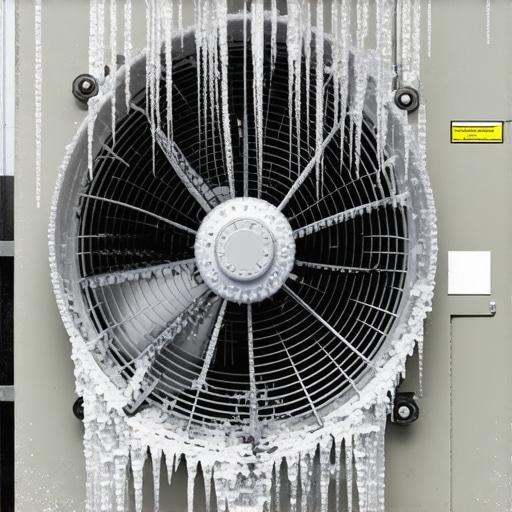
Listen closely. If you hear your outdoor unit screaming like a banshee in a blizzard, it is not because the equipment is ‘junk.’ It is because physics is a cruel mistress. I have spent thirty winters dragging gauges through knee-deep snow, and if there is one thing I have learned, it is that most homeowners are sold a bill of goods about heat pumps that stops being true once the thermometer hits 20°F. I recently followed a ‘Sales Tech’—one of those guys in a pristine white shirt who wouldn’t know a manifold from a macaroni noodle—into a job in the middle of a January cold snap. He had already quoted this poor guy $14,000 for a total system replacement because the outdoor coil was ‘frozen solid.’ He told him the compressor was shot. I walked in, scraped the frost off the nameplate, and checked the defrost board. It was a $150 fix, but the real culprit? A clogged furnace filter replacement that was long overdue, killing the airflow and making the unit work twice as hard to extract heat that wasn’t there. That is the reality of the trade; the ‘juice’ only works if the air can move.
The Thermodynamic Wall: Why COP Crumbles
Heat pumps do not ‘create’ heat; they move it. Even at 10°F, there is heat energy in the air—molecular movement that the refrigerant (the ‘gas’) wants to grab. But here is the catch: as the ambient temperature drops, the pressure of that refrigerant drops too. When the pressure is low, the density of the vapor returning to the compressor is thin. Imagine trying to breathe through a cocktail straw while running a marathon; that is your compressor trying to provide heating when it’s 5°F outside. We measure this via the Coefficient of Performance (COP). At 47°F, a high-end unit might have a COP of 4.0, meaning for every dollar of electricity you put in, you get four dollars of heat. But when you hit that ‘balance point’—usually around 30°F for older sticks—the COP dives toward 1.0. At that point, you might as well be heating your house with a toaster.
“The most expensive equipment in the world cannot overcome a bad duct system.” – Industry Axiom
In cold climates, we deal with the ‘Defrost Cycle’—the necessary evil of heat pump ownership. The outdoor coil becomes the evaporator in winter. It gets cold—colder than the air—and because we have humidity (latent heat), that moisture turns to ice. The unit has to periodically reverse itself into AC mode to send hot gas to the outdoor coil to melt that ice. If your boiler maintenance services or heat pump sensors are off, the unit stays in defrost too long or not long enough, leading to a block of ice that no amount of ‘AI-driven HVAC optimization’ can fix without a torch.
The 2025 Regulatory Cliff and A2L Refrigerants
We are entering the era of R-454B and R-32. The industry is moving away from R-410A because the EPA says it is too hard on the planet. These new A2L refrigerants are ‘mildly flammable.’ Don’t panic; it just means we ‘tin knockers’ and techs have to be more precise. These new systems require sophisticated refrigerant leak detection sensors built right into the cabinetry. If you are looking at heat pump solutions for 2025, you need to understand that the old ‘slap-and-gap’ installation methods will trigger a sensor and shut your system down faster than a sparky hitting a live wire. The efficiency of these new machines is higher, but the margin for error is razor-thin.
Airflow: The King of Efficiency
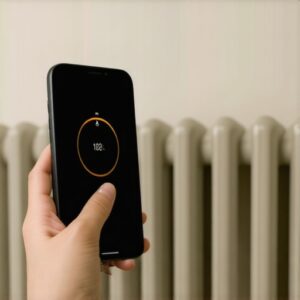
I’ve seen guys spend hours on a smart thermostat setup trying to ‘optimize’ a system that has a 12-inch return for a 4-ton blower. It’s like putting a Ferrari engine in a lawnmower. If your static pressure is too high because your ducts are choked with ‘Pookie’ (mastic) in the wrong places or restricted by undersized runs, your heat pump’s efficiency vanishes. This is where zoning system installation becomes critical. By directing the limited heat to the rooms you actually use, you stop the ‘short cycling’ that kills compressors. In the North, we often recommend a ‘Dual Fuel’ setup. This involves gas line installation for furnaces underneath the heat pump coil. When the temperature drops below the balance point where the heat pump can’t keep up, the gas furnace kicks in. It’s the best of both worlds: efficient electric heating in the 40s and 50s, and ‘suction line’ scorching heat when the polar vortex hits.
“Design conditions for heating shall be based on the 99% or 97.5% column in the ASHRAE Fundamentals handbook.” – ASHRAE Standards
For those in extreme rural areas, we are even seeing a resurgence in biomass boiler services as a secondary backup. But for the suburban homeowner, it comes down to maintenance. A dirty outdoor coil increases the head pressure, making the compressor pull more amps and generate less heat. If you haven’t had a pro look at your thermostat installation to ensure the ‘Aux Heat’ isn’t kicking on too early, you are literally burning money. Efficiency isn’t just a rating on a sticker; it’s the result of physics, airflow, and a tech who knows that a $20 capacitor is usually the hero, not a $15,000 sales pitch. If your system is struggling, don’t let a salesman tell you it’s ‘tired.’ Check the airflow, check the charge, and remember: you can’t cool—or heat—what you can’t touch. Check our privacy policy if you want to know how we handle your data, but if you want to know how we handle your HVAC, just look at the gauges.