The Airflow Manifesto: Why Your Attic is Winning the War
I remember my old mentor, a man who smelled perpetually of PVC glue and burnt capacitors, screaming at me in a 130-degree attic back in ’94. ‘You can’t cool what you can’t touch, kid!’ he’d bark while pointing at a collapsed return flex. It’s a lesson most ‘Sales Techs’—those guys in crisp white shirts who wouldn’t know a manifold gauge from a toaster—never learned. They want to sell you a shiny new 18-SEER box, but if your ductwork is dumping cold air into the crawlspace, that new unit is just an expensive paperweight. Comfort isn’t a product you buy; it’s physics you manage. When we talk about top HVAC repair strategies, we aren’t just talking about swapping parts; we’re talking about the integrity of the vessel carrying the medium. If your ducts are leaking, you’re literally paying to air condition the neighborhood squirrels. In my 30 years of melting on rooftops, I’ve seen homeowners waste thousands on ‘juice’ (refrigerant) when the real culprit was a 50-cent hole in a return plenum.
“The most expensive equipment in the world cannot overcome a bad duct system.” – Industry Axiom
Thermodynamic Zooming: The Latent Heat Nightmare
In humid climates, a duct leak isn’t just a loss of air; it’s an invitation for disaster. When your air handler kicks on, it’s supposed to pull warm, moist air from your living space, pass it over an evaporator coil that’s dropped below the dew point, and remove the latent heat—that’s the energy stored in water vapor. If you have a leak in the return ducting located in a sweltering attic, you’re pulling in 140°F air saturated with humidity. This overwhelms the coil. Instead of cooling your house, the system spends all its energy trying to dehumidify the attic. This is why your house feels like a cold swamp. The air coming out of the vents might be ‘beer can cold’ on the suction line, but the volume is too low to drop the sensible heat in the rooms. This leads to short cycling and premature compressor failure. Proper airflow measurement services are the only way to quantify this loss. If your air handler repair tech isn’t pulling out a manometer to check static pressure, they’re just guessing.
The Forensic Diagnosis: Signs Your Ducts are Bleeding
How do you know if you’re a victim? First, look at your registers. If you see dark ‘ghosting’ or dust streaks on the ceiling around the vents, that’s a dead giveaway. This happens when high-velocity air leaks out before reaching the boot, creating a Venturi effect that sucks attic dust into the stream. Second, listen to your system. High-pitched whistling often points to a disconnected branch or a failing limit switch replacement because the furnace is overheating from lack of airflow. In church heating systems, where duct runs are massive, we often find entire sections of ‘pookie’ (mastic) that have dried and cracked over decades, leading to a 30% loss in efficiency. If you’re running geothermal heat pump systems, duct integrity is even more critical because these systems operate on tighter temperature deltas. A leak in a geothermal setup is basically burning money in a high-efficiency furnace.
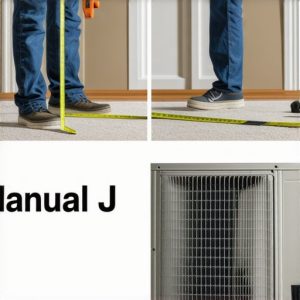
“Designers shall use Manual D to sizeduct systems to ensure the blower can deliver the required airflow against the system’s total external static pressure.” – ACCA Manual D
The Physics of Pressure: Why Modulating Furnaces Fail
Modern equipment, like what you’ll find when looking into heat pump solutions for 2025, is smarter than ever. A modulating furnace repair often involves sensitive pressure switches that will shut the whole thing down if the static pressure is off. If your ducts are restricted or leaking, the variable-speed motor will ramp up to compensate, screaming like a jet engine and tripled your electric bill before eventually burning out the control board. This is where thermostat wiring upgrades can sometimes mask a deeper issue; a smart thermostat might tell you there’s a ‘filter clog’ when in reality, your return duct has collapsed in the crawlspace. You need a tin knocker who knows how to seal with mastic, not just ‘sparky’ who can wire a sensor. Regular maintenance is the only way to catch these ‘invisible’ leaks before they kill your heat exchanger. Speaking of which, heat exchanger cleaning is useless if the airflow isn’t there to pull the heat away; the metal will just fatigue and crack from the thermal stress of overheating.
The Solution: Beyond the Silver Tape
Don’t let a ‘Sales Tech’ convince you that silver duct tape is a fix. That stuff is for hobbyists. We use ‘Pookie’—thick, fiber-reinforced mastic—and UL-181 rated foil tape that actually survives the heat cycles of a furnace. If you’re seeing high bills, check your contactor repair history; if you’re replacing contactors every two years, your unit is likely struggling against a leaky, high-static duct system. Before you commit to a new install, check out our guide on choosing the best heating service to ensure they actually perform a load calculation. Airflow is the lifeblood of your home. If you suspect your ducts are venting into the crawlspace, contact us for a real diagnostic, not a sales pitch. We’ll bring the manometers, not a glossy brochure. To keep your system running through the next decade, prioritize preventative heating maintenance that includes a full duct inspection. Anything else is just hot air.