I’ve spent thirty years crawling through blown-in fiberglass insulation that feels like a thousand tiny needles in your forearms just to find a single loose wire. I’ve seen the industry go from mercury-bulb thermostats that lasted forty years to these digital gadgets that some ‘Sales Techs’ use as an excuse to bankrupt a family. You know the type: they show up with a shiny tablet, find a speck of dust on your blower motor, and suddenly you need a $15,000 system. I remember following one of these guys into a local parish last winter. He’d quoted them a full replacement for their church heating systems because he claimed the ‘logic’ was fried. I took one look at the control board diagnostics, saw a chattering contactor repair was all that was needed, and saved that congregation twenty grand. The smell of a scorched contactor is unmistakable—ozone and burnt copper—and it doesn’t mean the whole furnace is scrap.
“The most expensive equipment in the world cannot overcome a bad duct system.” – Industry Axiom
In the North, where the wind bites through your jacket like a serrated knife, comfort isn’t just about turning a dial; it’s about physics. We deal with sensible heat—the temperature you see on the screen—and the brutal reality of dry air. When the temperature drops, your furnace runs more, and that air becomes bone-dry. This is where whole-home humidifiers come into play. If your house is at 70 degrees but only 10% humidity, you’re going to feel like you’re in a walk-in freezer because the dry air is evaporating moisture off your skin. By integrating these systems with modern thermostat installation, you aren’t just controlling the fire in the box; you’re controlling the latent heat of the entire structure. This is especially vital when we look at heat pump solutions for efficient home comfort in 2025, where managing the balance between the compressor and the auxiliary heat strips is the difference between a $100 bill and a $600 disaster.
The biggest shift I’ve seen in three decades is the R-454B refrigerant transition services. We are hitting a regulatory cliff in 2025. R-410A, the ‘juice’ we’ve used for twenty years, is being phased out for A2L refrigerants like R-454B. These are ‘mildly flammable,’ which sounds scary but really just means we have to be smarter. Modern app-based upgrades now include sensors that can detect a leak before you even smell the additive. If you’re still running an old R-22 beast, you’re on borrowed time. Transitioning to a new system with occupancy sensor installation means your unit isn’t cooling or heating an empty guest room. It’s using infrared ‘eyes’ to tell the control board where the bodies are, shifting the airflow through motorized dampers. This isn’t magic; it’s static pressure management. If you close too many vents, you’ll kill the compressor by slugging it with liquid refrigerant because the evaporator couldn’t boil it off.
“Design conditions for heating and cooling shall be determined in accordance with the procedures in the ASHRAE Handbook of Fundamentals.” – ASHRAE Standard 62.1
IMAGE_PLACEHOLDER_1
Let’s talk about the ‘gut’ of the system. You can have the fanciest app in the world, but if your heat exchanger cleaning hasn’t been done in five years, you’re breathing in whatever has been cooking on those metal cells. I’ve seen hot water heater repair calls turn into full basement floods because people ignored a $50 anode rod. It’s the same with your furnace. A cracked heat exchanger isn’t just a repair; it’s a death trap for carbon monoxide. That’s why preventative heating maintenance a guide for homeowners in 2025 is the only way to stay ahead of the ‘Sparky’ (electrician) or the ‘Tin Knocker’ (duct guy) needing to tear your house apart. If you’re dealing with ice on your driveway, snow melt systems installation tied into your high-efficiency boiler is the ultimate luxury, but it requires precise manifold balancing or you’ll just end up with a very expensive ice rink.
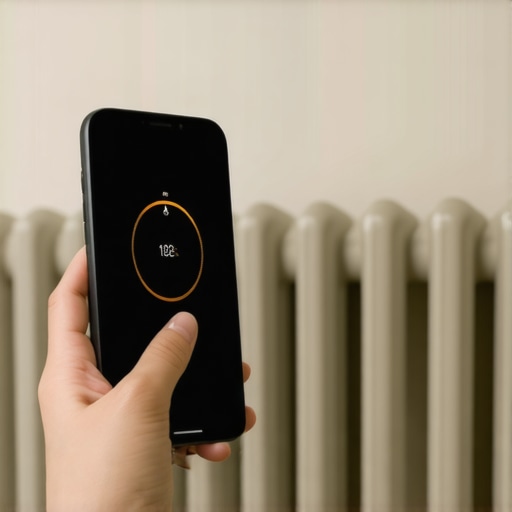
When I’m looking at top hvac repair strategies to extend your systems life, I’m looking at the capacitor and the contactor. These are the two most common failure points. A capacitor is like a battery that gives the motor a kick-start. If it’s bulging like a can of bad tuna, it’s about to pop. Replacing it early saves the motor. Adding a smart thermostat that can monitor the amperage draw of these components—yes, they do that now—means you get an alert on your phone before the system actually dies. This is why choosing the best heating service expert tips for 2025 is about finding a tech who knows how to use a multimeter, not just a sales brochure. Comfort is a science, and 90% of the problems I solve come down to airflow, not the ‘gas’ in the lines. If the suction line isn’t ‘beer can cold’ in the summer or the discharge air isn’t hitting that 120-degree sweet spot in the winter, something is wrong with the physics, not the app interface.