The Sound of a Dying Flame: A Forensic Diagnosis
The silence of a failing furnace in the dead of a Chicago-style winter is heavier than the snow outside. You wake up at 3 AM, and the air has that thin, metallic edge to it—the smell of a house losing its fight against the frost. You walk to the basement, click the thermostat, and hear nothing but the faint, pathetic tick of a sparker or the hiss of gas that won’t catch. You think it’s just a ‘blown pilot,’ a minor nuisance you can fix with a long-reach lighter. But as a tech who has spent thirty years crawling through spider-infested crawlspaces and diagnosing church heating systems that haven’t been touched since the Eisenhower administration, I’m here to tell you: that pilot light isn’t just out. It might be trying to tell you that your house is trying to kill you.
The Mentor’s Physics Lesson: Why Airflow is King
My old mentor, a man who smelled like WD-40 and menthol cigarettes, used to scream at me until his face was the color of a cherry-red heat exchanger: ‘You can’t burn what you can’t breathe!’ This is the fundamental law of the Airflow Architect. Most homeowners think a pilot light goes out because of a breeze. In reality, it’s often a symptom of a pressure imbalance so severe it’s literally sucking the life out of your combustion chamber. This is where manual J calculations come into play. It’s not just about how big the furnace is; it’s about the volume of air the structure requires to remain in equilibrium. If your Tin Knocker didn’t size the return air properly, or if you’ve sealed your house so tight with new windows that the furnace is starving for oxygen, you’ve created a vacuum. That vacuum pulls air down the flue, blowing out your pilot and potentially dumping carbon monoxide into your living room.
“The most expensive equipment in the world cannot overcome a bad duct system.” – Industry Axiom
The Forensic Anatomy of a Pilot Failure
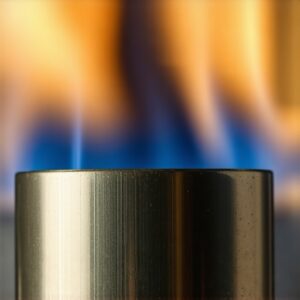
When I arrive for a service call, I’m not looking at the flame first; I’m looking at the soot. If I see yellow-tinged carbon around the burner assembly, I know we have a combustion problem. The thermocouple—that little copper rod sitting in the flame—is the ‘brain’ of the operation. It generates a millivolt signal that tells the gas valve it’s safe to stay open. If the flame is ‘lifting’ off the burner because of poor draft, the thermocouple cools down, the millivolts drop, and—click—the gas shuts off. This is a safety feature, not a bug. If you find yourself constantly relighting it, you aren’t fixing the problem; you’re bypassing a warning. This is why preventative heating maintenance is non-negotiable. We check the millivolt output and the integrity of the heat exchanger to ensure that ‘gas’ stays where it belongs.
The Scary Reason: Backdrafting and the Chimney Trap
In older homes, especially those undergoing radiator replacement or boiler upgrades, the chimney liner installation is often the most overlooked component. A modern high-efficiency furnace or water heater vented into an oversized, cold masonry chimney will never create the ‘stack effect’ needed to carry flue gases away. The exhaust cools, becomes heavy, and sinks. This ‘slug’ of cold air sits on your pilot light like a wet blanket. Worse, the moisture in that exhaust is acidic. It eats the mortar from the inside out, eventually leading to a collapse that can block the vent entirely. If you’re smelling a sour, acidic odor near your mechanical room, your chimney is failing, and that pilot light is your last line of defense.
Advanced Ventilation: ERVs, HRVs, and HEPA Systems
We see this a lot in ‘tight’ modern homes or large church heating systems where we’ve installed HEPA filter systems. You want clean air, so you seal the building. But now the furnace has no ‘make-up’ air. This is where energy recovery ventilators (ERV) and heat recovery ventilators (HRV) become essential. They allow the building to breathe, swapping stale indoor air for fresh outdoor air while recovering the sensible heat so you aren’t throwing money out the window. Without these, your furnace is fighting a losing battle against static pressure. If you’re experiencing predictive maintenance alerts on your smart thermostat regarding ‘long run times’ or ‘ignition failure,’ it’s likely an airflow issue, not a part failure. This is why I always tell people that top hvac repair strategies always start with a manometer, not a screwdriver.
“A chimney is not merely a vertical pipe; it is a thermal engine that requires precise temperature differentials to function safely.” – ASHRAE Standards
The Solution: Physics over ‘Pookie’
While some guys will just slap some ‘Pookie’ (mastic) on a leak and call it a day, a real tech looks at the whole-home psychrometrics. If your air is too dry, it can actually affect how heat is perceived and how the furnace cycles. Installing steam humidifiers can bridge that gap, but they must be integrated into a system that has been properly sized through rigorous manual J calculations. If your system is oversized, it will short-cycle, never reaching the steady-state efficiency needed to maintain a proper draft, leading to more pilot issues and cracked heat exchangers. When the cost of repair starts to approach 50% of the value of a new high-efficiency unit, we help homeowners with rebate application assistance to ensure they get the most advanced tech without breaking the bank. Choosing the right path requires choosing the best heating service expert who understands the physics of the North’s brutal climate zones.
Conclusion: Don’t Ignore the Warning
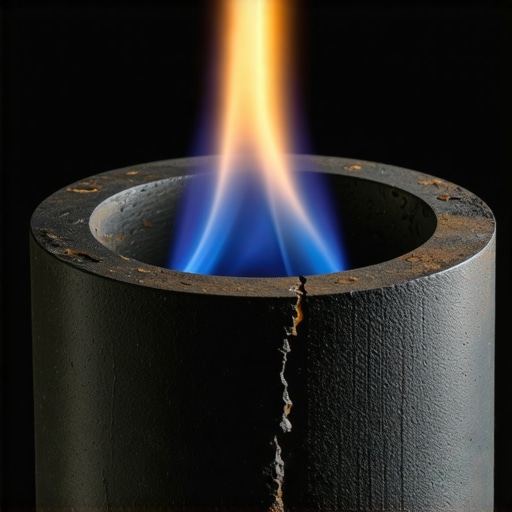
That little blue flame is a sentinel. If it goes out once, it might be a fluke. If it goes out twice, it’s a trend. If it goes out three times, it’s a threat. Between carbon monoxide risks, cracked heat exchangers, and the simple reality of being left in the cold, you cannot afford to guess. If you need a forensic look at your system, contact us today. We don’t just ‘top off the gas’; we fix the physics. “