It was 2:15 AM on a Tuesday in mid-January, and my phone was screaming. The thermometer outside read a brutal -8°F. The caller was frantic—a commercial landlord with a historical brick property where the old hydronic heartbeat had flatlined. Tenants were already seeing their breath indoors, and in this kind of deep-freeze climate, you do not have hours; you have minutes before water lines turn into structural pipe-bombs. This is where real heating expertise separates the seasoned technicians from the wet-behind-the-ears sales guys who only know how to swap out boxes.
The Midnight Forensic Investigation
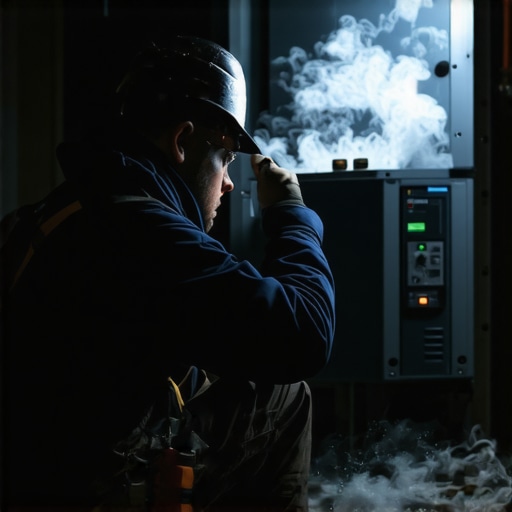
I followed a newly hired technician from a rival franchise who had been on-site just three hours prior. He had slapped a sticker on the boiler casing, condemned the entire system, and quoted the landlord twenty-two grand for an immediate replacement, claiming the heat exchanger was completely shot. He left them in the freezing dark because he did not want to work in a cold basement. When I walked down those concrete steps, the air smelled of stale basement dust, copper, and that distinct, metallic chill of a dying hydronic system. I did not see a cracked heat exchanger. What I saw was a dirty, neglected steam boiler that had starved itself of water because of a seized automatic low-water cutoff valve, combined with a clogged pressure-trol pig-tail siphon.
The system had simply locked itself out for safety, and the previous tech did not even bother to check the basic controls. It took me thirty minutes to manually flush the sediment, clean the glass gauge, pipe in a temporary bypass, and get the burner roaring back to life. That twenty-two thousand dollar quote evaporated into a minor service call and a lesson in pure troubleshooting. This is the reality of the trade: physics does not lie, but lazy technicians do.
The North/Cold Climate Dynamics & Steam Physics
In our northern winters, the enemy is not just cold; it is the brutal physics of water expansion and heat transfer. When we talk about steam boiler repair, we are dealing with latent heat of vaporization. Steam carries massive amounts of thermal energy, but it requires precise pressure management to push that heat through heavy cast-iron radiators across three floors. If your steam pressure is set too high because some amateur cranked the pressure-trol, you are not heating the building faster; you are just creating water hammer, destroying your radiator vents, and burning fuel like a runaway locomotive.
“The most expensive equipment in the world cannot overcome a bad duct system.” – Industry Axiom
When dealing with wet heat, the water level is everything. If the water drops too low, the metal of the boiler crown sheet overheats and can crack under the thermal stress when cold water suddenly hits it. Conversely, if the boiler is overfilled, you get priming and foaming, sending raw water up into the steam mains, leading to freezing pipes at the far ends of the system because steam cannot circulate. This is why routine preventative heating maintenance is not a luxury; it is a life-support system for your home.
The Diagnostic Blueprint: Steam vs. Modern Heat Pumps
While that old steam boiler is a majestic beast of cast iron and raw flame, many building owners are looking at transitioning to modern technology like a dual-fuel setup or high-efficiency heat pumps. Let us lay out the forensic breakdown of what goes wrong when these systems fail in sub-zero weather, and how we diagnose them:
- The Flame Sensor Cleanliness: On gas-fired systems, a microscopic layer of silica or carbon buildup on the flame sensor rod will stop the current flow (measured in microamps). The board thinks there is no fire, shuts the gas valve down, and leaves you freezing. A simple rub with some steel wool saves a thousand-dollar middle-of-the-night panic.
- The Defrost Cycle Failure: On a modern cold-climate heat pump, the outdoor coil will naturally frost over in freezing weather. The system must regularly reverse its cycle to send hot gas back outside to melt the ice. If the defrost board or sensor fails, that outdoor unit becomes a solid block of ice, choking off heat transfer entirely.
- The Radiator Vent Trap: On classic hydronic systems, if a single radiator replacement is done incorrectly, or if air is trapped in the upper loops, the entire hydronic loop stalls. Water cannot compress, and air pockets act like physical blockades to thermal flow.
The Airflow Manifesto: Why Tight Ducts Matter
Even if you have the finest heating plant on the block, bad distribution will ruin your comfort and drain your wallet. In northern climates, cold drafts are often caused by poor duct design rather than furnace capacity. If you have ducts running through cold attics or crawlspaces that are not sealed with professional mastic (what we call “pookie” in the trade), you are essentially heating the great outdoors.
“System performance is directly proportional to the integrity of the thermal envelope and the distribution network.” – ACCA Manual D Principle
We see it all the time: a homeowner installs a brand-new high-efficiency furnace, but they keep the old, uninsulated, leaky tin-work. The air leaving the supply registers is lukewarm because the heat leaked out into the crawlspace before ever reaching the living room. Professional heating service experts will always analyze the static pressure of the ductwork before suggesting any equipment changes. If your tin knocker did not seal the joints with real mastic paste, your high-efficiency system is nothing more than a high-priced draft generator.
Upgrading and Protecting Your Thermal Infrastructure
When the midnight emergency is resolved, it is time to look at long-term resilience. If you are stuck with antiquated equipment, transitioning to SEER2 compliant upgrades or integrating advanced indoor air quality systems is a smart move. Modern homes require a balance of tight construction and mechanical ventilation. Integrating air purification directly into your central air handler ensures that as you seal your ducts to save energy, you are not trapping stale air and indoor contaminants. If you are facing comfort issues or want to ensure your heating system survives the next polar vortex, do not wait for the midnight alarm. Reach out to us through our contact page to schedule a thorough thermal and static pressure evaluation.