The Sound of a Mechanical Death Rattle
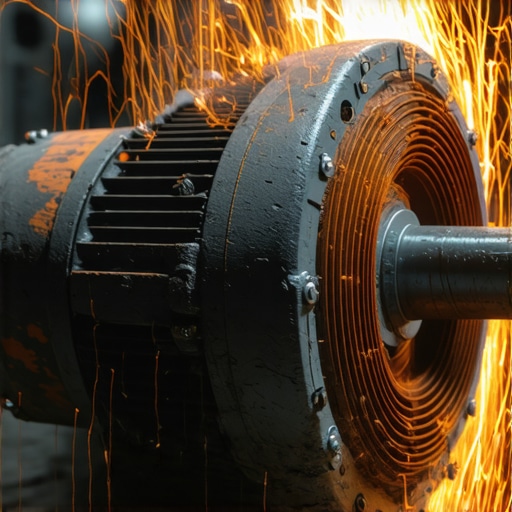
You’re sitting in your living room, the first real cold snap of the season has hit, and you hear it—a rhythmic, metallic screeching coming from the basement or the utility closet. It sounds like a bag of marbles in a blender, followed by the sharp, ozone-heavy scent of an electrical fire. You pull the panel off your furnace, and there it is: a strobe light of blue sparks dancing inside the blower housing. This isn’t just a nuisance; it’s a thermodynamic emergency. As a guy who’s spent thirty years crawling through crawlspaces and dragging manifolds across icy roofs, I can tell you that a sparking blower motor is the final scream of a system that’s been strangled for years. Most ‘Sales Techs’ will see those sparks and immediately start writing a quote for a $15,000 full system replacement. But before you sign your life away, we need to talk about the physics of why that motor is trying to commit suicide.
The Physics Lesson: You Can’t Move What You Can’t Touch
My old mentor, a man who could diagnose a bad TXV just by the vibration of the suction line, used to scream at me, ‘You can’t cool or heat what you can’t touch!’ He was obsessed with airflow, and he was right. This is why airflow matters more than horsepower. When I see a blower motor throwing sparks, I don’t just see a bad part; I see a victim of high static pressure. Most people think of their HVAC system like a fan blowing air into a room, but it’s actually a sophisticated pressure vessel. If your ductwork is too small, or if you’ve shoved a high-density MERV filter into a system designed for fiberglass mesh, that motor has to work twice as hard to move the same mass of air. This increases the amperage draw, which generates heat, which eventually melts the lacquer off the motor windings. That sparking you see? That’s the electrical current jumping the gap because the insulation has literally cooked off the copper. This is where HVAC load calculation services become the difference between a system that lasts 20 years and one that dies in five.
“The most expensive equipment in the world cannot overcome a bad duct system.” – Industry Axiom
The Forensic Diagnosis: Anatomy of an Electrical Failure
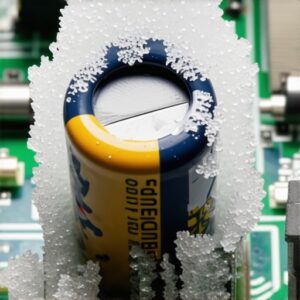
Let’s look at the mechanical anatomy. In an older Permanent Split Capacitor (PSC) motor, you have carbon brushes and a commutator. Those sparks are often ‘arcing,’ which happens when the brushes wear down to the nub or the commutator becomes pitted from excessive heat. In modern Electronically Commutated Motors (ECM), the failure is usually in the ‘Sparky’ side—the control board attached to the back of the motor. When an ECM motor fails, it’s often because the thermistor on the power module has exploded due to a voltage spike or sustained high static pressure. The motor tries to maintain a constant CFM (Cubic Feet per Minute) regardless of the resistance. If your MERV filter upgrades were done without checking the blower’s capability, the motor will ramp up its RPMs to 100% just to breathe, eventually leading to a catastrophic failure of the control board diagnostics.
Thermodynamic Zooming: Why Heat Destroys the Blower
In a gas furnace repair scenario, the blower motor isn’t just moving air for your comfort; it’s the primary cooling mechanism for the heat exchanger. When the gas burners ignite, the heat exchanger reaches temperatures that would make the metal glow if the air weren’t there to strip that heat away through convective heat transfer. If the blower motor starts to fail—evidenced by those sparks and a drop in RPM—the sensible heat builds up inside the furnace cabinet. This triggers the high-limit switch, but not before the heat has begun to bake the motor’s internal capacitors and the furnace flame sensor cleaning becomes a secondary concern to the actual melting of wire harnesses. We aren’t just talking about a dead fan; we are talking about a system that is no longer able to manage the thermal energy it produces.
“Proper airflow is the foundation of all HVAC system performance; without it, the refrigeration cycle and the combustion process both fail.” – ASHRAE Standard 62.2
The Commercial Connection: From Kitchens to Hotels
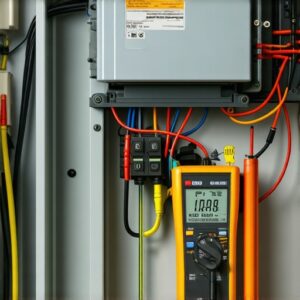
This isn’t just a residential nightmare. In my decades of service, I’ve seen this play out in high-stakes environments. Take restaurant kitchen exhaust repair. If the makeup air unit’s blower motor starts arcing, the entire kitchen becomes a vacuum, pulling grease-laden air into the dining room and putting massive stress on the RTUs (Roof Top Units). Similarly, hotel boiler services often overlook the venting blowers that exhaust combustion gases. A sparking motor in a hotel’s mechanical room is a precursor to a total system lockout, leaving 200 guests without hot water. In these environments, the ‘Juice’ (amperage) being pulled by the motors must be checked quarterly. If you wait for the sparks, you’ve already lost the battle.
The Strategy: Repair vs. Replace
When I find a sparking blower, my first move isn’t to look at the motor; it’s to look at the ‘Pookie’ (mastic) and the ductwork. Is the return air drop too small? Are the supply trunks restricted? If I just swap the motor for $800 and don’t fix the underlying airflow issue, that new motor will be throwing sparks in another two years. We need to look at emergency heating repair as a forensic investigation. Does the client need a zoning system installation to manage different thermal loads? Is the control board failing because of poor grounding or high ambient heat in the cabinet? Sometimes, a simple furnace flame sensor cleaning and a capacitor replacement can buy time, but if the windings are gone, the motor is toast. In 2025, with the transition to new refrigerants and higher efficiency standards, maintaining your existing blower is more critical than ever, especially since preventative heating maintenance is significantly cheaper than a mid-winter emergency call.
The Cold Reality of North/Cold Climates
In the Northeast or Midwest, where the furnace is the heart of the home, a sparking blower is often the result of the ‘Polar Vortex’ stress. When the unit runs for 18 hours straight, the lubrication in the sleeve bearings dries up. The friction increases, the heat rises, and the ‘Sparky’ (electrician) or tech will find that the motor has literally welded itself to the shaft. This is why choosing the best heating service matters. You need someone who checks the ‘static pressure’ across the coil, not just someone who looks for ‘dust on the blades.’ If your tech doesn’t own a manometer, he’s not an HVAC tech; he’s a parts changer.
Conclusion: Don’t Ignore the Warning Signs
If you see sparks, hear the screeching, or smell the ozone, shut the system down at the breaker immediately. Continuing to run a failing blower motor can lead to a cracked heat exchanger (due to overheating) or an electrical fire in the control board cabinet. Check your rebate application assistance options if a replacement is necessary, but always start with a diagnostic that looks at the whole system’s ‘lung capacity.’ Airflow is the lifeblood of your home’s comfort, and as I always say, if you can’t breathe, you can’t live. Your furnace is no different.