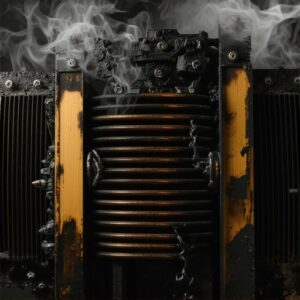
The silence of a dead furnace at 3 AM during a polar vortex is a sound every homeowner fears, but for me, it’s just another Tuesday in February. I’ve spent thirty years crawling through crawlspaces where the frost on the joists looks like cave crystals and standing on commercial rooftops where the wind chill turns hydraulic fluid into molasses. You aren’t just looking for a ‘quick fix’ when the mercury drops to ten below; you’re looking for a way to stop the thermal energy from escaping your sanctuary before your plumbing turns into a series of jagged ice-grenades. When the heat fails, time is your primary enemy, but physics is the tool you use to fight back. Before the ‘Sparky’ or the ‘Tin Knocker’ arrives, you have a job to do. This isn’t about comfort anymore; it’s about structural survival.
“The most expensive equipment in the world cannot overcome a bad duct system or a neglected thermal envelope during a design-load event.” – Industry Axiom
The Physics of the Freeze: Why Pipes Actually Burst
Most folks think a pipe bursts because the ice expands and pushes outward against the copper or PEX. That’s only half the story. As a Master Tech, I’ve seen thousands of flooded basements, and the truth is more mechanical. When ice forms in a pipe, it creates a blockage. As that ice plug grows, it pushes the liquid water toward the closed faucet, creating massive hydrostatic pressure. It’s that pressure—not the ice itself—that causes the pipe to rupture at its weakest point, usually a joint or a thinned-out bend. This is why programmable thermostat programming is your first line of defense. You don’t use ‘setback’ periods when it’s below twenty degrees outside. You keep that house at a constant 68°F minimum. If you’re waiting for a furnace ignition repair, you need to understand the concept of the ‘Heat of Fusion.’ Water releases a tiny bit of energy as it freezes; by keeping your faucets at a slow drip, you are constantly bringing in ‘warmer’ water from the underground main (which stays around 50°F) to replace the water losing its sensible heat to the freezing air in your walls.
The Forensic Diagnosis: Why Your Furnace Quit
My old mentor used to scream at me, ‘You can’t cool what you can’t touch, and you can’t heat what you can’t vent!’ This is the core of the furnace ignition repair struggle. Most ‘no-heat’ calls I run in the dead of winter aren’t because the heat exchanger cracked (though that’s the dangerous one); it’s because the pressure switch won’t close. See, your high-efficiency furnace produces acidic condensate. If that drain line freezes—common in unconditioned attics or rim joists—the water backs up, the inducer motor can’t pull a vacuum, and the whole system locks out. I once followed a ‘Sales Tech’ who told a family they needed a $12,000 replacement because of a ‘dead control board.’ I walked in, cleared a literal ice cube out of the 3/4-inch PVC drain line, and the flame lit right up. That’s the difference between an Airflow Architect and a guy looking for a commission. You need to check your exhaust vents. If snow or ice blocks that PVC pipe sticking out the side of your house, the carbon monoxide detector installation you (hopefully) performed is the only thing that might save your life as the system tries to recycle its own flue gases.
The Commercial Scale: From School Boilers to Warehouses
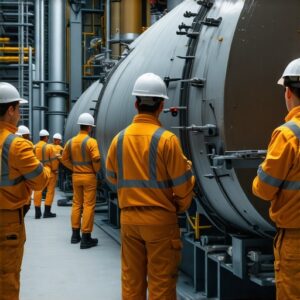
In the world of school boiler maintenance or warehouse heating solutions, the stakes are even higher. We’re talking about massive thermal masses. In a school, if the hydronic loop freezes, you’re looking at millions in damage. This is where smart building management systems come into play. These systems monitor the ‘Delta T’ (temperature difference) across the heat exchangers in real-time. If the return water temp drops below a certain threshold, the pumps ramp up to prevent stagnation. In a warehouse, we often see dual fuel heat pump systems struggling because the technician didn’t set the balance point correctly. When it’s too cold for the ‘gas’ (refrigerant) to effectively move heat from the outdoor air, the system should automatically kick over to the gas furnace or electric strips. If that hand-off fails, you’re left with a block of ice outside and a freezing crew inside. For those in drier climates, you’ve likely shut down your swamp cooler maintenance for the year, but if you didn’t blow out the water lines, those small copper feeds will snap like dry twigs the moment the first hard freeze hits.
Strategic Survival: What to Do While You Wait
If you’re sitting there in a parka waiting for the van to pull into the driveway, here is your checklist. First, open every cabinet door under a sink. You need the ambient heat of the room to reach the plumbing. Second, find your main water shut-off. If a pipe does go, you need to be able to kill the flow in seconds, not minutes. Third, if you have a heat recovery ventilator or energy recovery ventilators, shut them down if they don’t have an active defrost cycle; they can sometimes bring in too much sub-zero air and overwhelm a struggling backup heat source. Check your top hvac repair strategies to extend your systems life for long-term fixes, but for right now, keep the air moving. Airflow is the vehicle that carries the heat. If you have a space heater, do NOT point it at a thermostat; you’ll trick the system into thinking it’s warm while the rest of the house freezes. Instead, aim it toward the coldest exterior wall where the plumbing runs.
“Carbon monoxide is the silent ghost of a failed heat exchanger; never ignore the smell of ‘dirty socks’ or a yellow, flickering flame.” – EPA Section 608 Safety Manual
The Long Game: Upgrading for the Next Polar Vortex
Once the crisis is over, don’t just go back to sleep. You need to look at heat pump solutions for efficient home comfort in 2025 that include cold-climate compressors capable of 100% capacity down to 5°F. You should also be choosing the best heating service expert tips for 2025 to find a tech who actually understands static pressure and ‘Pookie’ application. If your ductwork is leaking 30% of your heated air into the attic, no furnace on earth is going to keep your pipes from freezing when the real cold hits. You need a tech who looks at the house as a system, not just a box that blows hot air. I’ve seen too many people spend thousands on smart building management for their homes only to realize that the ‘smart’ thermostat can’t fix a ‘dumb’ duct design. Invest in insulation, seal your rim joists with spray foam, and ensure your carbon monoxide detector installation is up to code. That’s how you sleep through the next storm instead of shivering over a frozen copper pipe with a hair dryer.