You hear that? It is 3:00 AM in the middle of a January cold snap, and instead of the steady hum of your furnace, you hear a rhythmic, metallic clicking. It is the sound of a system trying to breathe, trying to ignite, and failing. As a technician who has spent thirty years crawling through spider-infested crawlspaces and baking in attics, I can tell you that a flickering pilot light is rarely just a ‘stubborn flame.’ It is a symptom of a mechanical struggle. My old mentor, a grizzly guy named Miller who smelled like pipe tobacco and PVC glue, used to scream at me, ‘You can’t burn what you can’t feed! This is why airflow matters more than horsepower.’ He was right. If the physics of the combustion air or the integrity of the sensor is compromised, the system shuts down to prevent your house from becoming a giant kiln.
The Mechanical Anatomy: Why the Flame Dies
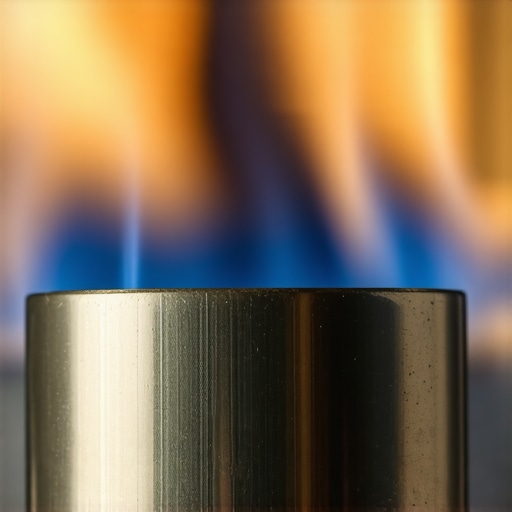
In the trade, we do not just look at a flame; we look at the thermodynamics of the ignition sequence. Your pilot light is the sentinel. In older systems, it sits there, heating a thermocouple—a simple device that uses the Seebeck effect to generate a tiny amount of millivoltage. This voltage tells the gas valve it is safe to stay open. If that flame flickers, the voltage drops, and the valve slams shut. It is a fail-safe, not a nuisance. When we talk about furnace flame sensor cleaning, we are usually dealing with more modern ‘hot surface ignition’ or ‘spark-to-pilot’ systems. That little stainless steel rod gets coated in carbon or silica. The flame is there, but the sensor can’t ‘see’ it because the ions can’t bridge the gap through the soot. A ‘Sales Tech’ will tell you that you need a whole new board for $1,200. I’ll tell you that five minutes with a piece of Scotch-Brite usually fixes the ‘ghost’ in the machine.
“Any combustion appliance shall be provided with a supply of combustion, ventilation, and dilution air.” – NFPA 54 / ANSI Z223.1 National Fuel Gas Code
If your pilot is dancing like it is at a disco, you likely have a draft issue. This is where HVAC duct sealing comes into play. You might think ductwork only carries heat to your rooms, but the return side of the house is a giant vacuum. If you have massive leaks in your return ducts near the furnace, you can actually create a pressure imbalance that pulls air back down the flue. This ‘backdrafting’ snuffs out your pilot light and, more dangerously, can dump carbon monoxide into your living space. This is why I always tell homeowners that preventative heating maintenance is not about a checklist; it is about ensuring the pressure in your mechanical room stays neutral. If you are still running an old atmospheric burner, it might be time to look into an oil to gas conversion or, better yet, the high-efficiency hyper-heat heat pumps that are taking over the North. These systems do not rely on a flickering flame; they move heat through phase-change physics even when it is -15°F outside.
The Climate Crisis: Cold Air and Combustion
In the frozen Northeast and the windy Chicago corridors, we deal with ‘Flame Rollout.’ When the heat exchanger is cracked—a death sentence for a furnace—the air from the blower motor pushes through those cracks and disrupts the burner flame. It is a terrifying sight. The flames lick out of the cabinet toward the commercial furnace repair tech. If your pilot keeps going out, I’m looking for these cracks first. We also see issues with steam humidifiers. People love the comfort of moist air, but if they are installed improperly, that moisture can condense on the ignition assembly, leading to corrosion and ‘no-heat’ calls. If your system is old and tired, switching to a heat pump or exploring biomass boiler services for rural properties can eliminate the pilot light headache entirely. Modern energy recovery ventilators can also help balance that internal pressure so your furnace doesn’t have to fight for oxygen.
“The most expensive equipment in the world cannot overcome a bad duct system.” – Industry Axiom
Repair vs. Replace: The $500 Gamble
When I find a pilot assembly that is gunked up, the repair is usually under $300. But if that pilot is flickering because the gas valve is failing or the heat exchanger is compromised, you are looking at a $1,500+ bill. At that point, you are throwing good money after bad. I tell my clients to check out top HVAC repair strategies to extend your systems life, but there is a limit. If your unit is over 15 years old and the ‘gas’ (refrigerant) is the old R-22 or even R-410A, the parts are becoming gold-plated in price. You might be better off looking into heat pump solutions for efficient home comfort in 2025. These new systems are ‘smart’ enough to tell you exactly why they aren’t working, rather than leaving you in the dark with a flickering flame. If you’re tired of the 3 AM ‘click-click-click,’ consider preventative heating maintenance or signing up for priority service memberships. It is the difference between a $20 cleaning and an $8,000 emergency replacement on Christmas Eve. If you need a pro who knows the difference between a thermocouple and a thermal couple, you should contact us before the next blizzard hits. Don’t let a ‘Sales Tech’ sell you the moon when you just need a clean sensor and some ‘Pookie’ on your ductwork joints.