The silence is the first thing you notice on a November morning. It is a heavy, unnatural quiet that tells you the furnace didn’t kick on at 4:00 AM like it was supposed to. You roll out of bed, floorboards freezing, and head to the thermostat. You crank it up to 75, hear a faint click from the relay services, and then… nothing. No roar of the burner, no hum of the blower. Just the smell of scorched dust and the realization that your heating system has checked out exactly when you need it most. As a technician who has spent three decades dragging a tool bag through crawl spaces, I can tell you this isn’t bad luck; it’s physics. My old mentor, a man who smelled perpetually of pipe dope and R-22, used to scream at me, ‘You can’t heat what you can’t touch! If the air doesn’t move, the heat doesn’t happen!’ This is why airflow matters more than horsepower, and why that tiny silver cylinder—the capacitor—is the most common casualty of the first cold snap.
“The most expensive equipment in the world cannot overcome a bad duct system.” – Industry Axiom
The Physics of the Freeze: Why Capacitors Quit
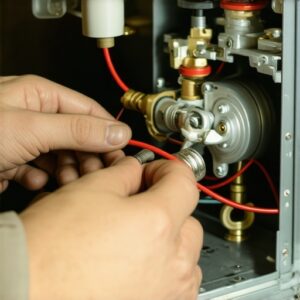
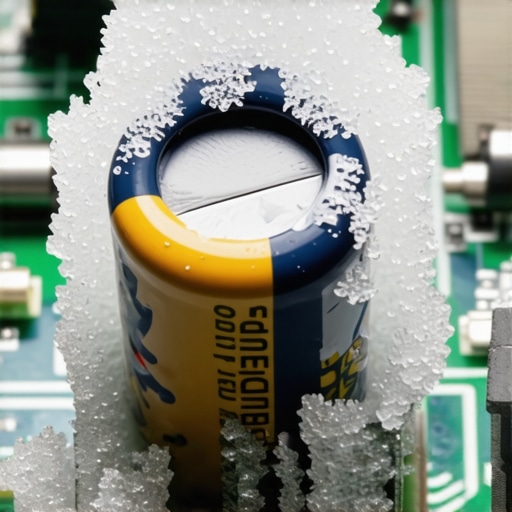
To understand why capacitors die when the mercury drops, we have to look at system performance testing and the concept of ‘stiction.’ In the HVAC world, a capacitor is essentially a temporary battery that provides the ‘kick’ needed to start a motor. It creates a phase shift in the electrical current, allowing the motor to overcome inertia. During the summer, your blower motor is running constantly. The lubricants are warm and viscous. But when the unit sits idle during the mild autumn weeks, those lubricants thicken. When that first cold snap hits, the motor requires significantly more torque to break free and start spinning. If your capacitor is already weak—say, it’s rated for 35 microfarads (µF) but is only pushing 31µF—it simply won’t have the ‘juice’ to overcome that cold-start friction. The motor hums, overheats, and eventually trips the thermal overload. This is where furnace repair services become a necessity rather than a suggestion. You aren’t just paying for a part; you’re paying for the diagnostic expertise to know that a $50 capacitor is the culprit, not a $1,200 blower motor. A ‘Sales Tech’ will see that stalled motor and immediately try to sell you a whole new system, but a real tin knocker knows better.
Thermodynamic Zooming: Heat Transfer and Airflow
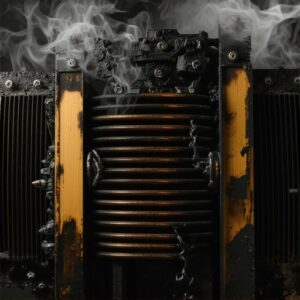
In a cold climate like the Northeast or Chicago, the furnace isn’t just a box that makes fire; it’s a heat exchange machine. When the burner ignites, the heat exchanger reaches temperatures that would make a steak house broiler jealous. We need the blower motor to pull cold return air across those metal cells to strip the heat away and push it into your living room. This is the essence of crawl space heating solutions. If the capacitor fails and the blower doesn’t start, the heat exchanger temperature skyrockets. This triggers the limit switch replacement cycle. The limit switch is a safety device that kills the gas valve if things get too hot. When these switches cycle too often because of poor airflow or weak capacitors, they eventually fail ‘open,’ leaving you in the cold. It’s a cascading failure of mechanical logic. I’ve seen homeowners try to bypass these switches—never do that unless you want a visit from the fire department. If you’re dealing with a system that feels ‘lethargic,’ it might be time for top hvac repair strategies to extend your systems life.
The Propane and Chimney Factor
For those in rural areas, propane conversion services add another layer of complexity. Propane is denser and carries more BTUs than natural gas, meaning the heat exchanger gets hotter, faster. This puts even more pressure on the blower motor to activate immediately. Furthermore, chimney liner installation is critical for older homes transitioning to high-efficiency furnaces. Modern furnaces extract so much heat from the exhaust that the remaining flue gases are cool and acidic. Without a proper liner, that moisture condenses inside your chimney, eating the brick from the inside out. It’s the kind of ‘hidden’ failure that leads to carbon monoxide leaks—the silent killer of the HVAC world. During any thermostat installation or system overhaul, we check the venting first. You can have the fanciest programmable thermostat programming in the world, but if your flue is obstructed, the system is a paperweight.
“Ventilation systems shall be designed to provide the required outdoor air-flow rates.” – ASHRAE Standard 62.1
Advanced Comfort: ERVs and Precision Control
In tightly sealed modern homes, we often see energy recovery ventilators (ERVs) installed to manage air quality. These units swap the heat from outgoing stale air with incoming fresh air. During a cold snap, an ERV ensures you aren’t bringing in 10-degree air directly. It’s about managing the ‘latent’ and ‘sensible’ heat. When we perform preventative heating maintenance, we check the ERV cores to ensure they aren’t frosted over. A well-tuned system is a symphony of moving parts, and the conductor is often a properly configured thermostat. If you’re struggling with high bills, choosing the best heating service expert tips for 2025 can help you navigate the complexity of variable-speed equipment and A2L refrigerant transitions. We don’t just ‘top off the gas’; we look at the whole house as a pressurized vessel. We use ‘pookie’ (mastic) to seal duct leaks because tape is for Christmas presents, not for high-velocity airflow. If you’re tired of the cold-swamp feeling in your home, it’s likely an airflow issue, not a ‘horsepower’ issue. For more information on keeping your home efficient, check out our guide on preventative heating maintenance a guide for homeowners in 2025 or contact us directly to get a real tech out to your property. Don’t let a ‘Sales Tech’ talk you into a $15,000 unit when your capacitor just needs a little help from a pro. Finally, remember that even if you have a heat pump, the cold snap is your enemy; you might need to look into heat pump solutions for efficient home comfort in 2025 to ensure your backup heat strips are ready to take the load when the compressor can’t keep up with the physics of the frost.