The Sound of a Silent Furnace at 2 AM
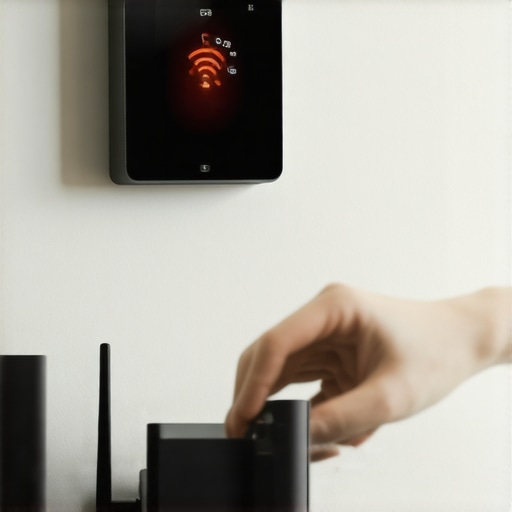
There is a specific kind of silence that wakes an HVAC man up in the middle of a January night. It is not the peaceful kind; it is the heavy, oppressive silence of a dead blower motor and a cold heat exchanger. In my thirty years of crawling through spider-infested crawlspaces and balancing on icy rooftops, I have learned that the most advanced technology is often the most fragile link in the chain. You bought a smart thermostat to ‘elevate’ your home—actually, let’s not use that corporate fluff. You bought it to save a few bucks on the gas bill and see your temps from your phone. But when that ‘Searching for Network’ spinning wheel of death appears, your $10,000 furnace becomes a very expensive paperweight. I have seen homeowners shivering in parkas inside their own living rooms because a 2.4 GHz signal decided to drop out during a polar vortex. This isn’t just about ‘connectivity’; it is about thermodynamics. If the brain can’t talk to the heart, the body freezes. Whether you are dealing with a preventative heating maintenance issue or a digital glitch, the result is the same: no heat.
The Sales Tech Scam: A $15,000 Connectivity Glitch
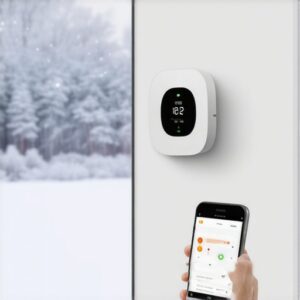
Let me tell you a story about why I hate ‘Sales Techs.’ Last winter, I followed a guy from a big-box franchise who had just quoted a retired schoolteacher fifteen grand for a full system replacement—gas furnace, coil, the works. He told her the ‘main logic board’ was fried because the thermostat wouldn’t stay online. I walked in, looked at the wall, and saw a Nest thermostat hanging on by its fingernails. No C-wire. The ‘Sales Tech’ didn’t bother to check the power draw. These smart pucks try to ‘power steal’ from the R and W wires to charge their internal batteries. In a cold climate like ours, when the furnace is running long cycles to combat 10-degree weather, the thermostat can’t find enough ‘juice’ to keep its Wi-Fi chip alive. It prioritizes the heating relay and kills the internet connection to survive. I spent twenty minutes pulling a new five-wire bundle and another ten on a heating service expert diagnostic. Total cost? A fraction of that scam quote. The unit wasn’t dead; it was just starving for 24 volts.
“Controls shall be capable of maintaining the temperature and humidity conditions required for the specific application.” – ASHRAE Standard 55
The Anatomy of a Disconnection: Why the ‘Brain’ Goes Dark
When we talk about HVAC repair strategies, we have to look at the ‘Common’ wire, or the C-wire. This is the return path for the 24V transformer. Old-school mercury bulbs didn’t need it. But your smart thermostat is basically a tiny smartphone on your wall. If it loses connection, it’s usually one of three things: Power Starvation, Signal Interference, or ‘Sparky’ Interference. In northern climates, we see a lot of multi-family heating upgrades where the original ‘Tin Knocker’ (duct guy) didn’t account for the interference caused by massive steel supports or foil-backed insulation. That insulation acts like a Faraday cage. Your router might be twenty feet away, but if there is a HEPA filter system with a heavy-duty blower motor and steel casing in the way, that signal is going to bounce like a rubber ball.
Thermodynamic Zooming: The Risk of Short Cycling
Why does a dropped Wi-Fi signal matter for your heat pump solutions? Because smart thermostats use ‘predictive algorithms’ to manage latent heat. In the winter, your furnace doesn’t just heat the air; it heats the thermal mass of your home—the walls, the furniture, the floor. If the thermostat loses its mind and starts ‘short cycling’ (turning on and off every five minutes because it’s rebooting), the heat exchanger never reaches its steady-state efficiency. You end up with ‘flame rollout’ risks or, worse, condensation in the flue pipe. A gas furnace repair often starts because the thermostat didn’t tell the inducer motor to run long enough to vent those acidic combustion gases. You end up with a rusted-out flue pipe installation that could have been avoided with a stable connection.
The Forensic Diagnosis: How to Restore the Link
First, check the ‘juice.’ Use a multimeter to see if you have a steady 24V between R and C at the thermostat base. If you don’t have a C-wire, stop trying to use an adapter and hire a pro to pull a new wire. Second, look at the frequency. Most HVAC equipment hates 5GHz Wi-Fi; it wants the long-range, slow-and-steady 2.4GHz band. Third, check for ‘Pookie’ (mastic) or dust buildup inside the unit. If your HEPA filter systems are clogged, the internal temp of the furnace rises, which can trigger a limit switch. When that limit switch trips, it cuts power to the thermostat to save the house from a fire. Your ‘lost connection’ might actually be a 24/7 heating emergency response waiting to happen. If you’re seeing oil to gas conversion units acting up, the grounding is often the culprit. A ‘Sparky’ might have missed a ground wire, creating electrical ‘noise’ that kills the Wi-Fi chip’s ability to talk to the cloud.
“The most expensive equipment in the world cannot overcome a bad control system.” – Industry Axiom
The Maintenance Manifesto
If you’re tired of resetting your router just to turn up the heat, it’s time to look at the bigger picture. Connectivity issues are often the first sign that your transformer is weakening or your contactor is pitting. This is why HVAC maintenance plans are critical. A real tech—not a salesman in a clean uniform—will check the milliamp draw of your thermostat and the signal strength at the wall plate. Don’t let a $200 gadget lead to a $1,000 emergency repair. If you’re struggling, contact us before you start ripping wires out of the wall. Physics doesn’t care about your app’s user interface; it only cares about the flow of electrons and the transfer of heat.