The Sound of a Frozen Nightmare
There is a specific sound that a furnace makes when it dies in the dead of a Chicago-style winter. It is not a bang. It is not a crash. It is the absolute, soul-crushing silence of a frozen house. As an HVAC tech who has spent three decades dragging my tools through knee-deep snow and into crawlspaces that would make a claustrophobic person faint, I can tell you that silence is the most expensive sound you will ever hear. In my world, we do not care about ‘smart features’ because they look cool on a wall; we care about them because they are the only thing standing between you and a $50,000 insurance claim for burst pipes while you are away on vacation.
The $12,000 ‘Cracked Heat Exchanger’ That Wasn’t
I remember following a ‘Sales Tech’—you know the type, clean uniform, more hair gel than brain cells, and a quota for new unit sales—who had just quoted a retired schoolteacher $12,000 for a new variable speed furnace service because he claimed her heat exchanger was ‘dangerously cracked.’ The lady was terrified. When I arrived for a second opinion, I did not even pull my combustion analyzer out yet. I looked at her thermostat. It was a 20-year-old mercury bubble that was sticking. The furnace was short-cycling because the old ‘sparky’ who wired it decades ago used 20-gauge wire that was brittle. I replaced the thermostat with a high-end WiFi unit, checked the gas pressure, and performed a real system performance testing. The heat exchanger was pristine. Total bill? Under $400. That is why I hate Sales Techs, and that is why you need to understand that the brain of your heating service is the thermostat, not just the box in the basement.
“Design and selection of controls shall be based on the thermal characteristics of the building and the specific heating equipment to ensure efficient operation.” – ACCA Manual S
Why Remote Access is the King of the North
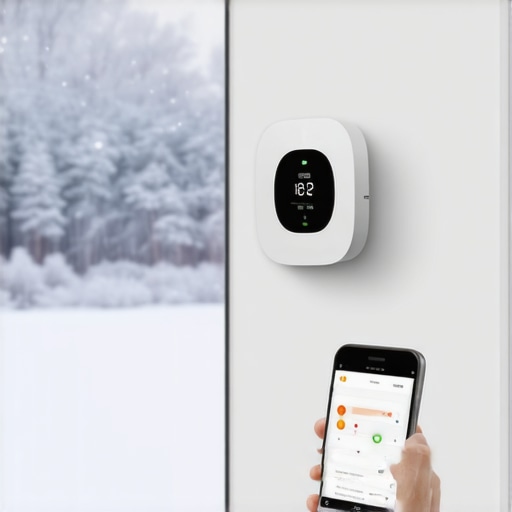
In a cold climate, WiFi thermostat integration is not a luxury; it is a diagnostic tool. When the temperature drops to -20°F, your furnace has to fight the laws of thermodynamics to maintain what we call ‘Sensible Heat.’ If you are sitting on a beach in Florida and your furnace fails, you need to know within minutes. By the time your neighbor sees the icicles forming on your window sills, the damage is done. A proper remote access system allows you to monitor the ‘Heat Rise’ and ensures your variable speed furnace services are actually delivering the CFM (Cubic Feet per Minute) required to keep the secondary heat exchanger from freezing up with condensate. If your furnace is high-efficiency (90%+), it produces water. If the heat goes out, that water freezes in the trap and cracks the inducer housing. A smart thermostat tells you before that happens.
The Top 3 Thermostats for Freezing Latitudes
Not all smart thermostats are built for the brutal realities of a northern winter. I have seen ‘sleek’ models from Silicon Valley companies fail because they try to ‘power steal’ from the control board, which causes the contactor to chatter like a set of teeth in a blizzard. Here are the three I actually trust when the ‘gas’ is flowing and the wind is howling.
1. The Ecobee Smart Premium: The Airflow Architect’s Choice
The Ecobee is the only one I trust for zoning system installation because of its remote sensors. In a cold climate, the ‘Tin Knocker’ (duct guy) usually puts the thermostat in the hallway, but the master bedroom is 10 degrees colder because it is over a garage. The Ecobee allows you to average those temperatures. More importantly, it handles bypass humidifier repair and integration better than any other. In winter, your house is as dry as a desert. If you do not control the latent heat (humidity), 70°F feels like 64°F. The Ecobee can kick on the humidifier without needing a separate ‘sparky’ to wire it in.
2. The Honeywell Home T10 Pro: The Reliability King
Honeywell has been in the game since before your grandfather was born. The T10 Pro uses RedLINK technology. If your WiFi goes down because of a snowstorm, the thermostat and its sensors still talk to each other. This is critical for heating service reliability. It also handles dual-fuel setups—where you have a heat pump and a gas furnace—with a logic engine that prevents the heat pump from running when it is too cold for the R-454B refrigerant transition services to be effective. It is the ‘workhorse’ of the industry.
3. The Google Nest Learning Thermostat (With a C-Wire)
I have a love-hate relationship with the Nest. It is beautiful, but it is finicky. If you install this without a ‘Common Wire’ (C-wire), it will eventually kill your furnace control board. However, for ventless gas heater services or simple boiler systems, its ‘Farsight’ feature is great. It knows when you are home and when you are away, which is vital for HVAC maintenance plans aimed at reducing wear and tear on the blower motor. If you want a Nest, make sure your tech does a system performance testing to ensure the voltage is steady.
“The burner system shall be designed so that the flame does not impinge on the heat exchanger surfaces to prevent premature failure and carbon monoxide leakage.” – ASHRAE Standards
The Physics of the ‘C-Wire’ and Why it Matters
Most homeowners think a thermostat is just a switch. It is not. It is a computer. Computers need constant power. In old systems, the thermostat only got power when the furnace was running. In a cold climate, if the thermostat loses power and shuts off, your furnace stops. This is why WiFi thermostat integration requires a dedicated 24V power supply. If your ‘Tin Knocker’ did not pull a 5-wire cable, you are asking for trouble. We often see ‘power stealing’ thermostats cause the furnace to ‘limit out,’ which is a fancy way of saying the furnace thinks it is overheating because the thermostat is messing with the signal. This leads to emergency calls and rebate application assistance needs because you have fried your board.
The Transition to R-454B and Your Controls
By 2025, the industry is moving away from R-410A to R-454B. These new refrigerants are ‘mildly flammable’ (A2L). This means your thermostat is going to become even more important. New systems will have sensors that talk to the thermostat to shut the whole thing down if a leak is detected. If you are planning for heat pump solutions for efficient home comfort in 2025, you need a thermostat that can handle these new safety protocols. This is not just about comfort anymore; it is about code compliance.
The Role of Humidity in Cold Climate Comfort
You can’t talk about thermostats without talking about bypass humidifier repair. In a cold climate, the air is bone-dry. Dry air pulls moisture out of your skin, making you feel colder than you actually are. A smart thermostat with a built-in humidistat can modulate your furnace blower to ensure that the air passing through the humidifier is at the optimal velocity. If you are looking at choosing the best heating service expert tips for 2025, always ask if they calibrate the thermostat to the humidifier. If they don’t, they are just ‘parts changers,’ not technicians.
Preventative Maintenance: The Thermostat’s Secret Weapon
A smart thermostat is the best way to manage preventative heating maintenance. Most of these units will track your ‘Run Time.’ If the unit runs for 12 hours straight and the temp only rises 2 degrees, it will send an alert to your phone. This is usually the first sign of a dirty flame sensor or a clogged filter. Getting ahead of this is the key to top HVAC repair strategies to extend your systems life. Do not wait for the ‘silence’ I talked about earlier. If you need help setting up your remote monitoring, you should contact us before the first frost hits.