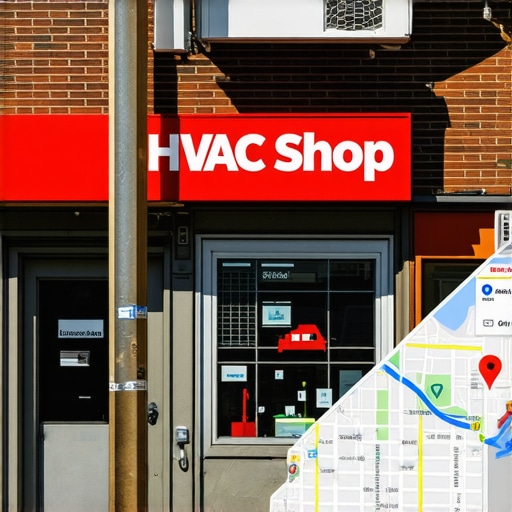
Why Your HVAC Shop is Still Missing from the Local Map Pack Top 3
Imagine this: It is the hottest week of July. Your phone should be ringing off the hook with homeowners desperate for AC repair. You know your team is the best in town, your trucks are clean, and your technicians are NATE-certified. Yet, when you search for “AC repair near me,” your business is nowhere to be found. Instead, the “Local Map Pack” – those top three spots on Google Maps that appear before the organic search results – is occupied by a competitor with half your experience and a third of your reviews.
For many HVAC business owners, this is a daily reality. Being “invisible” on Google Maps isn’t just a minor annoyance; it is a massive drain on your revenue. In the high-stakes world of home services, the Map Pack is where the majority of clicks happen. If you aren’t in those top three spots, you are essentially handing your leads to the competition. Implementing a robust google business profile seo strategy is no longer optional; it is the lifeline of a modern mechanical contracting business. In fact, industry data shows that HVAC companies that master local SEO can increase their organic traffic by up to 453%, leading to a consistent flow of high-intent calls without the skyrocketing costs of PPC ads.
The “Category Catastrophe”: Why Your Primary Category is Killing Your Rank
One of the most common reasons an HVAC shop fails to rank in google map pack results is a fundamental misunderstanding of Google’s category system. When you set up your Google Business Profile (GBP), you are asked to select a “Primary Category.” Many owners quickly select “HVAC Contractor” and move on. While that isn’t technically wrong, it might be the reason you are losing to a more specialized competitor.
Google’s algorithm places immense weight on the Primary Category. If a user searches for “furnace repair,” Google looks for businesses whose Primary Category most closely matches that specific intent. If your primary category is “Plumber” because you handle both HVAC and plumbing, you will almost always lose the “furnace repair” ranking to a competitor whose primary category is “Heating Contractor.”
To achieve google business profile optimization, you must be strategic. If it is peak summer, “Air Conditioning Contractor” might be your most valuable primary category. In the winter, “Heating Contractor” takes the lead. While you can add up to nine secondary categories, the primary one carries about 75% of the ranking weight. You must also ensure your secondary categories cover the full spectrum of your services, such as “Air Conditioning Repair Service,” “Furnace Repair Service,” and “Mechanical Contractor.” If you are unsure which category is dominating your local market, using a google business profile audit tool can reveal exactly what your top-ranking competitors are using to stay ahead.
NAP Consistency and the “Service Area” Trap
Name, Address, and Phone number (NAP) consistency is the bedrock of local search. If your business is listed as “Smith Heating & Air” on Google, but “Smith HVAC Services” on Yelp, Google gets “confused.” In the world of search algorithms, confusion leads to lower rankings. Inconsistent NAP data is consistently cited as one of the top 10 SEO mistakes HVAC contractors make.
However, for HVAC businesses, there is a more complex issue: the Service Area Business (SAB) trap. Because many HVAC owners operate out of their homes or a warehouse that doesn’t accept walk-in customers, they choose to “hide” their address on their GBP. While this is a Google-sanctioned practice, it creates a “proximity” problem. Google ranks businesses based on their distance from the searcher. When you hide your address, Google has a harder time pinpointing your “centroid,” often resulting in a smaller visibility radius.
To combat this, you must define your Service Areas precisely. Don’t just select “USA” or an entire state. Select specific counties and major zip codes. This tells Google exactly where your trucks are rolling. This geographical precision is vital, much like how Manual J Savings depend on specific local climate data and home orientation; your SEO depends on the specific “climate” of your local search radius. If you are struggling to see where your visibility ends, a google maps rank tracker can show you a “heat map” of your rankings across different neighborhoods, showing you exactly where your “Service Area” is actually working and where it is failing.
The Review Gap: It’s Not Just About the Stars
Every HVAC owner knows reviews are important, but most don’t understand the *mechanics* of how reviews drive google maps seo. It is a common misconception that having a 4.9-star rating is enough. In reality, Google looks at three specific metrics: recency, velocity, and keywords.
- Recency: A hundred five-star reviews from 2021 are practically invisible to today’s algorithm. Google wants to see that you are providing great service *now*. If your last review was three months ago, your ranking will likely dip.
- Velocity: This is the speed at which you acquire reviews. A steady stream of 2-3 reviews per week is much better than getting 20 reviews in one day and then none for a month.
- Keywords in Reviews: This is the “secret sauce.” When a customer leaves a review saying, “Great job,” it helps your reputation but does little for your SEO. However, if a customer writes, “The best AC installation in Springfield, they fixed my ductless mini-split perfectly,” Google associates your business with those specific high-value keywords.
To rank higher on google maps, you need a proactive google review strategy. Train your technicians to ask for reviews at the kitchen table before they leave the house. Ask them to encourage the customer to mention the specific service performed. This creates a natural keyword density that signals to Google that you are an authority in specific niches, such as heat pump repair or boiler maintenance. For more on how these listings translate to revenue, see Why Most Local HVAC Listings Fail to Convert Searchers into Customers.
Technical Signals: Website Speed & Hyperlocal Content
Your Google Business Profile does not exist in a vacuum. It is tethered to your website. If your website is slow, not mobile-friendly, or lacks local relevance, your GBP ranking will suffer. This is often The Real Reason Your HVAC Business Isn’t Getting Clicks from Local Maps.
To improve google maps ranking, your website must reinforce your local authority. This is achieved through “City Pages” and “Service Pages.” If you want to rank in the Map Pack for a suburb 15 miles away, you need a dedicated page on your website for that suburb. This page shouldn’t just be a copy-paste of your homepage. It should include local landmarks, local weather considerations, and perhaps even testimonials from customers in that specific neighborhood.
Furthermore, Google looks at the “linked” page on your GBP. Many contractors link their GBP to their homepage. However, if you have a specialized landing page for “Emergency AC Repair,” linking your “Air Conditioning Contractor” profile to that specific page can sometimes provide a significant ranking boost. Technical health is paramount; using local seo software to audit your site for broken links, slow load times, and missing header tags is a critical step in a professional google maps ranking service. When your site is technically sound, it makes it easier for Google to trust your business as a top recommendation, especially when users are Choosing the Best Heating Service for their needs.
Advanced Tactics: GBP Posts, Services, and Products
Most HVAC shops treat their GBP as a “set it and forget it” profile. To rank google business profile listings in competitive markets, you must treat it like a social media feed. Google provides several features that most contractors ignore:
GBP Posts
You should be posting to your GBP at least once or twice a week. These posts can be “Offers” (e.g., $50 off a seasonal tune-up), “What’s New” (e.g., a photo of a new van or a completed install), or “Events.” These posts signal to Google that your business is active and engaged. They also increase the “real estate” your listing takes up on a mobile screen, pushing competitors further down.
The Services Menu
In the “Services” section of your GBP, Google allows you to list every single thing you do. Don’t just write “HVAC.” Add “Thermostat Installation,” “Indoor Air Quality Testing,” “UV Light Air Purifiers,” and “Emergency Furnace Repair.” Each of these acts as a secondary signal for local map pack seo. If you are looking for ways to boost specific equipment sales, check out 7 Fast Moves to Help Your Heat Pump Service Rank Higher on Google Maps.
The Products Section
While HVAC is a service industry, you can use the “Products” section to showcase the brands you carry, such as Trane, Carrier, or Lennox systems. This adds visual appeal to your listing and provides more opportunities for keyword integration. By utilizing these advanced features, you are participating in active google business profile management, which is a key differentiator between the top 3 and everyone else.
Tracking Success: Beyond the “Vibe Check”
How do you know if your local search optimization is actually working? Many owners rely on a “vibe check” – asking the office manager if the phones seem busy. This is a mistake. To truly scale, you need data. Professional HVAC SEO typically ranges from $800 to $2,000 per month, and you need to see the ROI on that investment.
Within your Google Business Profile manager, you have access to “Insights.” You should be tracking three specific KPIs:
- Calls: The number of people who clicked the “Call” button directly from your Map listing.
- Direction Requests: Even for SABs, this shows intent and interest in your service area.
- Website Clicks: How many people visited your site to learn more after seeing your Map Pack entry.
It is important to remember that local seo for hvac is a marathon, not a sprint. While some technical fixes can yield results in weeks, moving from page 2 to the Top 3 of the Map Pack usually takes 1 to 3 months of consistent effort. For those who want to see exactly where they stand against the competition in real-time, utilizing SEO Viper Tools can provide the deep-dive analytics needed to pivot your strategy when a competitor tries to leapfrog your position.
Consider the case of a New York-based HVAC business that struggled for years to break into the local top 3. By focusing on category optimization and a rigorous review velocity program, they reached a point of consistent, high-quality lead generation within 5 months, eventually reducing their reliance on expensive lead-buying platforms by 60%.
Conclusion: Dominating Your Local Market
Ranking in the Local Map Pack isn’t about one single “trick.” It is the result of a comprehensive, technical approach to google business profile seo. From ensuring your Primary Category is perfectly aligned with seasonal demand to maintaining a relentless review strategy and a high-performance website, every piece of the puzzle matters.
If your HVAC shop is currently invisible on Google Maps, the cost of inaction is growing every day. Your competitors are currently claiming the leads that should be yours. It’s time to stop guessing and start implementing a proven local SEO framework. Whether you choose to handle this in-house or partner with a professional agency like FMS Online Marketing – a full-service digital marketing agency specializing in local SEO and social media consulting for contractors – the goal remains the same: dominate the Map Pack and own your local market. Audit your profile today and take the first step toward becoming the most visible HVAC provider in your city.