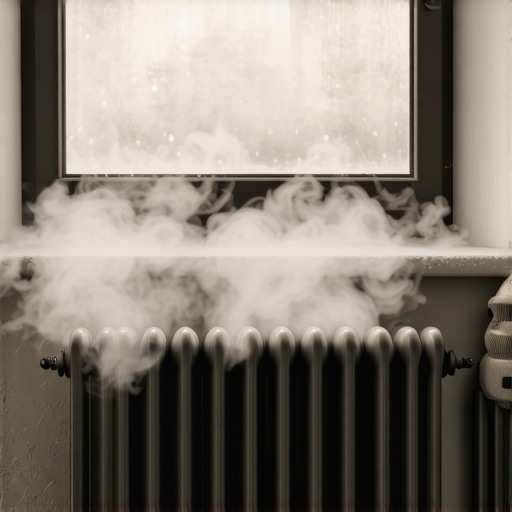
The Silence of a Dead Boiler: A Forensic Look at Hydronic Failure
There is a specific kind of silence that happens at 3:00 AM in a Northern winter. It’s not the quiet of a sleeping house; it’s the heavy, oppressive cold that starts in your marrow when the circulator pump stops humming and the cast iron starts to creak. As someone who has spent thirty years crawling through crawlspaces and dragging pipe wrenches across frozen job sites, I can tell you that most homeowners don’t realize their heating system is failing until the air in the bedroom hits 50 degrees. My old mentor, a man who could smell a gas leak from a block away, used to scream at me, ‘You can’t cool what you can’t touch, and you can’t heat what won’t circulate!’ He was a fanatic about airflow and fluid dynamics. He’d grab me by the collar and point at a rusted-out radiator, shouting that the iron didn’t matter if the physics of heat transfer were blocked by twenty years of magnetite sludge. This is the fundamental truth of HVAC: Comfort is a battle of physics, not a thermostat setting.
“The most expensive equipment in the world cannot overcome a bad duct system—or in the case of hydronics, a fouled heat exchanger.” – Industry Axiom
In the North, where the polar vortex turns your windows into sheets of ice, we don’t play games with BTU loads. We are dealing with sensible heat—the actual temperature rise we feel. When you have a boiler system, your radiators are the terminal units. They are the final stage of a complex thermodynamic dance involving the combustion process, the draft inducer motor pulling flue gases out, and the water carrying that energy through the house. If that radiator is compromised, you aren’t just losing comfort; you are wasting money on a system that is fighting itself. You might have the best attic insulation for heating in the county, but if your radiators are dead on arrival, your house will still feel like a walk-in freezer. Let’s look at the forensic signs that your radiators are ready for the scrap heap.
Sign 1: The ‘Cold Shoulder’ (Hydronic Sludge and Flow Blockage)
If you touch your radiator and the top is boiling while the bottom is stone cold, you don’t just have an air bubble. You have ‘sludge’—a nasty cocktail of iron oxide and calcium buildup that settles at the bottom of the fins. This isn’t something a simple bleed valve can fix. When this happens, the delta T (the temperature difference between the supply and return) goes haywire. Your boiler works overtime, cycling on and off because it thinks it has satisfied the load, but the heat is trapped in the pipes. This is why preventative heating maintenance is critical. Without a proper flush, that sludge will eventually travel back to your boiler’s heat exchanger, and then you’re looking at a $10,000 replacement instead of a simple radiator swap. In industrial settings, like restaurant kitchen exhaust repair or industrial heater services, we see this scaling destroy systems in months if the water chemistry isn’t right.
Sign 2: The Pinhole Leak and the Scent of Metallic Decay
Hydronic systems are sealed for a reason. Oxygen is the enemy. The moment you have a pinhole leak in a radiator, you are introducing fresh, oxygenated water into a system that should be anaerobic. This causes ‘the cancer.’ If you see rust blooming around the base of your radiator or hear a persistent ‘drip-hiss’ when the heat kicks on, that unit is a ticking time bomb. I’ve seen ‘Sales Techs’ try to patch these with pookie or epoxy. That’s a joke. You can’t patch a structural failure in cast iron or thin-walled steel once the oxidation has taken hold from the inside out. This is often the time to consider dual fuel heat pump systems as a backup or a full upgrade, especially as we look toward heat pump solutions for efficient home comfort in 2025. A leaking radiator isn’t just a puddle; it’s a sign that your flue pipe installation and the entire pressure vessel might be under stress.
Sign 3: Thermal Stress and the Metal Scream
When radiators reach the end of their life, they stop being silent partners. You’ll hear loud ‘clangs’ and ‘bangs’—this is more than just the pipes expanding. It’s often a sign of cracked internal baffles or severe scaling that causes localized boiling inside the radiator itself. This creates ‘water hammer,’ which can shatter fittings and lead to catastrophic floods. If you’re hearing these sounds, you need to check your draft inducer motor repair status as well, because erratic heating cycles often point to a combustion air issue that is stressing the entire system. Don’t let a ‘Sparky’ tell you it’s just electrical; this is a mechanical failure. For those with specialized needs, like pool heater repair or infrared heater installation, the sound of metal fatigue is the universal signal that the equipment has reached its thermodynamic limit.
“All combustion-based heating systems shall be vented to ensure that products of combustion do not enter the occupied space.” – ASHRAE Standard 62.1
Before the next cold snap hits, you need to be honest about your system’s age. If you are constantly ‘topping off’ the system or if your air quality feels heavy and dusty—perhaps necessitating air purification integration—it’s time to call an expert. We can help with rebate application assistance to make the transition to modern, high-efficiency radiators or heat pumps less painful. Don’t wait until you’re huddling around a space heater. Contact us today to get a real diagnosis, not a sales pitch. Whether it’s industrial heater services or your family living room, we treat every BTU with the respect it deserves.