The Death of the Old Guard: Why R-410A is Gas-Gasping its Last Breath
If you have been listening to the chatter in the supply houses lately, you know the HVAC world is standing on the edge of a regulatory cliff. By 2025, the EPA is slamming the door on R-410A, the refrigerant we have been pumping into systems for decades. We are transitioning to A2L refrigerants like R-454B and R-32. For those of you living at 5,000 feet or higher, this isn’t just a change in the juice we use; it is a fundamental shift in how we keep your family from freezing when the mountain air turns lethal. My old mentor used to scream at me until he was purple in the face, ‘You can’t cool what you can’t touch, and you can’t heat what you can’t move!’ This was his way of teaching me that airflow matters more than horsepower. At high altitudes, the air is thin, lazy, and carries less heat. That is why the old-school heat pumps of the 90s were jokes in the mountains—they would just turn into expensive electric toasters the second the temp dropped below 40 degrees.
“The most expensive equipment in the world cannot overcome a bad duct system.” – Industry Axiom
The Physics of Thin Air: Why Static Pressure Testing is Your New Best Friend
In high-altitude environments, we are fighting a battle against physics. The air density is lower, which means your blower motor has to work twice as hard to move the same mass of air. This is where static pressure testing becomes the difference between a system that lasts 20 years and one that burns out a contactor repair or a blower motor in three. When we talk about SEER2 compliant upgrades, we aren’t just talking about efficiency numbers; we are talking about redesigned coils that can handle the lower heat transfer rates of mountain air. If your tin knocker didn’t size your return air drops correctly, your new high-efficiency heat pump is going to wheeze like a smoker climbing a flight of stairs. We see it all the time: homeowners spend $15k on a top-of-the-line unit but leave the old, restrictive ductwork in place. It is like putting a Ferrari engine in a lawnmower frame.
Thermodynamic Zooming: The Magic of Vapor Injection
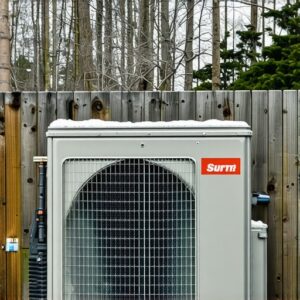
How does a Cold Climate Heat Pump (CCHP) actually work at -10°F? It comes down to vapor injection technology. In a standard system, as the ambient temperature drops, the compression ratio increases, and the discharge temperature of the juice gets too high, causing the system to shut down to protect the compressor. CCHPs use a flash tank to inject a bit of liquid refrigerant back into the middle of the compression process. This cools the compressor and allows it to keep pumping heat out of the air even when it feels like there is no heat left to find. This is sensible heat management at its finest. You aren’t just ‘turning on the heat’; you are manipulating the boiling point of refrigerants to scavenge energy from a frozen wasteland. For those who still worry, we often perform gas furnace repair on existing units to keep them as a ‘dual-fuel’ backup, ensuring that even if the power grid flinches, the house stays warm.
The A2L Transition: Why Buying Cheap in 2024 is a Trap
I see people rushing to buy the last remaining R-410A units because they are scared of the new ‘mildly flammable’ A2L refrigerants. Let me tell you, that is a mistake. The new 2025 systems are being built with sophisticated leak sensors and spark-proof controls. If you buy a bottom-of-the-barrel clearance unit now, you are locking yourself into a refrigerant that will cost $200 a pound in five years. We are already seeing the price of R-410A climb. Investing in heat pump solutions for efficient home comfort in 2025 means you are getting the latest sensor technology and components designed for these new pressures. Whether you are looking at a Trane with its legendary Climatuff compressor or a Carrier with its Greenspeed intelligence, the goal is the same: modulating the gas flow to match the exact heat loss of your home.
“Design for the 1% heating design temperature, not the average, to ensure reliability during peak load events.” – ACCA Manual J
High-Altitude Hazards: Flue Pipes and Carbon Monoxide
When we integrate a heat pump into a hybrid system with a gas furnace, flue pipe installation becomes a life-or-death technicality. In thin mountain air, combustion is finicky. If the venting isn’t pitched perfectly, or if the sparky didn’t wire the safety limits correctly, you risk carbon monoxide buildup. This is why carbon monoxide detector installation is a non-negotiable part of our process. We also find that mountain homes are notoriously dry. As the heat pump runs, it doesn’t dry out the air as much as a scorched-earth gas furnace, but you still need steam humidifiers to keep your skin from cracking and your hardwood floors from splitting. It’s about creating a managed ecosystem, not just blowing hot air.
Commercial Implications: Hotel Boiler Services and Large Scale Comfort
This isn’t just for residential cabins. We are applying these same CCHP principles to hotel boiler services and commercial furnace repair across the high country. Large commercial spaces are moving toward VRF (Variable Refrigerant Flow) systems which are essentially giant cold-climate heat pumps. If you’re managing a resort, you know that a boiler failure in January is a catastrophe. By diversifying with heat pumps, you reduce the load on the central plant and provide redundancy. We’ve seen attic insulation for heating efficiency double the effectiveness of these commercial units by simply keeping the latent heat where it belongs—inside the building envelope.
The Verdict: Don’t Get Scammed by ‘Standard’ Techs
I followed a ‘Sales Tech’ last week who told a customer their heat pump was ‘broken’ because it had frost on the outdoor coil. It was in a defrost cycle, you moron! That is how the physics work. He was trying to push a $12,000 replacement for a system that just needed a $50 contactor repair. At our shop, we believe in top hvac repair strategies to extend your systems life before we ever talk about replacement. But when it is time to upgrade, especially in high-altitude zones, you need a tech who understands pookie application on duct joints, the nuances of SEER2, and the reality of cold-climate thermodynamics. Don’t let a ‘parts changer’ sell you a sea-level system for a mountain home. Reach out to us for preventative heating maintenance and let’s make sure your suction line stays ‘beer can cold’ in the summer and your vapor injection is screaming in the winter. For any questions on how these regulations affect you, feel free to contact us today.