The Invisible Weight: Why Your House Feels Like a Damp Cave
You’ve seen it a thousand times. You walk into a house where the thermostat says 70 degrees, but you’re sweating through your shirt and the air smells like a locker room. That’s because the person who installed that unit was likely a ‘tin knocker’ who didn’t understand the difference between sensible and latent heat. Most folks think an air conditioner just makes air cold. That’s rookie thinking. An air conditioner is a dehumidifier that happens to produce cold air as a byproduct. If you aren’t managing the moisture, you aren’t providing comfort; you’re just creating a cold swamp.
My old mentor, a guy who had been brazing copper since the days of R-12, used to scream at me in the back of the van: ‘You can’t cool what you can’t touch!’ He was talking about the boundary layer of air on the evaporator coil. If the air is moving too fast, or if the compressor is just slamming on and off like a light switch, you never get the coil cold enough or long enough to actually wring the water out of the air. This is why variable speed systems are the only legitimate answer for anyone living in a climate where the dew point regularly climbs above 60.
“The most expensive equipment in the world cannot overcome a bad duct system, nor can it compensate for a failure to calculate latent load requirements.” – ACCA Manual J Principles
The Physics of the ‘Cold Swamp’ Effect
In the humid South, the enemy isn’t just the heat—it’s the energy stored in the water vapor. We call this latent heat. A standard, single-stage ‘Sales Tech’ special compressor is either 0% or 100%. It turns on, hammers the house with a blast of 55-degree air, and satisfies the thermostat in ten minutes. The thermostat is happy, but the walls are still damp. This is ‘short-cycling.’ Because the unit didn’t run long enough, the evaporator coil never had time to stay below the dew point and drain that ‘juice’ out of the house. You end up with a house that’s cold but clammy.
Variable speed technology, particularly in dual fuel heat pump systems, changes the math. Instead of a light switch, think of it like a dimmer. The compressor can scale down to 25% capacity. It runs for 40 minutes at a low, quiet hum. This allows the air to crawl across the fins of the coil, giving the moisture time to condense and run down the drain. This is where system performance testing becomes critical; if your static pressure is off, even the best variable speed unit will struggle to breathe.
The Thermodynamic Zoom: How Latent Heat Is Stripped
When we look at the refrigeration cycle, we’re managing a phase change. The refrigerant enters the evaporator as a low-pressure liquid-vapor mix. As the warm, wet return air hits those fins, the refrigerant boils, absorbing energy. If we’re using a modulating furnace or a variable speed blower, we can slow that air down to a crawl. This maximizes the ‘contact time.’ You’ll see the ‘suction line’ get ‘beer can cold,’ and you’ll hear the steady drip-drip-drip of gallons of water leaving your home. Without this, you’re just circulating wet air. This is why new construction heating design is moving toward high-efficiency modulating equipment; the old ‘rules of thumb’ for sizing are dead. If you’re still sizing units based on square footage alone, you’re doing it wrong.
To ensure this process stays efficient, heat exchanger cleaning and regular coil scrubbing are non-negotiable. A layer of dust as thin as a human hair acts as an insulator, preventing that heat exchange. It’s the difference between a high-performance machine and a paperweight. When I perform a modulating furnace repair, the first thing I check isn’t the control board—it’s the airflow. If the blower can’t ramp up or down properly because of a clogged filter or pinched duct, the variable speed logic goes out the window.
The Airflow Manifesto: Static Pressure and ‘Pookie’
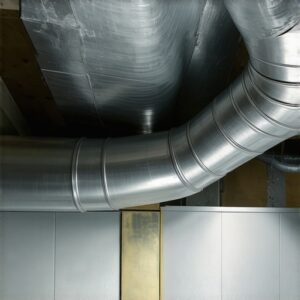
Airflow is king. You can have a $20,000 unit with remote thermostat access and every bell and whistle, but if it’s hooked up to a duct system that’s leaking 30% of its air into the attic, you’re burning money. I’ve seen ‘sparkies’ and ‘tin knockers’ slap some silver tape on a joint and call it a day. Real techs use ‘Pookie’—thick, messy mastic that actually seals the gap. A sealed system allows us to maintain the proper static pressure required for air purification integration. If you want HEPA-grade filtration, your blower has to be strong enough to pull air through a dense filter without burning out the motor.
For those in colder climates, we talk about Energy Star heating certification and boiler maintenance services, but the logic remains the same. Whether you’re dealing with radiator replacement or a modern heat pump, the goal is consistent, modulated delivery of energy. We don’t want blasts of heat; we want a steady state. This is why I always recommend top hvac repair strategies to extend your systems life: https://ecohvacservicez.com/top-hvac-repair-strategies-to-extend-your-systems-life. It’s about keeping the system in that ‘sweet spot’ where it isn’t constantly starting and stopping.
“Equipment shall be sized to satisfy the calculated loads. Over-sizing is a primary cause of humidity control failure and equipment premature wear.” – ASHRAE Standard 62.2
Why 2025 is the Year of the Heat Pump
The industry is shifting. With the phase-out of older refrigerants and the push for electrification, heat pump solutions for efficient home comfort in 2025: https://ecohvacservicez.com/heat-pump-solutions-for-efficient-home-comfort-in-2025 are becoming the standard. These aren’t your grandpa’s heat pumps that stopped working at 40 degrees. Modern variable-speed heat pumps can pull heat out of the air even when it’s freezing outside. But more importantly, their ability to modulate makes them the ultimate tool for humidity control during those ‘shoulder seasons’ when it’s 75 degrees and 90% humidity outside.
If you’re looking at a preventative heating maintenance a guide for homeowners in 2025: https://ecohvacservicez.com/preventative-heating-maintenance-a-guide-for-homeowners-in-2025, you’ll see that the focus is shifting toward sensors and data. We use remote thermostat access not just to turn the heat up from the couch, but to monitor the ‘delta-T’ (the temperature difference) across the coil in real-time. If that delta-T starts to slip, we know the system is losing ‘gas’ or the coil is plugging up before the homeowner even notices a problem.
The Verdict: Don’t Buy the Sales Pitch, Buy the Physics
When a Sales Tech tells you that you need a ‘bigger’ unit to keep the house cool, show them the door. A bigger unit is almost always the wrong answer for humidity. You want a unit that is sized exactly to your home’s load—or slightly undersized—and equipped with a variable speed compressor that can run all day long on just a few hundred watts of power. It’s quieter, it’s cheaper to run, and most importantly, it actually dries the air.
If you’re confused about which direction to go, check out these expert tips for 2025: https://ecohvacservicez.com/choosing-the-best-heating-service-expert-tips-for-2025. And if you have questions about how your specific home’s ductwork will handle a high-static variable speed blower, don’t hesitate to contact us: https://ecohvacservicez.com/contact-us. We don’t do ‘scam tune-ups’ or $15,000 capacitor replacements. We do physics. We do airflow. And we do it right the first time. For more info on our data handling, see our privacy policy: https://ecohvacservicez.com/privacy-policy. [{“@context”: “https://schema.org”, “@type”: “HowTo”, “name”: “How to Optimize Variable Speed HVAC for Humidity Control”, “step”: [{“@type”: “HowToStep”, “text”: “Perform a Manual J load calculation to ensure the system is not oversized.”}, {“@type”: “HowToStep”, “text”: “Seal all ductwork joints with mastic ‘Pookie’ to maintain static pressure.”}, {“@type”: “HowToStep”, “text”: “Set the variable speed blower to a ‘dehumidification profile’ which slows the ramp-up speed.”}, {“@type”: “HowToStep”, “text”: “Install a communicating thermostat to monitor latent and sensible heat loads in real-time.”}]}]