The Invisible Thief: Why Your Winter Comfort is Leaking Out
You wake up with a throat that feels like it’s been scrubbed with a wire brush. You reach for the doorknob and a blue spark jumps an inch, snapping your knuckles. Your solid oak floors are starting to show gaps you could slide a nickel through. This isn’t just ‘winter weather’—it’s a failure of your home’s thermodynamic envelope. As an HVAC veteran who has spent three decades crawling through freezing crawlspaces and troubleshooting cold climate heat pumps, I can tell you that most people treat humidity as an afterthought. They think it’s a luxury. It’s not. It’s physics. When the temperature outside drops, the air’s capacity to hold water vapor craters. You take that dry-as-a-bone air, shove it through a furnace or electric heater services, and you end up with a relative humidity (RH) lower than the Sahara Desert.
“Maintain relative humidity between 30% and 60% to minimize the growth of biological organisms and maintain occupant health.” – ASHRAE Standard 55
The Physics Lesson: Why Airflow is King
My old mentor, a grizzly guy who could smell a draft inducer motor repair from the driveway, used to scream at me, ‘You can’t heat what you can’t touch!’ He wasn’t talking about the air itself; he was talking about the molecules. In a bone-dry house, the air is ‘thin’ in terms of heat capacity. Moist air holds more energy. This is why a 70°F room at 45% humidity feels like a warm hug, while the same 70°F at 15% humidity feels like a walk-in freezer. If your duct design services were botched by some ‘tin knocker’ who didn’t understand static pressure, your humidity distribution is going to be a nightmare. You’ll have a tropical rainforest in the laundry room and a desert in the master bedroom. This is the ‘Airflow Manifesto’: comfort isn’t just about the temperature on the app-controlled heating systems; it’s about the moisture density in the air stream.
The Portable Unit: A Plastic Band-Aid for a Hemorrhage
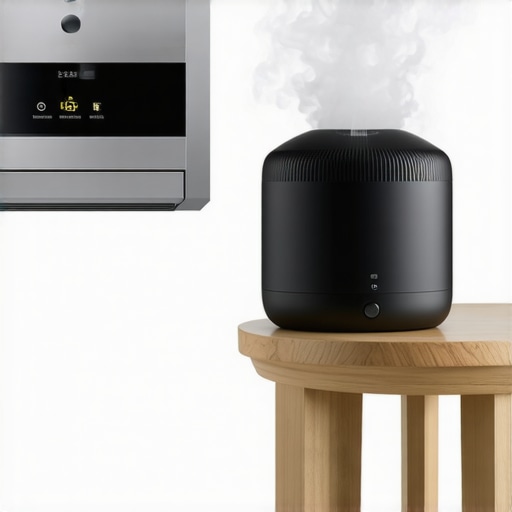
People love the $50 portable humidifier from the big-box store. They carry it into the bedroom, fill it with a gallon of water, and think they’ve solved the problem. Here’s what they don’t see. That portable unit is a localized moisture bomb. It raises the RH in a ten-foot radius, often to the point of saturation, leading to condensation on windows and potential mold growth in the drywall. Meanwhile, the rest of the house stays at 10% RH. Then there’s the maintenance. Unless you’re cleaning that tank with bleach every three days, you’re basically running a biological laboratory. You aren’t humidifying; you’re atomizing bacteria. From a service perspective, portables are a nuisance. They don’t integrate with your thermostat wiring upgrades and they do nothing for the structural integrity of your home’s woodwork.
The Steam Heavyweight: Thermodynamic Zooming
Now, let’s talk about whole-home steam humidifiers. Unlike ‘bypass’ humidifiers that rely on the furnace’s heat to evaporate water off a pad, a steam unit is an independent beast. It uses electrodes or a heating element to boil water into pure, sterile vapor. When that steam hits the supply plenum, it’s already a gas. It doesn’t need to ‘evaporate’—it just mixes. This is critical for warehouse heating solutions and large residential footprints. Because it’s not dependent on the furnace run-time, it can call for the blower to move moisture even when the burners are off. This is where you need a ‘Sparky’ to run a dedicated 240V line, because these units pull serious juice. But the payoff? Precision. You can dial in exactly 35% RH, and the system maintains it across every square inch of the house.
“Properly designed duct systems are the foundation of any high-performance HVAC installation; without them, even the most efficient equipment will fail to deliver comfort.” – ACCA Manual D
Static Pressure and the ‘Pookie’ Factor
If you’re going to invest in a steam system, your duct design services better be up to snuff. If your return air is undersized, you’re going to have high static pressure, which can cause that expensive steam vapor to condense back into liquid water inside the ducts. That’s a recipe for disaster. I’ve seen ‘Sales Techs’ slap a steam humidifier on a system with leaky, unsealed ducts, and all that moisture just escapes into the attic. You need to seal those joints with ‘Pookie’ (mastic) to ensure the moisture actually reaches the living space. While you’re at it, don’t ignore dryer vent cleaning and carbon monoxide detector installation. A tight, humidified house is a comfortable one, but it also needs to be a safe one. If your draft inducer motor is failing, it doesn’t matter how perfect your humidity is—you’ve got a safety hazard on your hands.
The Verdict: Why Steam Wins in 2025
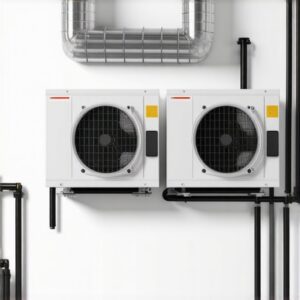
When you look at the 2025 landscape of heat pump solutions for efficient home comfort, steam is the only logical partner for cold-climate systems. Heat pumps often have lower discharge air temperatures than old gas-guzzling furnaces. Bypass humidifiers struggle in these conditions because the air isn’t hot enough to evaporate the water efficiently. Steam doesn’t care. It brings its own heat. It’s the difference between a professional-grade solution and a toy. If you’re tired of the ‘Sales Tech’ pitch and want real comfort, look at your home as a single thermal machine. Proper preventative heating maintenance, as outlined in our guide for homeowners in 2025, must include a humidity strategy. Don’t wait for a 24/7 heating emergency response to realize your air is too dry or your heat exchanger is cracked. Invest in the physics of steam. Your skin, your floors, and your lungs will thank you. “