The Sound of a Choking Beast
I’ve spent thirty years belly-crawling through sub-zero crawlspaces and balancing on ice-slicked rooftops while the rest of the world is inside sipping cocoa. There is a specific sound a high-efficiency furnace makes when it’s dying—a rhythmic, desperate hunting of the inducer motor, followed by the metallic click of a pressure switch that refuse to close. It’s the sound of a machine that’s being strangled by its own breath. Most homeowners think that if they bought a 96% AFUE furnace, they’re set for life. But here’s the cold, hard truth: a high-efficiency furnace is a temperamental Thoroughbred, and if your venting isn’t perfect, it’ll turn into a very expensive paperweight faster than you can find your thermostat. We aren’t just talking about ‘blowing air’ anymore; we are talking about fluid dynamics and the chemistry of combustion.
The Narrative Matrix: The $14,000 Bird’s Nest
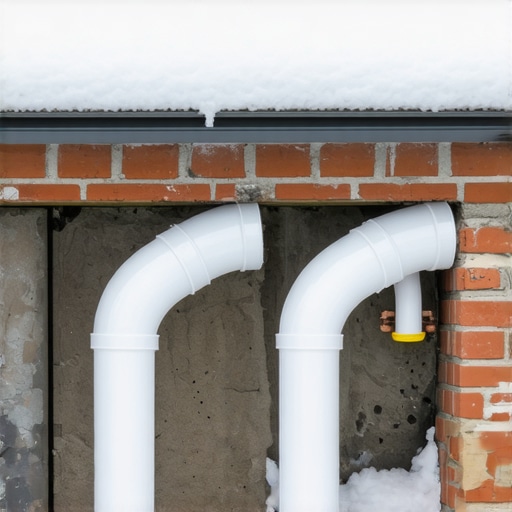
I followed a ‘Sales Tech’—one of those guys who carries a shiny iPad and a clipboard but doesn’t know a multimeter from a toaster—to a house in a freezing suburb last January. He had already quoted this young couple $14,000 for a full system replacement, claiming their heat exchanger was ‘compromised’ because the furnace was tripping on a limit switch. I walked in, smelled the air, and heard that tell-tale whistle. I didn’t look at the heat exchanger first. I went outside. The intake PVC pipe had been installed too close to a dryer vent, and a thick layer of lint and a single adventurous sparrow had turned the pipe into a vacuum-sealed tomb. I cleared the pipe, ran a static pressure testing sequence, and the unit fired up perfectly. Total cost? A service call and a lesson. That Sales Tech didn’t care about physics; he cared about commission. This is why you need to understand what’s actually happening in those white plastic pipes.
The Physics of Condensation and Latent Heat
When we talk about ‘high-efficiency,’ we are talking about condensing technology. In an old 80% furnace, the exhaust is so hot (around 400°F) that it stays as a gas and floats up a metal chimney by natural draft. But in a 95%+ unit, we use a secondary heat exchanger to suck every last drop of energy out of that fuel. We drop the exhaust temperature so low (often under 120°F) that the water vapor in the flue gas turns back into liquid. This is the ‘latent heat of vaporization’—energy we’re capturing instead of wasting. But that liquid is acidic. It’s basically dilute nitric acid. If your vent pipes aren’t sloped at exactly 1/4 inch per foot back toward the furnace, that acid pools in the pipe. Eventually, the draft inducer can’t push past the water, and the pressure switch kills the party to prevent carbon monoxide from backing up into your living room. It’s a safety feature, not a bug.
“Condensing appliances shall be installed in accordance with the manufacturer’s instructions, especially regarding the pitch and support of vent piping to prevent condensate traps.” – International Fuel Gas Code (IFGC)
The North Zone Reality: Ice, Snow, and Polar Vortices
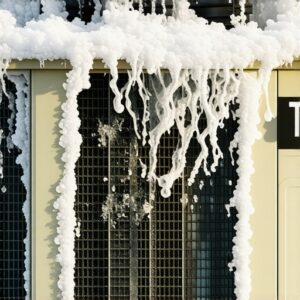
In cold climates like Chicago or Minneapolis, the venting is your furnace’s Achilles’ heel. I’ve seen hundreds of ‘no-heat’ calls caused by a ‘hoar frost’ buildup. This happens when the warm, moist exhaust hits the -10°F air and instantly turns into ice at the termination point. If your tin knocker didn’t install a proper 45-degree elbow or used the wrong termination kit, that ice will grow like a stalactite until it seals the pipe. This is where commercial furnace repair techniques come into play—sometimes you need to rethink the entire termination strategy. If you’re seeing ‘Error Code 31′ or ’33’ on your board, don’t just reset it. Look at the pipes outside. Are they buried in a snowbank? Is there a giant icicle hanging off the intake? If the furnace can’t breathe, it can’t burn. And if you’re running a garage heater installation, this problem is even more common because people tend to ‘shortcut’ the venting through sidewalls without proper clearance.
The Myth of the ‘Clean’ Duct
People love to talk about duct cleaning services as a cure-all for furnace woes. Look, I’m not saying don’t clean your ducts, but it won’t fix a venting issue. If your furnace is short-cycling, it’s usually an airflow problem on the return air side or a venting restriction. We use airflow measurement services to check the ‘Total External Static Pressure.’ Think of it like blood pressure for your house. If the pressure is too high because your ducts are too small or your filter is a ‘HEPA-style’ brick, the blower motor has to work twice as hard. This overheats the heat exchanger, causing it to expand and contract violently until it cracks. Once that happens, you aren’t just looking at a furnace repair services bill; you’re looking at a life-threatening CO leak. This is where a steam boiler repair expert might actually have an edge—they understand the importance of pressure differentials better than most ‘blow-and-go’ AC guys.
The A2L Transition and the Future of Your Mechanical Room
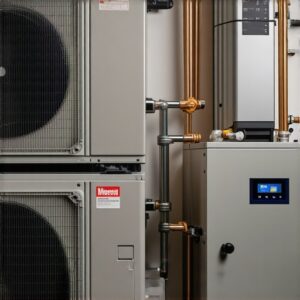
As we move into 2025, the industry is shifting toward A2L refrigerants like R-454B. While this primarily affects your AC or heat pump, it changes how we look at the whole ‘mechanical closet.’ If you have a hot water heater repair technician in your home, they need to be aware of the new sensors required in high-efficiency systems. We are seeing more integrated systems where demand-controlled ventilation (DCV) is tied into the furnace’s logic board. This ensures that the house stays pressurized correctly so that your fireplace insert services don’t end up pulling smoke back down the chimney because the furnace created a negative pressure zone. It’s all one big, interconnected lung. You can’t change one part without affecting the others.
“The most expensive equipment in the world cannot overcome a bad duct system or improper venting geometry.” – ACCA Manual D Standards
The Forensic Diagnosis: Why Your Venting Failed
If you’re staring at a dead furnace, here is the forensic checklist I use. First, I check the ‘Pookie’ (mastic). Is the seal between the furnace and the plenum tight? Next, I look at the PVC. Is it Schedule 40 or that cheap cellular core stuff that can sag over time? If the pipe sags, water collects. If water collects, the ‘gas’ (refrigerant or fuel) can’t flow or exhaust correctly. I’ve seen units where the hot water heater repair guy bumped the furnace vent and knocked it out of pitch. It took six months for the water to build up enough to kill the furnace. If you’re experiencing issues, check out our top HVAC repair strategies to see how to maintain these components. Maintenance isn’t just about changing a filter; it’s about verifying the thermodynamic integrity of the entire venting loop.
Repair vs. Replace: The $5,000 Question
When is it time to stop calling for furnace repair services and just buy a new box? If your heat exchanger is rusted out from back-flowing condensate (due to bad venting), the game is over. You’re looking at a $2,000 to $4,000 repair on a unit that might only be worth $5,000. But if it’s just a failed inducer motor or a gummed-up condensate trap, fix it. But fix the venting too, or you’ll be replacing that motor again in two years. For those in the North, proper preventative heating maintenance is the only way to catch these venting sags before they freeze and crack your secondary heat exchanger. And remember, if a tech doesn’t pull out a manometer to check your static pressure testing, they aren’t a tech—they’re a part-changer.
Final Verdict: Airflow is King
You can buy the most expensive, 99% efficient, variable-speed, Wi-Fi-enabled furnace on the market, but if you hook it up to 2-inch PVC that’s 100 feet long with six elbows, it will perform worse than a wood stove from the 1800s. Comfort is physics, not magic. You need the right gas, the right juice, and most importantly, the right path for that air to travel. If you’re unsure about your setup, consult our guide on choosing the best heating service to ensure you get a ‘Tin Knocker’ who knows their math. Don’t let a ‘Sales Tech’ talk you into a new system when your current one is just gasping for air. Clean your pipes, slope your vents, and keep your static pressure low. That’s how you survive the winter without going broke.