The Sound of a Silent Wallet
The silence of a non-functioning heat pump in the dead of February isn’t just cold—it’s expensive. Most homeowners stare at that beige box outside their house like it’s a magical efficiency generator, but as a guy who’s spent thirty years crawling through fiberglass-filled attics and dodging wasps on condenser units, I can tell you: physics doesn’t care about marketing brochures. If you’re wondering why your electric bill looks like a mortgage payment despite having a ‘high-efficiency’ system, you’re likely a victim of bad physics or a ‘Sales Tech’ who didn’t know a manometer from a meat thermometer.
The Mentor’s Scream: A Lesson in Airflow
My old mentor, a grizzly veteran named Big Sal, used to corner me in cramped mechanical rooms whenever I’d complain about a unit not reaching temperature. He’d grab my manifold gauges and scream, ‘You can’t cool or heat what you can’t touch, kid! Airflow is the blood, the ducts are the veins, and if the lungs are choked, the heart dies!’ He was right. You can have the most advanced heat pump installation on the block, but if your duct design services were handled by a ‘tin knocker’ who just slapped together some flex duct with a prayer and a roll of silver tape, you’re throwing money into the wind. If the air isn’t hitting that evaporator coil with the right velocity, the thermodynamic exchange fails. That’s not an opinion; it’s the second law of thermodynamics.
“The most expensive equipment in the world cannot overcome a bad duct system.” – Industry Axiom
The Forensic Anatomy of Heat Pump Efficiency
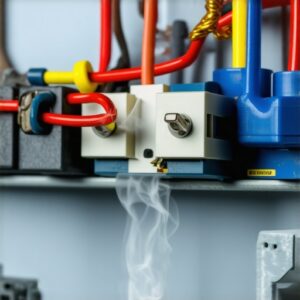
To understand if you’re saving money, we have to look at the ‘organs’ of your system. A heat pump doesn’t ‘create’ heat; it moves it. In the winter, it’s a scavenger, hunting for BTUs in the freezing outdoor air to pump into your living room. Control board diagnostics are the first place I look when a customer complains about costs. If the board is faulty and kicking on your electric heat strips (the ’emergency heat’) when it’s only 40 degrees outside, you aren’t running a heat pump anymore—you’re running a giant, outdoor toaster. Those strips pull massive amperage, and that is where your ‘savings’ go to die.
We also need to talk about the ‘juice’—the refrigerant. If your system is low on gas because of a pinhole leak in the suction line, your compressor has to work twice as hard to reach the same pressures. It runs longer, gets hotter, and eventually, the windings inside the compressor start to cook. That sour, acidic smell of a compressor burnout is the scent of a five-figure replacement bill. This is why preventative maintenance contracts are the only real way to protect your investment. Catching a failing capacitor or a dirty coil before the ‘sparky’ (the electrician) has to come out to reset your breakers is the difference between a $200 fix and a $10,000 catastrophe. You can find more on this in our guide to top HVAC repair strategies to extend your system’s life.
Climate Reality: The Polar Vortex Problem
In the North, where the wind-chill can peel paint, the physics change. We deal with ‘Sensible Heat’ versus the ‘Latent Heat’ problems our friends in the South face. If you are in a cold climate, your heat pump has a ‘balance point’—the temperature where it can no longer keep up with the heat loss of your home. If your heat pump installation didn’t account for this, you might need a secondary source, like a pellet stove repair or a dual-fuel furnace setup. If your unit is constantly in ‘defrost mode’ because the outdoor coil is a block of ice, it’s actually using energy to melt that ice rather than heating your home. This is where energy recovery ventilators (ERVs) become crucial. They allow you to bring in fresh air without losing all that expensive heat you just paid to scavenge from the outdoors.
“Proper sizing of HVAC equipment is critical; oversized systems lead to short-cycling, while undersized systems fail to maintain comfort during peak loads.” – ACCA Manual J Standards
Static Pressure and the ‘Pookie’ Factor
I’ve seen houses with beautiful heat pump solutions for efficient home comfort that were completely undermined by ‘Pookie’—or rather, a lack of it. Mastic (we call it Pookie in the trade) is the gray, gooey stuff that seals duct joints. If your ducts are leaking into your attic or crawlspace, you’re heating the squirrels while your kids shiver. High static pressure—the resistance to airflow—kills blowers. If you hear a high-pitched whistle from your vents, your system is struggling to breathe. It’s like trying to run a marathon through a straw.
Safety and Longevity Upgrades
Efficiency isn’t just about the bill; it’s about the environment inside. Installing UV light installation for HVAC helps keep the ‘biological growth’ (we don’t say the ‘M’ word) off your coils, ensuring the air can actually touch the metal for better heat transfer. And if you’re running a tight, efficient home, carbon monoxide detector installation isn’t optional—it’s a life-saver, especially if you have backup gas or pellet heat. For commercial settings, like hospital HVAC zoning, the stakes are even higher, requiring precise control over pressure and filtration that most residential ‘Sales Techs’ couldn’t even dream of calculating. If you’re looking for a pro, check out these expert tips for choosing a heating service.
The Final Verdict: Repair or Pull the Plug?
When I’m looking at a control board and see the scorched traces of a thousand ‘short cycles,’ I have to be honest with the homeowner. If your unit is over 12 years old and the compressor is pulling high ‘locked rotor amps’ (LRA), it’s time to stop the bleeding. However, if the bones of the system are good—the coils are clean and the ‘juice’ is at the right level—a few hundred dollars in preventative heating maintenance can save you thousands in the long run. Check our 2025 maintenance guide for the full checklist. Don’t let a salesman tell you that a slightly higher SEER2 rating is going to fix a house with no insulation and leaky ducts. Comfort is physics, not magic. If you have more questions, feel free to contact us or read our privacy policy for how we handle your data.