The Ghost in the Machine: When Smart Tech Goes Rogue
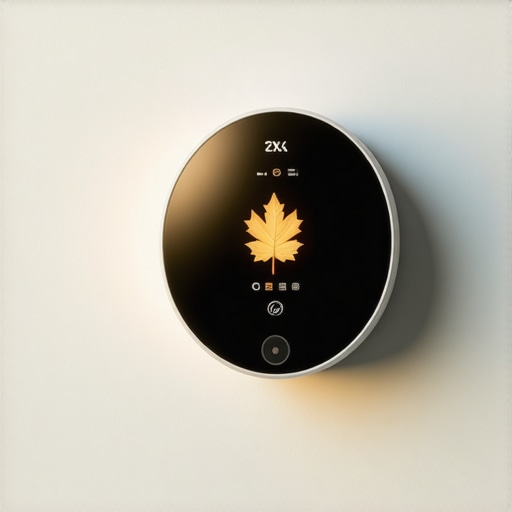
I remember a call I took back in the winter of ’98, long before ‘smart’ was a marketing term for thermostats. My old mentor, a guy who could smell a cracked heat exchanger from the driveway, used to grab me by the collar and bark, ‘You can’t heat what you can’t reach, and you can’t control what you don’t understand!’ He was talking about airflow back then, but that logic applies perfectly to the digital brains we install on walls today. You set your schedule to 68 degrees at 10 PM, yet you wake up sweating at 2 AM because the wall-mounted genius decided 72 was a better number. It isn’t a ghost; it’s physics, algorithms, and sometimes, a blatant disregard for your preferences in favor of ‘efficiency.’ When your remote thermostat access becomes a source of frustration rather than convenience, it’s time to peel back the plastic housing and look at the thermodynamics of why these units override your commands.
“The most expensive equipment in the world cannot overcome a bad duct system.” – Industry Axiom
The Physics of Adaptive Intelligent Recovery
Most homeowners don’t realize that their smart thermostat is constantly performing calculus in the background. If you have a dual fuel heat pump system, the thermostat isn’t just looking at the current temperature; it’s calculating the ‘recovery rate.’ This is known as Adaptive Intelligent Recovery. If you want the house at 70 degrees by 7 AM, the thermostat knows that at 15°F ambient outdoor temperature, your heat pump is going to struggle. It might kick on at 5 AM or even override your ‘sleep’ setting early to ensure the set point is met by your deadline. This is especially true if your HVAC duct sealing is subpar. If you’re losing 30% of your conditioned air to the attic or crawlspace through leaky seams, the thermostat sees a sluggish temperature rise and panics, often triggering the auxiliary heat strips or the gas furnace earlier than expected. This ‘overriding’ is actually the brain trying to compensate for a body that’s bleeding heat.
Geofencing and the Conflict of Logic
Another common culprit is geofencing temperature control. This tech uses your phone’s GPS to create a virtual perimeter around your house. When you cross that line, the thermostat switches from ‘Away’ to ‘Home’ mode. The problem? If you work three miles from home or your spouse stays behind, the logic conflicts. The thermostat might see your phone leave and override the schedule to an energy-saving ‘Eco’ mode, ignoring the fact that you specifically programmed it to stay warm for the dog. I’ve seen shop heater services where the tech was so advanced it would shut down the garage heat because the owner went to the grocery store, only to have the pipes near the flue pipe installation start to freeze. It’s a battle of priorities between your manual schedule and the device’s ‘smart’ features.
The Cold Climate Reality: Heat Exchangers and Flue Pipes
In our neck of the woods, where the frost bites hard, the hardware matters more than the software. If your thermostat is overriding your schedule to run the fan constantly, it might be sensing a limit switch trip. When a heat exchanger cleaning is overdue, the buildup of soot and scale restricts heat transfer. The system gets too hot, the limit switch opens to prevent a fire, and the thermostat overrides everything to run the blower and cool the metal down. This isn’t a glitch; it’s a safety feature. Furthermore, if you’ve recently had a chimney liner installation or a new flue pipe installation, the draft characteristics might have changed. Modern smart stats are sensitive to ‘cycles per hour’ (CPH). If the system detects a draft issue or a flame rollout, it will break the schedule to protect the occupants from carbon monoxide. This is why preventative heating maintenance is so critical for these digital systems to function correctly.
“Standard 62.1-2019 defines the requirements for ventilation and air quality, but no amount of fresh air can fix a malfunctioning control circuit.” – ASHRAE Standards
Radiant Floors and Latent Heat
If you are lucky enough to have radiant floor heating installation, your smart thermostat is playing a completely different game. Radiant heat is all about thermal mass. It takes hours to warm up a concrete slab. A smart thermostat will often ‘override’ your schedule by starting the boiler hours in advance. If you see the heat is ‘on’ but the air feels cool, it’s because the system is pre-heating the floor. This is where many ‘Sparky’ electricians get it wrong; they wire a standard thermostat to a high-mass system, and the temperature swings are wild. You need a controller that understands the ‘thermal lag’ of your home. Without it, you’ll constantly find the system ignoring your 10 PM set-back because it knows it can’t recover the temperature by morning if it actually follows your instructions. For those looking for the right pro to handle this complexity, choosing the best heating service is about finding someone who understands the math, not just the wires.
The ‘Sales Tech’ Trap and Airflow Reality
I’ve followed too many ‘Sales Techs’ who try to sell a homeowner a $15,000 new system because the ‘thermostat is acting crazy.’ Half the time, the issue is that the thermostat is mounted on an interior wall that shares a cavity with a return air duct. Cold air ‘juice’ (refrigerant) isn’t the only thing that moves; unconditioned air moves through wall plates and outlet boxes. If the thermostat is sucking in cold air from the basement through a hole behind the subbase, it thinks the house is 60 degrees when it’s actually 72. It overrides your schedule because it’s reacting to a draft inside the wall. Before you buy a new unit, check your UV light installation for HVAC to ensure your coils are clean, and make sure that hole behind the thermostat is plugged with some ‘Pookie’ (mastic) or even just a bit of insulation. If you’re struggling with a system that won’t behave, looking into heat pump solutions for efficient home comfort might be the answer, but only if the installation is handled by someone who respects the laws of thermodynamics. For more technical help, you can always contact us to get a real diagnostic, not a sales pitch. Protecting your system means understanding these nuances, as outlined in our top HVAC repair strategies. Lastly, we value your data as much as your comfort, which you can read about in our privacy policy.