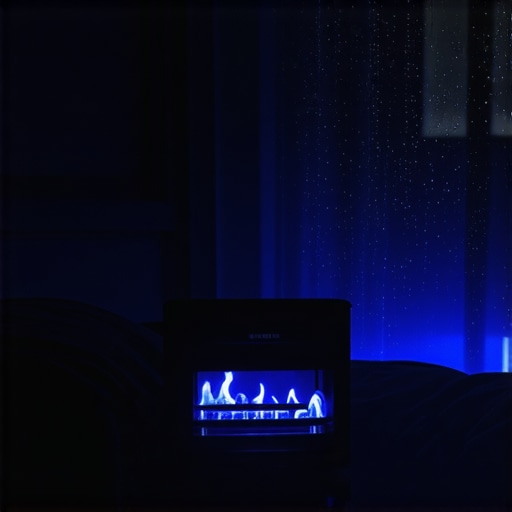
The Sound of Silence and the Hidden Danger
There is a specific kind of silence that happens at 3 AM in a northern winter when a furnace finally gives up the ghost. It is a heavy, freezing silence that drives homeowners to make desperate decisions. As a technician with thirty years spent crawling through tight crawlspaces and dodging ‘sparky’ mistakes, I have seen these decisions first-hand. Usually, it starts with a trip to the big-box store to buy a ventless gas heater. They are marketed as ‘99.9% efficient’ and ‘easy to install.’ But in the world of thermodynamics, efficiency has a dark side. I remember my old mentor, Miller, once screaming at a young apprentice who was admiring a blue-flame wall unit: ‘You can’t cool what you can’t touch, and you can’t burn what you don’t vent without paying the price in blood!’ That was my first real physics lesson. Miller knew that while a ventless heater is technically efficient because it doesn’t lose heat through a flue, it also means it doesn’t lose anything else through a flue either—including the toxic byproducts of combustion.
“The most expensive equipment in the world cannot overcome a bad duct system, but a ventless heater in a confined space overcomes the human respiratory system even faster.” – Industry Axiom (Modified for Reality)
The Anatomy of a Mechanical Hazard
Let’s look at the mechanical anatomy of these units. A ventless gas heater is essentially a burner sitting in your room. Unlike a furnace or a boiler where the combustion happens inside a sealed heat exchanger and the ‘juice’ (fuel) byproducts are sent outside by a tin knocker’s expertly crafted vent, a ventless unit dumps everything—heat, carbon monoxide, nitrogen dioxide, and water vapor—directly into your breathing zone. When you are in a bedroom, often with the door closed for privacy, you are creating a localized atmospheric trap. In cold climates like Chicago or the Northeast, where houses are wrapped tight to save on energy, there is no ‘leakage’ to provide fresh combustion air. You are competing with the heater for oxygen. Most units come with an Oxygen Depletion Sensor (ODS). This is a tiny pilot light calibrated to drop out if oxygen levels fall below a certain percentage. But relying on a $15 sensor to keep you from suffocating in your sleep is a gamble I would never take. I have seen ODS sensors bypassed by ‘handymen’ or clogged with dust, rendered useless while the burner continues to eat the air you need.
The Latent Heat Trap: Humidity and Structural Decay
In the North, we fight the ‘Polar Vortex’ and ‘Flame Rollout’ regularly, but the hidden enemy of the ventless heater is latent heat. For every gallon of gas burned, roughly a gallon of water vapor is released into the air. In a bedroom, this isn’t just a comfort issue; it’s a structural disaster. That moisture hits the cold window panes and turns into a ‘cold swamp.’ It drips into the sills, rots the framing, and feeds mold spores that thrive in the damp warmth. This is why we preach about HVAC duct sealing and proper ventilation. If your home is damp, your ‘sensible heat’ (the temperature you feel) is fighting against the ‘latent heat’ (the moisture content), making the air feel clammy and oppressive. I’ve seen homeowners spend thousands on top HVAC repair strategies only to ruin their indoor air quality by sticking a ventless heater in the master suite because they didn’t want to fix a simple preventative heating maintenance issue like a cracked heat exchanger.
“Unvented combustion appliances shall not be used as a primary heat source and are prohibited in sleeping quarters by many local jurisdictions due to moisture and indoor air quality concerns.” – ASHRAE Standard 62.1 (Contextual Summary)
The Math of Survival: Repair vs. Replace
I get it—a new furnace or a complex boiler repair services call can be expensive. You might be looking at a $500 contactor repair or a capacitor replacement services bill and think that a $200 wall heater is the smarter ‘math.’ It isn’t. When a system fails, it’s usually a symptom of neglect that could have been caught with HVAC maintenance plans. Modern systems are moving toward inverter-driven compressors and the R-454B refrigerant transition services, which are more efficient and safer. Even WiFi thermostat integration can help by alerting you to a drop in temp before the pipes freeze, giving you time to call for a real fix. If you’re dealing with a cold room, the answer is often found in the ‘Pookie’ (mastic). HVAC duct sealing can often restore the airflow needed to heat that back bedroom without resorting to dangerous gas-burning alternatives. We often find that a simple fix, like swamp cooler maintenance in the off-season or checking the ‘Sparky’s’ wiring on a heat pump, is all it takes to keep a home safe.
The Physics of Better Alternatives
If you are freezing, look at the physics of your home instead of the ‘miracle’ of a ventless heater. Are your returns blocked? Is your static pressure so high that the blower can’t push air to the furthest duct? A real technician doesn’t just ‘top off the gas’; they look at the airflow. We are entering a new era of home comfort. If you’re planning for the future, choosing the best heating service expert tips for 2025 suggests looking at heat pumps. With the new A2L refrigerants like R-454B, these systems are safer and more effective than ever, even in cold climates. They provide ‘beer can cold’ suction lines in the summer and steady, safe heat in the winter without the risk of carbon monoxide poisoning. Don’t be the homeowner I find on a cold January morning, coughing in a damp room while a yellow-flame heater slowly eats the oxygen. Invest in a real solution, keep your ‘Tin Knocker’ busy with duct repairs, and never, ever put a ventless heater where you sleep. Your life is worth more than a $200 ‘quick fix’ that ignores the laws of thermodynamics. If you’re unsure about your current setup, it’s time to contact us for a professional evaluation before the next cold snap hits.