The Sound of a Dying Compressor in a Polar Vortex
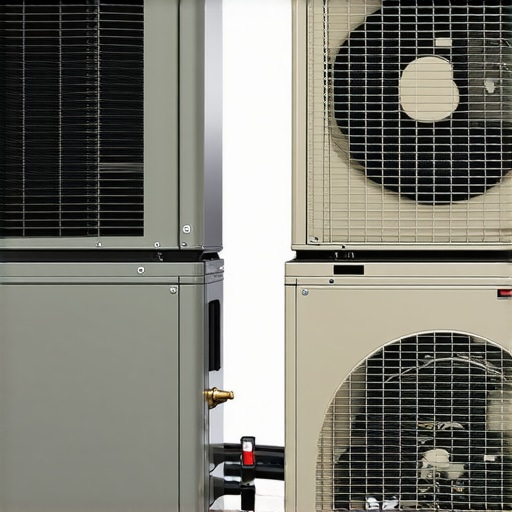
I can tell a traditional heat pump is struggling before I even get out of my truck. It’s that distinctive, metallic groan—the sound of a scroll compressor trying to compress liquid refrigerant because the outdoor ambient temperature has dropped below its physical limits. In my thirty years as a tech, I’ve seen thousands of homeowners in the North freeze because some tin knocker sold them a standard unit in a climate where the mercury regularly hits zero. They call for an emergency heating repair, and I show up to find the outdoor unit looking like a block of ice and the electric heat strips running the electric meter so fast it’s about to lift off the side of the house. That’s the reality of traditional heat pumps: they are essentially air conditioners that can run backward, but they have a breaking point.
“Equipment capacity and performance must be matched to the local design temperatures to ensure both comfort and efficiency under extreme conditions.” – ACCA Manual J, 8th Edition
The Sales Tech Scam and the $12,000 Misunderstanding
Last winter, I followed a ‘Sales Tech’—you know the type, clean shirt, no grease under his nails, carrying a clipboard instead of a manifold gauge—into a home where the owner was told his five-year-old system was ‘thermally exhausted’ and needed a $12,000 replacement. This guy was pushing a basic two-stage furnace installation when the house already had a perfectly good duct system. I walked into the mechanical room and smelled it immediately: that acrid, ozone-heavy scent of a shorted igniter. I did a furnace ignition repair for the cost of a service call and a part, but the real issue was that the homeowner was terrified because his heat pump quit at 20°F. He didn’t need a new furnace; he needed to understand why his heat pump failed him. That is where Hyper-Heat technology changes the math.
Thermodynamic Zooming: How Hyper-Heat Cheats Physics
Traditional heat pumps use a standard vapor-compression cycle. As it gets colder outside, there is less heat to ‘steal,’ and the density of the refrigerant gas drops. The compressor has to work harder to do less. By the time you hit 25°F, most traditional units have lost about 40% of their heating capacity. Hyper-Heat, or flash-injection technology, is a different animal. It uses a bypass circuit to inject a bit of liquid refrigerant into the compressor during the compression stroke. This cools the compressor and allows it to run at higher speeds without overheating the discharge gas. It’s the difference between a naturally aspirated engine and a twin-turbo powerhouse. This tech allows the unit to maintain 100% of its heating capacity down to 5°F and keeps running all the way to -13°F. This is a game-changer for crawl space heating solutions where you don’t have room for a massive furnace but need reliable warmth.
The Regulatory Cliff: Why 2025 Changes Everything
We are currently facing the ‘A2L Transition.’ The EPA is phasing out R-410A refrigerant (the ‘juice’) in favor of R-454B and R-32. These new refrigerants are ‘mildly flammable,’ which means the new units coming off the assembly lines are going to be packed with sensors and safety shut-offs. If you are looking at heat pump solutions for efficient home comfort in 2025, you need to realize that the ‘cheap’ units are about to become extinct. Investing in Hyper-Heat now isn’t just about comfort; it’s about future-proofing. Traditional units will struggle more with the new refrigerant pressures, while inverter-driven Hyper-Heat systems are designed from the ground up for these higher-efficiency standards. I always tell my customers: you can pay for the engineering now, or you can pay the ‘Sparky’ and the tech for 24/7 heating emergency response later when your old-school unit slugs a compressor in January.
Maintenance: Beyond the Filter
A lot of guys will tell you that a furnace filter replacement is all you need. That’s garbage. While keeping the ‘socks’ clean is important for airflow, these high-tech Hyper-Heat systems rely on predictive maintenance alerts. They monitor the delta-T (temperature difference) across the evaporator coil and the subcooling of the liquid line. If your tech isn’t checking the static pressure of your ductwork, he’s not doing his job. Bad ductwork is the silent killer of high-efficiency systems. I’ve seen guys install a beautiful Hyper-Heat outdoor unit and leave it hooked up to 40-year-old ‘Pookie’-covered ductwork that’s leaking 30% of the air into the attic. You might as well be burning money in the driveway. Even specialized systems like hospital HVAC zoning or a pellet stove repair require an understanding of how air moves through a building. If you’re coming from a swamp cooler maintenance background in a dry climate, moving to a humid-cold zone requires a total shift in how you think about latent vs. sensible heat.
“Ventilation systems must provide the required outdoor air regardless of the heating or cooling load to ensure indoor air quality and pressure balance.” – ASHRAE Standard 62.2
The Verdict: Physics Doesn’t Lie
When the ‘ice-man’ comes knocking in the dead of winter, a traditional heat pump is a liability in the North. It’s a fine piece of machinery for a mild climate, but once that ambient temp drops, you’re just running a very expensive electric toaster. Hyper-Heat is the only way to go if you want to ditch the gas bill without shivering. If you’re tired of the sales pitches and want the real story on choosing the best heating service expert tips for 2025, you have to look at the numbers. Don’t let a box-pusher talk you into a system that can’t handle a real winter. Check out our top HVAC repair strategies to extend your systems life to see how to keep whatever unit you have running, but when it’s time to pull the plug, go for the tech that actually beats the cold. You can find more details on our preventative heating maintenance a guide for homeowners in 2025 page, or if you’re already shivering because your traditional unit gave up the ghost, it’s time to contact us and get a tech who knows the difference between a capacitor and a compressor. Don’t forget to review our privacy policy before you book.