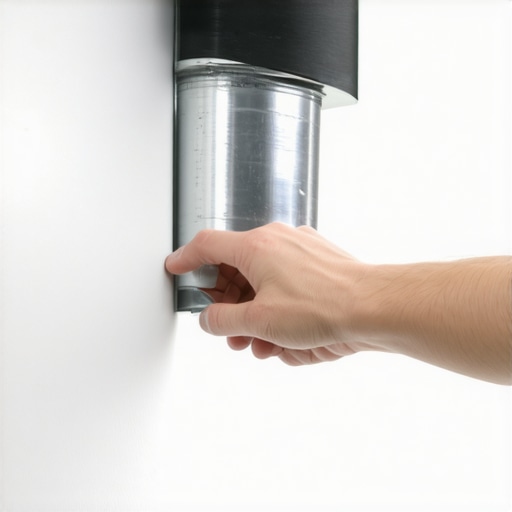
You’ve spent all Saturday morning with a microfiber cloth and a bottle of polish, only to see a fine layer of gray fuzz settling back onto your coffee table by Sunday evening. You blame the dog. You blame the cheap air filters. You might even blame the ‘Tin Knocker’ who installed your system twenty years ago. But the truth is hidden in the dark, unconditioned spaces of your attic or crawlspace. As a veteran who has spent three decades crawling through fiberglass insulation and tracking down mysterious whistles in plenums, I can tell you that a dusty house isn’t a cleaning problem—it’s a physics problem. Most people think their HVAC system is a closed loop, but in reality, it’s often an open straw sucking in every bit of filth from the worst parts of your home.
The Airflow Manifesto: Why Your House is a Vacuum
My old mentor, a grizzly guy named Miller who could diagnose a bad capacitor just by the hum of the transformer, used to scream at me during my apprenticeship: ‘You can’t cool what you can’t touch, and you can’t clean what you can’t control!’ He was right. Most homeowners think the air they breathe is just recirculating through the filter. But if your ducts aren’t sealed with ‘Pookie’—that’s trade talk for thick, fiber-reinforced mastic—your return air ducts are under negative pressure. This means they are actively sucking air from the attic, the wall cavities, and the joist spaces. Every time your blower motor kicks on, those leaks pull in insulation fibers, rodent droppings, and microscopic debris, bypassing your filter entirely and blowing it straight into your bedroom. This is why HVAC duct sealing is the most overlooked aspect of indoor air quality.
“The most expensive equipment in the world cannot overcome a bad duct system. Leakage in the return air plenum is the primary entry point for unconditioned, contaminated air.” – ACCA Manual D
When we talk about duct design services, we aren’t just talking about where the registers go. We are talking about static pressure. If your ducts are undersized or leaking, your blower has to work harder, increasing the ‘juice’ or amperage it draws, which eventually leads to a draft inducer motor repair or a total blower failure. In the humid South, where the latent heat—that’s the moisture in the air—is high, these leaks are even more dangerous. When you suck in hot, humid attic air into a cold return duct, you get condensation. Now you don’t just have a dust problem; you have a science project growing inside your dark, damp ductwork. This is why top HVAC repair strategies must always include a pressure test of the distribution system.
Thermodynamic Zooming: The Latent Heat Trap
Let’s get technical for a second. Your evaporator coil’s job is to drop below the dew point of the air passing over it. This allows the coil to wring out the humidity like a wet sponge. However, when you have massive duct leaks, you are introducing a constant stream of high-enthalpy (high energy/moisture) air into the mix. The system never reaches equilibrium. It stays in a state of ‘short cycling,’ where it cools the air temperature down quickly but fails to remove the latent heat. You end up with a house that feels like a cold swamp. You might think you need a heat pump replacement to fix the comfort issue, but if you put a new 5-ton unit on a 3-ton duct system that leaks like a sieve, you’ve just wasted ten grand. You’d be better off investing in proper sealing and a furnace tune-up services visit to ensure the combustion side is actually safe.
Speaking of safety, when I’m out on a call for a contactor repair or a simple thermostat swap, I always look at the venting. If your return ducts are pulling air from the same mechanical room where a gas water heater or a furnace sits, you risk backdrafting. This is where the HVAC system’s suction is stronger than the natural draft of the chimney, pulling exhaust gases—including carbon monoxide—back into the living space. This is why carbon monoxide detector installation is non-negotiable for any home with gas appliances. If you’ve been looking into ventless gas heater services, be doubly aware that those units rely entirely on the air in the room, making duct integrity even more critical for oxygen levels.
The Physics of Pookie vs. Tape
I see it every day: a ‘Sales Tech’ went into an attic and slapped some shiny foil tape over a gaping hole in a plenum. That tape will last one season. Between the expansion and contraction of the metal and the dust that eventually works its way under the adhesive, it’s a temporary fix. True professionals use mastic. It’s a messy, gray paste that cures into a rubbery gasket. When we seal a system, we are looking for every ‘Y’ branch, every boot connection, and every seam in the air handler. We want that ‘suction line’ to be beer can cold and the air inside to be nothing but what went through the MERV-11 filter. If your system is old enough to have radiator replacement needs or ancient thermostat wiring upgrades, chances are your ducts were never sealed to modern standards. For those interested in the long-term health of their equipment, checking out preventative heating maintenance is the first step toward stopping the dust storm.
“Air leakage from supply ducts in unconditioned spaces can account for as much as 20% of the total cooling load of a typical residential building.” – ASHRAE Standard 152
If you’re noticing that the room furthest from the air handler is always five degrees warmer, don’t just assume the unit is ‘tired.’ It’s likely a lost cause due to friction loss and leakage. Every CFM (cubic foot per minute) of air that leaks out of your supply ducts is air you paid to cool that is now cooling your attic squirrels. Worse, for every cubic foot of air that leaks out, a cubic foot of dirty, hot air has to leak *in* to the house to balance the pressure. That’s where your dust is coming from. It’s a vicious cycle of infiltration. Before you commit to a major overhaul, consult with someone who understands choosing the best heating service so you don’t get sold a compressor you don’t need when all you needed was a bucket of mastic and a dedicated ‘Sparky’ to fix a loose wire. Comfort isn’t magic; it’s a balanced equation of pressure, temperature, and filtration. Seal your ducts, and you’ll finally be able to put that microfiber cloth away for more than five minutes.