
The Sound of a Sales Tech Sharpening His Pencil
I followed a ‘Comfort Advisor’—that is the fancy title companies give Sales Techs these days—into a split-level home last Tuesday. The homeowner was a nervous wreck because she’d found a patch of black spotting on her supply registers. The Sales Tech had already written up a $19,500 quote for a full system replacement, claiming her unit was ‘undersized’ for the humidity load. I took one look at her return air grill and saw it was caked in three years of pet dander. I pulled out my manometer, measured the static pressure, and found the system was gasping for air. It wasn’t undersized; it was suffocating. After a thorough cleaning and a simple transformer replacement to fix a fluttering contactor, the system was pulling juice like a champ again. She didn’t need a new unit; she needed a technician who understood that airflow is the heart of the home. Most of these guys want to sell you a shiny box when the real problem is the ‘tin’ or the ‘Pookie’ (mastic) failing in the attic. If you want to stop 2026 indoor mold, you have to stop thinking about ‘cooling’ and start thinking about moisture removal physics.
The Airflow Manifesto: Why Your House Feels Like a Swamp
One room is freezing, the other is hot, and the air feels ‘heavy.’ That is the classic symptom of a system that can move sensible heat but is failing miserably at latent heat removal. When we talk about inverter-driven compressors, we aren’t just talking about energy savings; we are talking about run time. A standard single-stage compressor is like a light switch—it is either 100% on or 100% off. In a humid climate, it kicks on, blasts the house with cold air, hits the setpoint in ten minutes, and shuts off. This is called short-cycling. The air is cold, but the evaporator coil never stayed below the dew point long enough to wring the water out of the air. You end up with a 72-degree house with 70% relative humidity. That is the breeding ground for mold.
“The most expensive equipment in the world cannot overcome a bad duct system.” – Industry Axiom
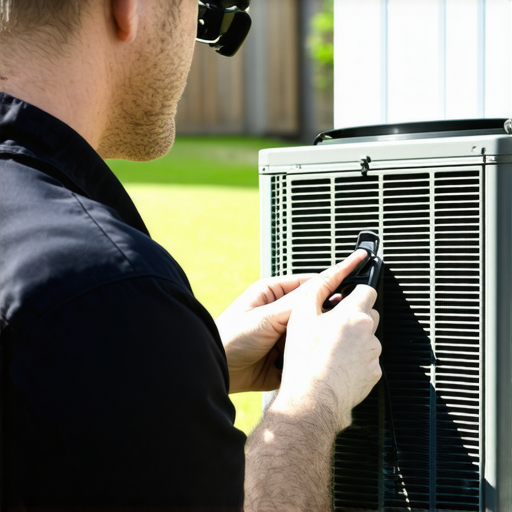
Static pressure is the resistance to airflow in your ducts. If your tin knocker (duct installer) didn’t size the return air drops correctly, your blower motor is working overtime to pull air through a straw. This increases heat at the motor and prevents the refrigerant from boiling off correctly in the coil. We see this often leading to a draft inducer motor repair or premature failure of the blower. To fix this, we look at the ‘Total External Static Pressure.’ If it’s too high, we don’t just ‘add more gas’ or ‘juice.’ We fix the physics. [image_placeholder_1]
Service 1: Heat Recovery Ventilators (HRVs) and the Fresh Air Paradox
In our push to make homes airtight for energy efficiency, we’ve created ‘Sick Building Syndrome.’ We’ve sealed the moisture inside. This is where heat recovery ventilators (HRVs) become essential for 2026. An HRV brings in fresh, filtered outside air while exhausting stale, humid indoor air. The magic happens in the core, where the outgoing air pre-conditions the incoming air. This prevents the ‘shock’ to your system. Without proper ventilation, things like spa heater services or indoor pools can turn a basement into a petri dish. If you are running high-moisture equipment, an HRV is the only way to ensure the combustion analysis of your home’s air remains safe and breathable.
Service 2: AI-Driven HVAC Optimization and Voice Control Setup
The days of the ‘dumb’ mercury thermostat are over. AI-driven HVAC optimization is now the brain of the operation. By integrating voice control setup Alexa Google, we can now set ‘humidity priority’ logic. Instead of just cooling to 72 degrees, the AI monitors the outdoor dew point and adjusts the inverter-driven compressors to run at lower speeds for longer cycles. This ensures the suction line stays ‘beer can cold’ just long enough to pull gallons of water out of your air daily. This is much more effective than a standalone dehumidifier that just dumps heat back into the room. If your tech hasn’t talked to you about transformer replacement for higher-load smart thermostats, they aren’t looking at the whole picture. For those looking to keep their systems running efficiently, checking out top HVAC repair strategies to extend your systems life is a great starting point for 2026.
Service 3: Hydronic Integration and Specialized Dehumidification
In many modern homes, we are seeing a shift toward hydronic heating systems for comfort, but these systems don’t provide cooling or dehumidification on their own. Integrating a whole-home dehumidifier into a hydronic-heavy house is a surgical procedure. We have to balance the airflow so that the dehumidifier isn’t fighting the radiant heat. This is where priority service memberships pay for themselves. A technician needs to perform a combustion analysis on your boiler while simultaneously checking the latent load of your air handlers. If the balance is off, you’ll get condensation on your floors—a nightmare for hardwood. Understanding preventative heating maintenance a guide for homeowners in 2025 can help you navigate these complex dual-fuel or hydronic-air-split systems.
“Ventilation shall be provided in accordance with ASHRAE Standard 62.2 to ensure acceptable indoor air quality in low-rise residential buildings.” – ASHRAE Standards
The Reality of 2026: Why You Can’t Wait
We are entering an era where refrigerant prices are volatile and equipment is becoming more complex. If you think a simple ‘tune-up’ from a ‘sparky’ who doesn’t know a manifold gauge from a multimeter will save you, you’re mistaken. You need a pro who understands the heat pump solutions for efficient home comfort in 2025 and beyond. Mold isn’t just a cleaning issue; it is a mechanical failure of the home’s ability to breathe. Whether it is a failing draft inducer motor causing poor combustion or a blower that can’t overcome high static pressure, the result is the same: discomfort and property damage. Don’t let a sales tech talk you into a $20k box when a properly designed airflow strategy and a few key dehumidification services can solve the problem for a fraction of the cost.