The silence of a dead furnace at 3 AM in the middle of a January cold snap has a specific frequency—it is the sound of impending property damage. When the mercury plunges below zero and your blower motor refuses to kick, the first thing most people do is panic and call for emergency heating repair. But as someone who has spent three decades dragging a tool bag through crawlspaces and over frozen rooftops, I can tell you that the ‘brain’ of your system—the thermostat—is often where the battle for comfort is won or lost. Most homeowners treat their remote thermostat like a simple light switch, but in the era of high-efficiency equipment, it is a complex logic controller that dictates the thermodynamic success of your entire home.
The Sales Tech Scam: A Forensic Lesson
I remember following a ‘Sales Tech’—those guys who wear whitened shirts and carry more clipboards than wrenches—to a job in a blizzard last year. He had quoted a family nearly $14,000 for a full system replacement, claiming their control board diagnostics showed a fatal failure. I stepped in for a second opinion and found the family huddled around a space heater. I didn’t look at the furnace first; I looked at their fancy new remote thermostat. The ‘Sparky’ who had installed their kitchen LEDs had messed with the sub-panel and knocked out the common wire (C-wire) to the thermostat. The unit wasn’t dead; it was just blind. I stripped the wire, re-landed it, and the inducer motor spun up in seconds. That family didn’t need a new furnace; they needed a technician who understood that communication is the heartbeat of modern HVAC. It is this kind of technical neglect that makes choosing the best heating service so critical in 2025.
“The most expensive equipment in the world cannot overcome a bad duct system.” – Industry Axiom
Thermodynamic Zooming: Why Programming Matters
To understand winter comfort, you have to stop thinking about ‘hot air’ and start thinking about heat transfer. In the frozen North, we are fighting a constant battle against infiltration—the process of cold air leaking in and warm air escaping. When you program a remote thermostat, you aren’t just setting a temperature; you are managing the enthalpy of the indoor environment. If you set your ‘swing’ or ‘differential’ too tight, your furnace will short-cycle. This is a killer for furnace repair services because it beats up the igniter and the inducer motor. Conversely, if the swing is too wide, the thermal mass of your furniture and walls drops so low that the air feels chilly even when the thermostat says 70 degrees. This is sensible heat vs. latent heat in action.
The Anatomy of the Control Board
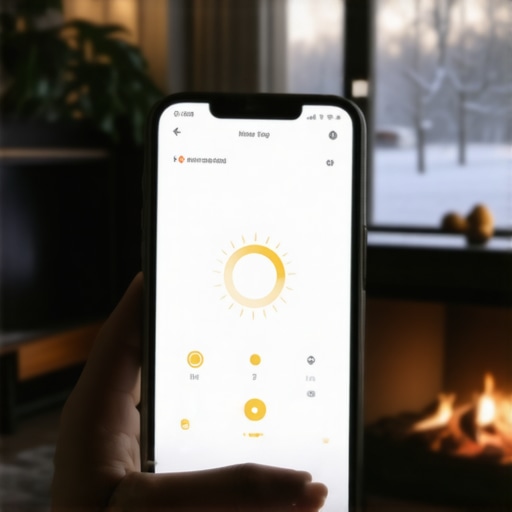
When you interact with your remote app, you are sending a low-voltage signal to the control board. If you have a cold climate heat pump, that board has to decide when to engage the compressor and when to call for ‘Aux Heat’ (the expensive electric strips). Poor programming often leads to the heat pump giving up too early, or worse, running the defrost cycle so often it turns your outdoor unit into an ice cube. Proper flue pipe installation and a clean furnace filter replacement are the physical requirements, but the programming is the software that keeps the heat exchanger from cracking under the stress of rapid expansion and contraction.
Programming for Cold Climate Reality
If you are running a steam boiler repair or an oil to gas conversion, your thermostat needs to be programmed for high-mass radiation. Steam doesn’t move like air. If you tell a steam boiler to jump five degrees in twenty minutes, it won’t happen. You need to program ‘recovery’ periods that are longer and more gradual. For those with forced-air systems, don’t ignore the importance of duct cleaning services; a remote thermostat can’t fix a blocked return air drop. If the ‘Tin Knocker’ who built your house didn’t size the returns right, your static pressure will skyrocket, and your ‘smart’ thermostat will keep throwing error codes that look like a hardware failure but are actually just a suffocating blower.
“Design conditions for winter heating shall be based on the 99.6% column of the ASHRAE Climatic Design Data.” – ASHRAE Standards
The Math of the 2025 Regulatory Cliff
We are entering the era of A2L refrigerants like R-454B. These new systems are ‘mildly flammable’ and require sophisticated leak detection sensors integrated into the control logic. If you are looking to avoid a massive bill, investing in warranty service plans is the only way to hedge against the rising cost of these high-tech components. When a control board fails on a 2025 model, you aren’t just swapping a relay; you are replacing a computer. This is why preventative heating maintenance is no longer optional. I’ve seen homeowners try to save $100 by skipping a tune-up, only to face an $800 repair when a simple flame sensor coating—sooty from a lack of cleaning—tricks the thermostat into a lockout mode during a blizzard.
Final Forensic Checklist for Winter Comfort
- Check the Deadband: Ensure your heat and cool setpoints are at least 3-5 degrees apart to prevent the system from ‘hunting.’
- Calibrate Remote Sensors: Don’t trust the thermostat on the wall if it’s near a drafty door. Use remote sensors in the bedrooms.
- Review the Staging: If you have a two-stage furnace, ensure the thermostat is actually controlling the second stage, not just a timer on the board.
- Monitor the C-Wire: Without a constant 24V supply, ‘smart’ thermostats steal power from the heating circuit, which can cause ‘ghost’ tripping of the limit switch.
Comfort isn’t magic; it’s physics. Whether you are dealing with an old cast iron boiler or the latest variable-speed heat pump, the way you interface with that system via your remote thermostat determines its lifespan. Don’t be the homeowner who waits for the ‘sour’ smell of a fried transformer. Stay ahead of the curve, keep your filters clean, and remember that top hvac repair strategies always start with the basics of airflow and logic.