The Anatomy of the Boom: Why Your Pool Heater is Screaming for Help
There is a specific sound that makes a seasoned technician’s skin crawl. It isn’t the hum of a condenser or the whir of a blower motor; it’s that metallic, rhythmic thumping that sounds like a trapped giant trying to hammer his way out of your pool heater. If you’ve heard it, you know exactly what I’m talking about. You’re sitting on the patio, enjoying the evening, and suddenly—CLACK-BANG-BOOM. My old mentor, a guy who had been a tin knocker since the Eisenhower administration, used to scream at me, ‘You can’t move heat if you’re choking the flow! If the fluid isn’t moving, the heat has nowhere to go but into the metal.’ He was right. That banging isn’t just an annoyance; it’s the sound of physics failing your equipment.
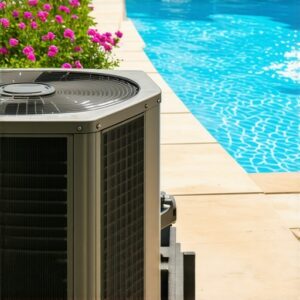
When a pool heater—which is essentially just a high-powered hydronic heating system—starts making those noises, it’s usually suffering from a condition we call ‘kettling.’ But before we get into the guts of the heat exchanger, you need to understand that most ‘Sales Techs’ will look at that heater and tell you the whole thing is shot. They’ll quote you five figures for a replacement before they even take the jacket off. They want the commission. I want you to understand the thermodynamic reality: 90% of the time, the heater is fine, but the system is sick. Whether it’s a lack of flow, scale buildup, or a bypass valve that’s stuck, the banging is a symptom of localized boiling. You are literally turning your pool heater into a tea kettle.
The Physics of Kettling and Heat Transfer
To understand the bang, we have to look at the evaporator and heat exchanger through the lens of thermodynamics. In a pool heater, you have a flame (sensible heat) transferring energy to a copper or cupro-nickel heat exchanger. Water flows through these tubes, absorbing that heat. Ideally, the water moves fast enough that it never reaches its boiling point. However, when scale—calcium and mineral deposits—builds up inside those tubes, it creates an insulation layer. The water trapped beneath that scale flashes into steam instantly. When those steam bubbles collapse, they create a cavitation shockwave. That’s the ‘bang.’
“Proper sizing and installation of hydronic heating systems require precise flow rate calculations to prevent localized boiling and mechanical stress on the heat exchanger.” – ASHRAE Systems and Equipment Handbook
This isn’t just a pool problem. I see the same thing in preventative heating maintenance for multi-family heating upgrades. When you have a massive boiler serving twenty units, and the flow isn’t balanced, the heat exchanger starts to rattle. If your pool heater is banging, the first thing you check isn’t the gas valve—it’s the flow. Are your filters clogged? Is your pump pushing enough GPM (gallons per minute)? If the water slows down, the heat builds up, and the ‘gas’ in your system becomes steam. This is why top HVAC repair strategies always start with the basics: airflow and water flow.
Delayed Ignition: The Other ‘Bang’
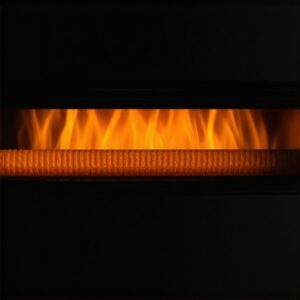
Not every bang is kettling. If the sound happens the exact millisecond the unit fires up, you’re likely dealing with delayed ignition. This is the ‘Sales Tech’s’ favorite because it sounds scary. Here’s what’s happening: the gas valve opens, but the igniter (whether it’s a pilot or a hot surface igniter) doesn’t light the gas immediately. Gas builds up in the combustion chamber. When it finally catches, it doesn’t just burn; it goes whoomph. This can buckle the jacket of the heater and, in worse cases, crack the heat exchanger.
In colder climates like the Northeast or Midwest, where we see more cracked heat exchangers due to thermal shock, this is a major safety concern. It’s similar to the risks we evaluate during furnace tune-up services. If your pool heater is integrated with WiFi thermostat integration, you might notice the unit cycling on and off rapidly—this is ‘short cycling.’ It’s a killer. It wears out the contactor and puts unnecessary strain on the gas train. If you’re seeing predictive maintenance alerts on your phone, don’t ignore them. The system is trying to tell you that the delta-T (the temperature difference between the inlet and outlet) is off the charts.
Manual J and Sizing: Why Bigger Isn’t Better
I’ve seen guys install a 400,000 BTU heater for a 10,000-gallon pool. That’s like putting a jet engine on a tricycle. They skip the manual J calculations because they think ‘more power equals more heat.’ Wrong. An oversized heater will reach its high-limit switch too fast, shut down, and then fire back up. This constant thermal expansion and contraction is what leads to those loud metallic pings and pops. You want a unit that is sized correctly for the volume of water and the ambient conditions. If you’re in a northern climate, you also have to consider crawl space heating solutions and how moisture interacts with your equipment. Excessive humidity can lead to corrosion on the burners, which causes—you guessed it—delayed ignition and more banging.
“Equipment capacity must be determined by a certified Manual J calculation to ensure the system operates within its designed psychrometric and thermal parameters.” – ACCA Manual J Standards
When I’m out on a call, I’m looking for the ‘Pookie’ (mastic) and tape jobs that some ‘Sparky’ or amateur ‘Tin Knocker’ left behind. If the venting isn’t right, the combustion air isn’t right. If the combustion air isn’t right, the burner flame will be yellow and ‘lazy’ instead of a crisp, roaring blue. A lazy flame leads to soot. Soot acts as an insulator. And we’re back to kettling. It’s a circle of mechanical failure that starts with bad maintenance.
The Checklist: How to Stop the Noise
If your heater sounds like it’s auditioning for a drum circle, follow this forensic diagnosis: 1. Check the filter. If the filter is dirty, flow drops. Flow drops, the heater bangs. 2. Check the bypass valve. If too much water is bypassing the heater, the water inside the tubes gets too hot. 3. Look at the burner tray. Is there rust or debris? 4. Check for scale. If you live in an area with hard water, you might need a professional acid wash of the heat exchanger. This is where heat pump solutions are actually becoming more popular—they don’t have the same high-intensity heat exchangers that gas units do, meaning they are often quieter and more reliable for long-term home comfort.
Don’t forget the peripheral safety. If you have a heater in an enclosed space or a shed, you need to treat it with the same respect you give a furnace. That means portable heater safety checks and ensuring you have dehumidification services to prevent the electronics from rotting out. A pool heater is a high-performance machine; treat it like one, and it won’t scream at you. Ignore the ‘juice’ (refrigerant) for your AC for a second and focus on the ‘gas’ and flow of your heater. Your wallet will thank you.