The Physics of Cold: Why Your Heat Pump Thinks It is a Refrigerator
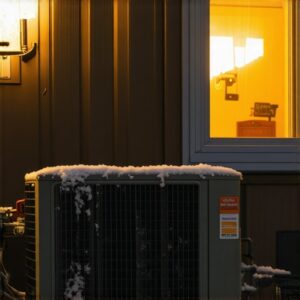
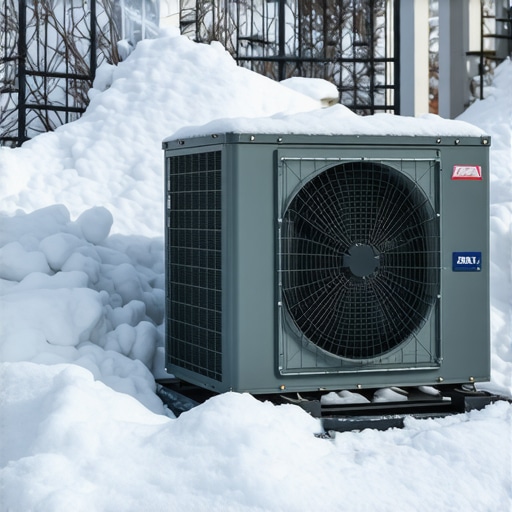
My old mentor used to scream, ‘You can’t heat what you can’t touch!’ This was his way of drilling into my thick skull that HVAC isn’t about ‘making cold’ or ‘making heat’—it is about moving energy. In the dead of a Northern winter, when the snow is piled four feet high against your outdoor unit, that heat pump is working in reverse. It is trying to find thermal energy in 15°F air to boil refrigerant that is even colder. If that air can’t move, the physics stop working. This is why airflow measurement services are the difference between a cozy living room and a $600 electric bill because your backup heat strips are doing all the heavy lifting.
The Thermodynamic Zoom: Heat of Compression and Latent Energy
When the snow starts falling, the outdoor coil acts as the evaporator. We pump ‘gas’ (that’s refrigerant to you) through an expansion valve, dropping its pressure and temperature until it is far below the ambient outdoor air. Even at 20°F, there is heat to be harvested. But here is the kicker: as the fan pulls that moist, snowy air across the fins, the moisture hits the dew point and freezes instantly. This is the latent heat of fusion in action. Your system is designed to handle this with a defrost cycle, but if your air handler repair wasn’t done right last fall, or if your static pressure is through the roof, that ice won’t just melt—it will encapsulate your unit like a glacier. I have seen ‘Sales Techs’ tell homeowners they need a $12,000 replacement because of a frozen coil when the real issue was just a failed relay services component on the defrost board.
[image_placeholder]
The Airflow Manifesto: Static Pressure and the ‘Pookie’ Factor
You can buy the most expensive SEER2 compliant upgrades on the market, but if your tin knocker (the duct guy) didn’t size the return air correctly, you are driving a Ferrari with a cork in the exhaust. I don’t care about the brand on the box; I care about the Total External Static Pressure (TESP). High static pressure kills compressors. It makes the blower motor work twice as hard for half the result. Most ‘bad units’ I see are actually victims of ‘tight’ ductwork that can’t breathe. This is especially true in church heating systems where the massive volume of the sanctuary requires specialized airflow measurement services to ensure the heat actually reaches the pews instead of just hovering 30 feet in the air. We use ‘Pookie’—that’s the gray mastic sealant—to ensure every CFM of air goes where it belongs. Forget that silver tape; it dries out and fails. Real pros use mastic and mesh. If you want to dive deeper into how these mechanical choices impact your unit’s longevity, check out these top HVAC repair strategies to extend your systems life.
The Regulatory Cliff: Low-GWP Refrigerants and 2025 Standards
We are currently standing on the edge of the biggest shift in HVAC history since the phase-out of R-22. The industry is moving toward low-GWP refrigerant retrofits and new A2L refrigerants like R-454B. These are ‘mildly flammable,’ which sounds scary to the uninitiated, but it really just means we need better sensors and more precise furnace tune-up services. These new systems are designed to be more efficient in the cold, but they are also more sensitive. If your tech doesn’t understand the pressure-temperature relationship of these new gases, they are going to ‘slug’ your compressor. This is why choosing a veteran who understands heat pump solutions for efficient home comfort in 2025 is non-negotiable. You can learn more about picking the right pro at choosing the best heating service expert tips for 2025.
“The most expensive equipment in the world cannot overcome a bad duct system.” – Industry Axiom
Church and Industrial Challenges: Scaling Up the Physics
Heating a house is easy; heating a 10,000-square-foot warehouse or a cathedral with 40-foot ceilings is where the ‘Airflow Architects’ separate themselves from the ‘Parts Changers.’ Industrial heater services require an understanding of combustion analysis and flame rollout that a residential tech might never see. In these large-scale environments, remote thermostat access isn’t just a luxury; it’s a necessity for preventing the ‘short cycling’ that occurs when a thermostat is placed in a drafty hallway. We often integrate duct cleaning services in these settings not just for air quality, but to reduce the internal friction of the air—every bit of resistance we remove helps the heat pump stay in its ‘sweet spot’ of efficiency.
The Snow Defense: A Technician’s Checklist
When the blizzard hits, your heat pump is at war. First, ensure the ‘legs’ of the unit are tall enough. If the unit is sitting on a slab and the snow covers the bottom two inches of the coil, it can’t breathe. Second, keep the ‘lid’ clear. Ice falling from the roof can shatter fan blades, leading to an immediate need for air handler repair. Third, don’t ignore the ‘whoosh’ sound—that is the reversing valve shifting the system into defrost mode. It might look like smoke (it’s just steam), but it’s a sign the system is working. If you notice your house getting colder during a storm, check your remote thermostat access app; if it says ‘Aux Heat,’ you are burning money. That is the time to call for preventative heating maintenance. You can find a complete checklist for this at preventative heating maintenance a guide for homeowners in 2025.
“Design conditions for winter heating shall be based on the 99% column of the ASHRAE Climatic Design Data.” – ACCA Manual J Standards
The Verdict: Maintenance vs. The Scam
I despise ‘Sales Techs’ who walk into a house with a pre-printed invoice for a new system. Most of the time, efficiency loss in snow is due to a dirty outdoor coil or a clogged filter—simple things that furnace tune-up services should catch. If your tech doesn’t pull out a manometer to check your static pressure, they aren’t doing a real tune-up. They are just ‘washing the windows’ while the engine is seizing. True comfort is a matter of physics, not a brand name on a metal box. Whether you are managing industrial heater services or just trying to keep your family warm, the rules of thermodynamics don’t change: keep it clean, keep the air moving, and never trust a guy who says you just need a ‘little more gas’ without finding the leak first.