The Ghost in the Machine: Why Your Building is Breathing Wrong
My old mentor, a grizzly veteran we called ‘Gears’ who had been swinging a manifold since the R-12 days, used to scream at me whenever I reached for a refrigerant jug too quickly. ‘You can’t cool what you can’t touch, kid!’ he’d bark, his voice raspy from decades of breathing in flux fumes. ‘This is why airflow matters more than horsepower. If the air isn’t hitting the coil, I don’t care how much juice you’ve got in the lines.’ That lesson stuck with me for thirty years. Most guys walk into a commercial space, see a high energy bill, and immediately start looking for a reason to sell a 20-ton RTU. They are ‘Sales Techs’—glorified retail clerks with a wrench. But if you want to actually fix a building, you have to look at the Demand-Controlled Ventilation (DCV). An audit isn’t just a clipboard exercise; it is a forensic investigation into how thermodynamics and occupancy physics are clashing in your mechanical room.
The Thermodynamic Zoom: Understanding DCV
Before we touch a single 5/16″ screw, we need to talk about latent heat. In a warehouse or a hotel, the biggest load isn’t just the sun beating on the roof; it’s the people inside breathing, sweating, and existing. When you over-ventilate, you’re bringing in massive amounts of unconditioned outside air. In the North, that means freezing dry air that cracks your heat exchanger; in the South, it’s a ‘cold swamp’ effect. DCV uses CO2 sensors to tell the intake dampers exactly how much ‘fresh’ air is actually needed based on real-time occupancy. [image placeholder] When these systems fail, the dampers often stick wide open, forcing your commercial furnace repair costs to skyrocket as the unit tries to heat the entire outdoors.
“The most expensive equipment in the world cannot overcome a bad duct system.” – Industry Axiom
A proper audit starts with the brain: the programmable thermostat programming. If your building is ‘breathing’ at 100% capacity at 3 AM when the only thing inside is a security guard and some dust bunnies, you are hemorrhaging money. We look for the ‘hunting’ effect, where the dampers are constantly cycling because the sensors are poorly placed or out of calibration. This leads to premature wear on actuators and can even lead to capacitor replacement services being needed more frequently due to the constant starting and stopping of blower motors trying to compensate for fluctuating static pressure.
The Forensic Audit Checklist: The Mechanical Anatomy
When I’m on a roof, the first thing I do is listen. I want to hear the smooth hum of a balanced blower, not the screech of a bearing or the rhythmic thumping of a belt with a ‘set.’ For a DCV audit, we look at the ‘Heart’ of the system. In a hotel, that’s often the hotel boiler services and the makeup air units. If your boiler is cycling too hard, check the thermocouple replacement logs. A faulty thermocouple or a fouled flame sensor can cause intermittent shut-offs that confuse the DCV logic, leading the system to think it needs more ventilation to ‘clear’ the air, when in reality, the combustion is just inefficient.
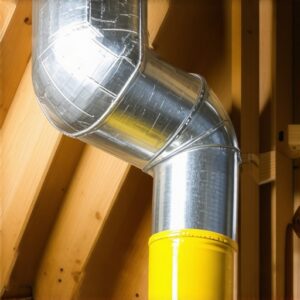
Next, we look at the ‘Veins’—your ductwork. If you haven’t invested in duct design services lately, your DCV system is likely fighting against its own ‘Tin Knocker’s’ worst nightmare. We measure Total External Static Pressure (TESP). High static pressure is the silent killer of efficiency. It’s like trying to run a marathon while breathing through a cocktail straw. If the static is too high, the ‘Pookie’ (that’s mastic for the uninitiated) starts to fail at the seams, and your conditioned air ends up in the plenum instead of the workspace. This is why attic insulation for heating is so critical in commercial-to-residential conversions; without a sealed envelope, your DCV is just an expensive fan.
The Cold Climate Reality: When the Polar Vortex Hits
In our neck of the woods, the ‘Enemy’ is the cracked heat exchanger. When a DCV system fails in a warehouse heating solutions environment during a cold snap, the dampers might freeze open. This blasts the heat exchanger with 10°F air while it’s trying to maintain a 180°F internal temperature. That thermal shock is what causes the metal to fatigue and crack. I’ve seen electric heater services called out to supplement a failing main unit, only to find that the root cause was a $50 damper motor that stayed open on a Friday night. If you’re seeing flame rollout or smelling that ‘burnt dust’ scent, stop looking at the thermostat and start looking at the intake.
“Ventilation for Acceptable Indoor Air Quality requires dynamic response to occupancy levels.” – ASHRAE Standard 62.1
We also have to consider the humidity. In the winter, dry air is a heat thief. A bypass humidifier repair is often part of a DCV audit because if the air is too dry, occupants will crank the heat to 75°F just to feel warm. Proper DCV integration ensures that we aren’t exhausting all our humidified air just because a sensor is misreading. It’s a delicate dance of psychrometrics. For more on how to keep your system alive, check out these top hvac repair strategies to extend your systems life.
Don’t Get Scammed: The Audit vs. The Sales Pitch
I followed a guy last week who told a building manager they needed four new RTUs because the ‘boards were fried.’ I went up there, pulled the panel, and found a blown fuse and a loose wire on the CO2 sensor. That’s it. He wanted $80,000; I charged for a service call and a handful of wire nuts. A real audit looks at the components. Does the unit need capacitor replacement services? Is the thermocouple replacement overdue? These are small fixes that preserve the system. If you want to know what a real pro looks for, read about choosing the best heating service expert tips for 2025. We focus on the physics, not the commission check. If your ‘tech’ doesn’t know what a psychrometric chart is, kick him off your roof.
Final Verdict: The Airflow Manifesto
Comfort in a commercial building isn’t magic; it’s math. If your DCV audit reveals that your warehouse heating solutions are failing, it’s usually an airflow issue. Seal your ducts with ‘Pookie,’ ensure your electric heater services are integrated with your programmable thermostat programming, and never trust a guy who says ‘it just needs a little more gas.’ If the gas is gone, there’s a leak. If the building is stuffy, the DCV is broken. It’s that simple. For professional help with your audit, contact us today to get a real veteran on your roof. We also recommend checking our guide on preventative heating maintenance for more tips on longevity.