The Sound of the Regulatory Cliff
Listen. That’s the sound of your 15-year-old furnace groaning through another cycle, and if you listen closer, you can hear the sound of your bank account leaking. We are standing at a regulatory cliff in the HVAC industry, and most homeowners are about to walk right off it without a parachute. As a guy who has spent three decades elbow-deep in blower wheels and caked-on dust, I’ve seen every ‘miracle’ fix in the book, but the transition to SEER2 isn’t marketing fluff—it’s a fundamental shift in how we measure the physics of comfort. If you’re still running an old R-22 system or even an early R-410A model, you’re essentially burning cash to keep the local squirrels warm.
“The most expensive equipment in the world cannot overcome a bad duct system.” – Industry Axiom
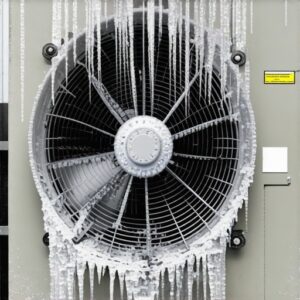
My old mentor used to scream at me until he was blue in the face: ‘You can’t cool what you can’t touch!’ He was talking about the boundary layer of air on the evaporator coil, but the lesson applies to everything we do. This is why airflow matters more than horsepower. You can slap a 5-ton unit on a 3-ton duct system, but all you’ll get is a frozen coil and a dead compressor. This principle is at the heart of the SEER2 mandate. The Department of Energy finally realized that the old SEER testing didn’t account for the real-world ‘static pressure’—the resistance air faces as it moves through your house. SEER2 raises the bar by testing units under much higher pressure, forcing manufacturers to build better blowers and more efficient coils. If you’re looking into heat pump replacement, you aren’t just buying a box; you’re buying a thermodynamic engine designed to handle the friction of your home’s lungs.
The Thermodynamics of the North: Why Sensible Heat is Only Half the Battle
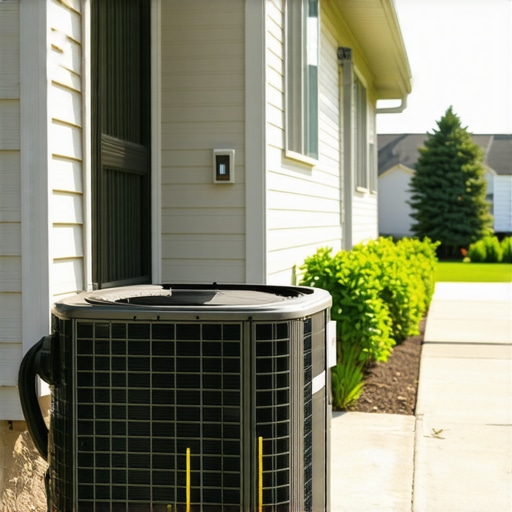
In our climate, we deal with the ‘Polar Vortex’ effect. When the temperature drops, your heat pump has to work harder to extract heat from the outside air. Older units would give up and kick on the ’emergency heat’—basically a giant toaster in your air handler that eats electricity like a starving beast. SEER2-rated variable-speed compressors change the game. Instead of being ‘on’ or ‘off,’ they ramp up and down like a dimmer switch. This allows the system to maintain a constant discharge temperature without the massive amp spikes that happen every time a single-stage compressor kicks in. We call the refrigerant ‘juice’ or ‘gas,’ but it’s really just a vehicle for moving BTUs. In a heating application, we’re dealing with the vapor-compression cycle in reverse. The evaporator (now outside) has to drop below the ambient temperature to absorb heat. If it’s 20°F outside, that coil might be at 5°F. This is where the magic happens, and where old systems fail.
The Death of R-410A and the A2L Transition
Here is the trap: R-410A, the refrigerant we’ve used for decades, is being phased out for the new A2L refrigerants like R-454B and R-32. These are ‘mildly flammable,’ which sounds scary but really just means we have to install sensors and more robust piping. Why does this matter for your bill? Because the new equipment is being engineered for these high-efficiency gases from the ground up. If you wait until 2026 to do a replacement, you’re going to pay a ‘transition tax’ as the industry scrambles to keep up with the new safety requirements. I’ve seen ‘Sales Techs’—those guys who look like they’ve never seen a day of ‘Pookie’ (mastic) in their lives—try to sell people on ‘dry-ship’ units to circumvent regulations. Don’t fall for it. Those units are inefficient dinosaurs. A proper heating service expert will tell you that a SEER2 heat pump with a matched air handler is the only way to actually see a ROI on your utility bill.
From Boilers to Pellets: The Specialist’s Perspective
It’s not just about residential split systems. If you’re running a hotel or a multi-unit complex, the stakes are higher. Hotel boiler services are a different breed of animal. You’re dealing with massive amounts of ‘latent heat’ and constant demand. Scaling in the heat exchanger can drop your efficiency from 94% to 70% in a single season if the water chemistry is off. Same goes for furnace flame sensor cleaning. That little rod of metal uses a microamp signal to tell the control board the gas is actually lit. If it’s coated in carbon, the furnace cycles on and off, wasting gas every time it goes through the ignition sequence. Whether it’s pellet stove repair or baseboard heater repair, the goal is always the same: maximize the heat transfer surface area and minimize the energy required to move that heat. Even pool heater repair follows these laws; if the heat exchanger is pitted, you’re just heating the ground, not the water.
“Standard 15 and 34 establish the safety framework for refrigerant use, and as we move to A2L, compliance isn’t optional—it’s the difference between a safe home and a hazard.” – ASHRAE Standards
The Remote Access Revolution
One keyword I keep hearing is ‘remote thermostat access.’ Some old-school ‘tin knockers’ hate it, but I love it. Why? Because it gives me data. I can see if a system is ‘short-cycling’ from my truck before I even walk in the door. Short-cycling is the silent killer of SEER2 efficiency. Every time a motor starts, it draws a ‘locked rotor amp’ surge. If your system is oversized (a classic ‘Sales Tech’ move), it hits the setpoint too fast, shuts down, and restarts ten minutes later. You never get the benefit of the high-efficiency run cycle, and you never pull the humidity out of the air. Modern boiler repair services and shop heater services now integrate these smart controls to ensure that the ‘Delta T’ (temperature difference) stays exactly where it needs to be for peak thermodynamic performance.
The Verdict: Repair or Replace?
If you’re looking at multi-family heating upgrades, you have to look at the ‘Total Cost of Ownership.’ A SEER2 upgrade might cost 20% more upfront, but when you factor in the 30% reduction in ‘juice’ consumption and the tax credits available for high-efficiency heat pumps, the system pays for itself in less than five years. Don’t let a ‘Sparky’ or a general handyman tell you that ‘any unit will do.’ HVAC is a science of pressures and temperatures. If your technician doesn’t own a set of digital manifolds and a micron gauge, show them the door. Your comfort—and your wallet—depends on the physics, not the sales pitch.