The Thermodynamics of the Deep Freeze
It’s 3:00 AM in the middle of a January polar vortex, and the outdoor ambient temperature has plummeted to -10°F. For a standard heat pump, this is the end of the line. The compressor is screaming, the heat strips are glowing red (and eating your wallet), and the indoor air feels like a lukewarm whisper. But then there is Hyper-Heat. My old mentor, a grizzly veteran we called Big Mike, used to stand in front of a frozen condenser and scream, ‘You can’t cool what you can’t touch, and you can’t heat with what you don’t have!’ He was a believer in the physics of the ‘lift.’ He taught me that even at sub-zero temperatures, there is heat energy in the air—molecular motion that simply needs to be concentrated and moved. Hyper-Heat isn’t magic; it’s a masterclass in vapor injection and inverter management that keeps the ‘Juice’ (refrigerant) moving when physics says it should stop.
The Physics of Enhanced Vapor Injection (EVI)
In a traditional system, as the outdoor temp drops, the density of the refrigerant gas decreases. The compressor has to work harder to compress less ‘gas’ to a temperature high enough to reject heat into your home. This is where the efficiency dies. Hyper-Heat systems utilize what we call ‘Flash Injection’ or ‘Enhanced Vapor Injection.’ Imagine a runner who gets a shot of pure oxygen halfway through a marathon; that’s what a third port on the compressor does. It injects a mixture of liquid and gaseous refrigerant directly into the compressor scrolls. This cools the internal components, allowing the compressor to run at much higher speeds (Hertz) without melting itself into a lump of scrap metal. This ‘Thermodynamic Zooming’ ensures the mass flow rate of the refrigerant stays high, even when the air outside is cold enough to crack a brass fitting.
“The most expensive equipment in the world cannot overcome a bad duct system.” – Industry Axiom
When I’m performing a high-efficiency furnace installation or a Hyper-Heat setup, I see ‘Sales Techs’ all the time trying to slap a 5-ton unit on a 3-ton duct system. It doesn’t work. Airflow is the lifeblood of the system. If your ‘Tin Knocker’ didn’t size the return air drops correctly, your fancy Hyper-Heat unit will hunt for capacity and eventually trip a high-limit switch. The static pressure becomes a wall. You need a blower motor replacement with an ECM (Electronically Commutated Motor) that can ramp up and overcome that resistance, but even then, physics is a cruel mistress. You can’t push a gallon through a straw without paying the price in electricity and noise.
The 2025 Regulatory Cliff: R-410A vs. A2L
We are standing on the edge of a massive shift in the trade. The phase-out of R-410A is here, and the transition to A2L refrigerants like R-454B is changing how we look at every contactor repair and system swap. These new refrigerants are ‘mildly flammable,’ which means your technician better know more than just how to use a crescent wrench. We’re talking about new sensors, spark-proof contactors, and mitigation boards. Buying the cheapest unit you can find right now is a trap. If you don’t look for Energy Star heating certification, you’re buying yesterday’s technology at tomorrow’s prices. For those in the coldest zones, pairing Hyper-Heat with propane conversion services for a dual-fuel setup is often the smartest play, giving you a gas backup when the grid gets shaky. You can learn more about choosing the best heating service expert tips for 2025 to avoid the pitfalls of this transition.
The Mechanical Anatomy of Winter Survival
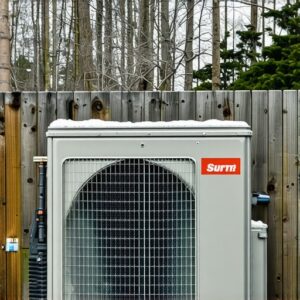
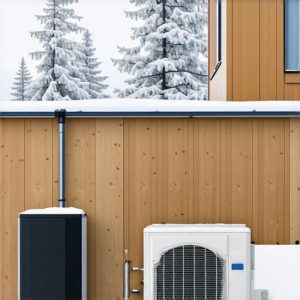
In the North, the enemy isn’t just the cold; it’s the ice. I’ve seen flue pipe installation jobs where the ‘Sparky’ or a lazy installer didn’t pitch the PVC correctly, leading to acidic condensate freezing and backing up into the secondary heat exchanger. That’s a recipe for a 2 AM emergency call. Similarly, snow melt systems installation on the outdoor pad is becoming a standard for high-end Hyper-Heat installs. If the unit sits in a snowbank, the defrost cycle has to work twice as hard. You’re basically paying to melt the driveway with your AC compressor. I always tell homeowners that preventative heating maintenance is the difference between a cozy night and a hot water heater repair combined with a frozen pipe nightmare. You can find a solid guide for homeowners in 2025 to keep these systems humming.
“Heat pumps shall be sized to meet the building’s heating load, even when the ambient temperature drops below the balance point.” – ACCA Manual S
I once walked into a shop where the owner was complaining that his shop heater services weren’t cutting it. He had a wall furnace installation that was 40 years old and a flue pipe installation that looked like a bird’s nest. I replaced it with a mini-split Hyper-Heat head and he thought I’d performed a miracle. But it wasn’t a miracle; it was just matching the sensible heat load to the equipment’s actual output at -5°F. People forget that a ‘3-ton’ unit is only 3 tons at 47°F. By the time it hits 0°F, a standard unit is barely a 1.5-ton. Hyper-Heat maintains that 100% capacity because it can over-drive the compressor without the discharge temperatures going into the stratosphere. If you’re struggling with efficiency, check out these top hvac repair strategies to extend your systems life.
Why Airflow and ‘Pookie’ Still Matter
You can have the most advanced inverter-driven compressor on the planet, but if your ductwork is leaking, you’re just heating the attic. I’ve seen ‘Pookie’ (mastic) save more homeowners money than any smart thermostat ever could. Seal those joints. Insulate those plenums. If you are looking for heat pump solutions for efficient home comfort in 2025, you have to start with the envelope of the house. Don’t let a ‘Sales Tech’ sell you a bigger unit to cover up for a leaky house. That’s how you end up with a system that short-cycles and dies an early death. If you have questions about your specific setup, you can always contact us for a real technician’s opinion, not a sales pitch. We also value your data, so feel free to review our privacy policy.