The Stale Air Trap: Why Your Modern Home is Choking
My old mentor, a man who had more silver brazing scars than skin on his knuckles, used to scream at me every time I grabbed a wrench: ‘You can’t cool or heat what you can’t touch, and if you don’t move the air, you’re just heating a box of farts!’ It was blunt, but he was right. Today, we build houses like airtight Tupperware containers. It’s great for the utility bill, but it’s a disaster for the human lungs. You’re breathing in VOCs from that new carpet, dander from the dog, and the carbon dioxide you just exhaled ten minutes ago. When one room feels like a stagnant swamp and the other feels like a drafty hallway, it isn’t a ‘horsepower’ problem; it’s a physics problem. This is where Energy Recovery Ventilators (ERVs) come in. They are the lungs of the house, and without them, your high-efficiency system is just recirculating poison.
“The most expensive equipment in the world cannot overcome a bad duct system.” – Industry Axiom
Thermodynamic Zooming: How the ERV Core Defies the Seasons
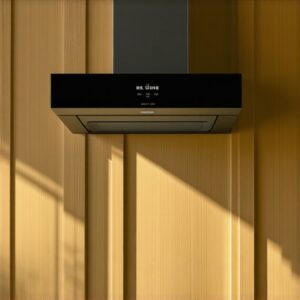
Let’s get technical for a second. In the North, where the polar vortex likes to turn your copper pipes into popsicles, you can’t just crack a window. You’d be throwing money into the wind. An ERV uses a cross-flow or counter-flow heat exchanger. Picture two streams of air passing each other like ships in the night, separated by a thin, permeable membrane. The stale, warm air from your bathroom and kitchen (the exhaust) gives up its heat to the incoming freezing air from the outside (the fresh air). But here’s the magic: it also transfers moisture. In the winter, it keeps the humidity inside so your skin doesn’t flake off like a dry croissant. This is the difference between sensible heat and latent heat. If you’re dealing with modulating furnace repair, you know these systems are sensitive to airflow; an ERV ensures that the air being fed into that high-tech furnace isn’t a shock to its system. [IMAGE_PLACEHOLDER]
Static Pressure and the ‘Tin Knocker’ Blues
Most ‘Sales Techs’ will try to sell you a bigger heat pump or a higher BTU furnace when you complain about comfort. They’re full of it. If your static pressure is too high because your ductwork looks like a pile of angry silver snakes, a bigger blower will just whistle through the vents and burn out your motor. When we do new construction heating design, we calculate the friction loss of every foot of pipe. We use ‘Pookie’—that messy grey mastic sealant—to ensure every CFM (Cubic Feet per Minute) goes where it’s supposed to. Using foil tape is for amateurs; real pros seal the joints until they’re airtight. This is critical when solar thermal heating integration is involved, as you’re working with precise temperature differentials that can’t be wasted through a leaky plenum. You can learn more about keeping things running smooth in our top HVAC repair strategies to extend your systems life.
The Maintenance Reality: Beyond the Filter
If you think maintenance is just vacuuming a floor vent, you’re the reason I have job security. A real tech looks at the furnace flame sensor cleaning to prevent nuisance lockouts and checks the thermocouple replacement on older standing pilot units. In modern systems, we’re looking at WiFi thermostat integration and leak detector integration. If your ERV core gets clogged with dust, your house starts to smell like ‘old gym bag.’ You have to pull that core, vacuum it out, and ensure the drains aren’t backed up with slime. For those in cold climates, checking the gas line installation for furnaces for proper pressure is the difference between a quiet blue flame and a ‘woof’ that shakes the house. Check out our preventative heating maintenance a guide for homeowners in 2025 for the full rundown.
“Ventilation is the intentional introduction of outdoor air into a space.” – ASHRAE Standard 62.1
The Fix: Physics Over Magic
The solution to a ‘uncomfortable’ house isn’t always more ‘juice’ (refrigerant) or a bigger compressor. It’s often about balancing the house. We use dampers to throttle back the rooms that get too much air and open up the returns in the rooms that feel stuffy. If you’re building a new place, the new construction heating design must include a dedicated return air path for every bedroom. When you integrate an ERV with a modern heat pump, you’re creating a closed-loop environment that manages its own climate with surgical precision. This is especially true when you use heat pump solutions for efficient home comfort in 2025. Don’t let a ‘Sparky’ or a ‘Tin Knocker’ tell you that a simple bathroom fan is enough ventilation; it’s like trying to drain a swimming pool with a straw while the garden hose is still running. It’s physics, not magic. Comfort is the result of managed airflow and proper enthalpy exchange. Period. “