The Ghost in the Machine: Why Your Old Thermostat is Killing Your Wallet
You hear that? That rhythmic thumping and the metallic groan coming from your utility closet? That’s the sound of a system that’s out of breath and overworking. My old mentor, a guy who could smell a burnt-out contactor from the driveway, used to scream at me, ‘You can’t heat what you can’t touch!’ He wasn’t talking about the radiator; he was talking about the molecules of air. If the airflow is restricted or the cycle timing is off, you’re just burning money in a combustion chamber that doesn’t care about your bank account. This is the fundamental truth that most ‘Sales Techs’ won’t tell you while they’re trying to push a $15,000 unit on you when you just need better logic at the wall. Proper thermostat installation isn’t just about mounting a pretty screen; it’s about establishing a digital handshake with your furnace’s brain.
“The most expensive equipment in the world cannot overcome a bad duct system or improper control logic.” – Industry Axiom (ACCA Manual J Supplement)
In the cold northern climates, where the wind whistles through the siding like a freight train, your furnace is fighting a constant battle against sensible heat loss. When you use a standard ‘dumb’ thermostat, your system operates on a crude binary: ON or OFF. It’s like driving a car by slamming the gas pedal to the floor until you reach 60mph, then cutting the engine until you drop to 55mph. It’s inefficient, and it wreaks havoc on your inverter-driven compressors and gas valves. App-controlled heating changes the physics of the game by utilizing algorithms that understand the thermal lag of your home. This is where system performance testing becomes critical. If we know exactly how long it takes for your specific structure to drop one degree, the app can modulate the heat arrival to prevent ‘overshooting,’ which is the primary cause of high energy bills.
The Thermodynamic Zoom: Sensible Heat and the AFUE Gap
Let’s talk about the actual science of the burn. When your furnace fires up, the heat exchanger has to reach a specific temperature before the blower fan (the tin knocker’s masterpiece) starts moving air. If your system short-cycles because of poor control, you’re losing 30% of your efficiency just in the startup and cooldown phases. This is why Energy Star heating certification is so important. A smart system monitors these cycles. If it detects that the furnace is kicking on every six minutes, it knows something is wrong—likely a restricted return or a failing limit switch—and it alerts you before you need a 24/7 heating emergency response call. You avoid the acidic, sour smell of a fried component because the app flagged the irregular cycle before the hardware melted. [IMAGE_PLACEHOLDER]
For those in multi-family units, multi-family heating upgrades often overlook the ‘brain’ of the system. Installing app-controlled hubs allows for a macro-view of the building’s health. We’re talking about managing the load across twelve units so the main gas line isn’t overwhelmed during a polar vortex. If you’re doing gas line installation for furnaces, you better ensure the pressure drop is calculated correctly, or no amount of ‘smart’ tech will save you. The app is the observer, but the plumbing—the flue pipe installation and the gas manifold—is the muscle. You need both. If your ‘Sparky’ (electrician) didn’t wire the C-wire correctly, that fancy thermostat will just drain its battery and leave you in the cold. It’s all connected.
“Ventilation systems shall be designed to provide no less than the minimum outdoor air ventilation rate.” – ASHRAE Standard 62.2
Why ‘Pookie’ and Proper Airflow Outperform Hardware Every Time
I’ve seen guys try to fix a cold room by adding more ‘juice’ (refrigerant) in the summer or cranking the manifold pressure in the winter. It’s a fool’s errand. If the HVAC repair doesn’t address the static pressure, you’re just putting a band-aid on a gunshot wound. I’ve gone into attics and found ductwork held together with nothing but hope and cheap tape. We use ‘Pookie’ (mastic) because it creates a permanent, airtight seal that survives the expansion and contraction of the seasons. When you combine an airtight duct system with an app-controlled interface, you’re finally reaching the efficiency levels the manufacturer promised. This is a core part of HVAC maintenance plans that actually work. Don’t let a tech just ‘brush the coils’ and leave; demand a static pressure test to see if your system is actually breathing. For more on this, check out our guide on top HVAC repair strategies to extend your systems life.
The app also serves as your first line of defense. It tracks the runtime of your inverter-driven compressors. If the ‘suction line’ isn’t hitting the right temperature, the sensors will pick it up before you even feel the chill. This level of preventative monitoring is why we recommend preventative heating maintenance for homeowners in 2025. You aren’t just buying a thermostat; you’re buying a 24/7 mechanical observer. This is especially vital when dealing with high-efficiency units that require precise flue pipe installation to prevent carbon monoxide rollout or moisture buildup that can rot your heat exchanger from the inside out. If you suspect your system is lagging, don’t wait for a total failure; contact us for a real diagnostic, not a sales pitch.
The Final Verdict: Is It Worth the Investment?
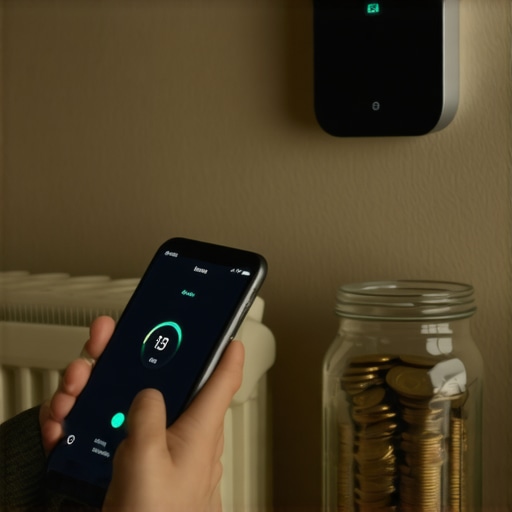
Is app-controlled heating a gimmick? Only if your system is junk. But if you have a solid foundation—properly sized gas lines, sealed ducts, and a clean heat exchanger—the logic provided by smart controls can reduce your bill by up to 20%. It’s about the ‘setback’ periods. The app knows you’re coming home from work because of your phone’s GPS and begins a gradual ‘ramp-up’ rather than a ‘panic-heat’ scenario. This preserves the life of your equipment and keeps your Energy Star heating certification status meaningful. If you are still trying to decide on the right path for your home, look into choosing the best heating service expert tips for 2025 to ensure your installation is handled by a pro, not a tinkerer. For modern alternatives like heat pumps, which require even tighter control logic, see our heat pump solutions for efficient home comfort in 2025. At the end of the day, comfort is physics. If you control the molecules and the timing, you control the cost. “