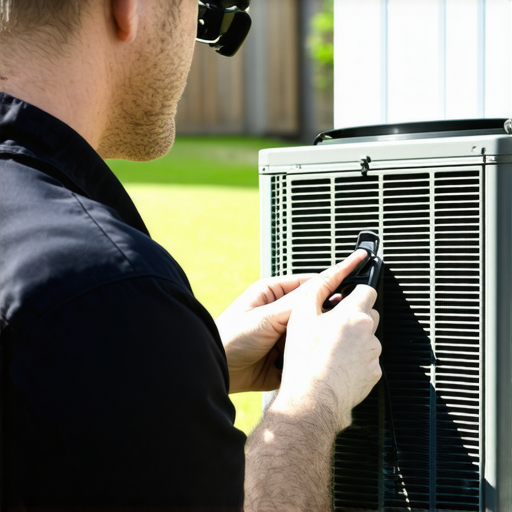

The 2026 Regulatory Cliff: Why Your Old AC Is a Financial Time Bomb
The sounds of a dying compressor are unmistakable to anyone who has spent three decades dragging a manifold gauge set through crawlspaces. It starts as a rhythmic thumping, transitions into a high-pitched metallic shriek, and ends with the smell of scorched copper and acidic oil. If your current unit was installed before the recent SEER2 shift, you aren’t just looking at a repair bill; you are staring down a massive regulatory shift. By 2026, the industry won’t just be different; it will be unrecognizable. We are moving away from R-410A—the ‘gas’ or juice we’ve used for twenty years—and stepping into the world of A2L refrigerants like R-454B. These are ‘mildly flammable,’ which means your new system will need leak sensors and mitigation boards that didn’t exist five years ago.
The Physics Lesson: Why Airflow Is King
My old mentor, a man who could sniff out a refrigerant leak from the curb, used to scream at me, ‘You can’t cool what you can’t touch!’ He was right. Most homeowners think the AC ‘creates’ cold. It doesn’t. It moves heat. The evaporator coil inside your air handler has to drop below the dew point of the air to pull out the latent heat—that’s the humidity that makes your shirt stick to your back. If your ductwork was slapped together by a ‘tin knocker’ who was more interested in speed than static pressure, your brand-new 2026-compliant unit will choke to death. You cannot overcome bad physics with a high SEER rating.
“The most expensive equipment in the world cannot overcome a bad duct system.” – Industry Axiom
Upgrade 1: The Transition to Inverter-Driven Heat Pumps
If you’re still running a single-stage ‘on-off’ box, you are burning money. A SEER2 compliant heat pump using inverter technology is like a car that can cruise at 60 mph instead of just flooring it or sitting at a red light. These systems modulate their capacity to match the heat load of the house exactly. This is critical for heat pump solutions for efficient home comfort in 2025 and beyond. When looking at financing for heat pump installs, make sure the tech isn’t just swapping the ‘box.’ You need to ensure the liquid line and suction line (which should be ‘beer can cold’ on a humid day) are sized for the new pressures. If a ‘Sales Tech’ tries to sell you a 15 SEER2 unit without checking your return air drop, show him the door. He’s looking for a commission, not a solution.
Upgrade 2: Energy Recovery Ventilators (ERVs) and Latent Heat
In our climate, the enemy isn’t just the temperature on the thermostat; it’s the 80% humidity. When we tighten up houses to meet new energy codes, we trap ‘stale’ air inside. Energy recovery ventilators are the answer. They allow you to bring in fresh outdoor air while ‘robbing’ the energy from the exhaust air. It’s a heat exchange process that keeps your ‘juice’ from working overtime. Without an ERV, your high-efficiency unit might short-cycle, meaning it cools the air so fast it never has a chance to dehumidify the space. You end up with a ‘cold swamp’—70 degrees and 70% humidity. That’s how mold starts growing on your supply registers.
“Design heating and cooling loads shall be determined in accordance with ACCA Manual J.” – ASHRAE Standard 90.1
Upgrade 3: Mandatory HVAC Load Calculation Services (Manual J)
Most ‘Sparkies’ and HVAC techs guess the size of the unit. They look at the square footage and say, ‘Yeah, looks like a 3-ton.’ This is malpractice. HVAC load calculation services (Manual J) are the only way to determine the true thermal requirements of your home. We look at the R-value of your insulation, the orientation of your windows, and the ‘pookie’ (mastic) sealing your joints. If the unit is oversized, it will cycle on and off constantly, killing the capacitor and eventually the compressor. If it’s undersized, it’ll run 24/7 and still never reach the setpoint. In 2026, with electricity prices climbing, an ‘eyeballed’ system is a luxury you can’t afford. This is why choosing the best heating service expert tips for 2025 emphasizes the math over the brand name.
Upgrade 4: App-Controlled Heating Systems and Zoning
The days of a single thermostat in the hallway are over. App-controlled heating systems linked to motorized dampers allow you to send the ‘cold’ or ‘heat’ only where you need it. Why are you cooling the guest room at 2 PM on a Tuesday? By using smart controls, you can manage the static pressure in your ducts and ensure the compressor stays within its design envelope. However, these systems require a technician who understands HVAC repair beyond just ‘topping off the Freon.’ If your tech doesn’t own a manometer to check static pressure, he shouldn’t be touching a zoned system. Proper maintenance is non-negotiable, which is why top hvac repair strategies to extend your systems life always include a deep dive into the controls.
The Critical Role of Industrial Heater Services and Safety
For larger properties or those with high-volume needs, industrial heater services are essential for maintaining the building envelope. But with high-output heating comes high-output risk. If you are integrating a wood burning stove installation as a secondary heat source, you absolutely must invest in carbon monoxide detector installation. I’ve seen too many ‘DIY’ stove installs where the flue pipe wasn’t pitched correctly, or the combustion air was being pulled from the same room as a gas-fired hot water heater repair job. This creates a backdraft situation that can be lethal. Safety isn’t an ‘add-on’; it’s the foundation of the trade.
Warranty Service Plans vs. The ‘Scam Tune-Up’
You’ll get flyers in the mail for a $49 tune-up. That isn’t a service; it’s a sales pitch. A real technician will check the ‘superheat’ and ‘subcooling’ to ensure the refrigerant charge is exact. They will check the microfarads on your capacitors and the contactor for pitting. Warranty service plans should be about proactive replacement, not reactive panic. Following a preventative heating maintenance guide for homeowners in 2025 can save you thousands. Don’t let a ‘Sales Tech’ tell you that a slightly dirty fan motor requires a whole new $18,000 system. If you stay on top of the ‘pookie’ on your ducts and keep those coils washed, a SEER2 system will pay for itself in five to seven years. Stop looking at the sticker price and start looking at the amp draw. That is where the real truth of your HVAC system lives. [{“@context”: “https://schema.org”, “@type”: “HowTo”, “name”: “How to Upgrade to SEER2 Compliance for 2026”, “step”: [{“@type”: “HowToStep”, “text”: “Perform a Manual J Load Calculation to determine the exact BTU requirements of the home.”}, {“@type”: “HowToStep”, “text”: “Inspect existing ductwork for static pressure leaks and seal with mastic (pookie).”}, {“@type”: “HowToStep”, “text”: “Select a SEER2 compliant heat pump or AC unit using A2L refrigerant mitigation boards.”}, {“@type”: “HowToStep”, “text”: “Install an Energy Recovery Ventilator (ERV) to manage latent heat and humidity loads.”}], “totalTime”: “P7D”}]”, “image”: {“imagePrompt”: “A professional HVAC technician in a grey uniform using a digital manometer to check the static pressure of a modern SEER2 compliant silver outdoor condenser unit, technical tools visible, realistic style, bright daylight.”, “imageTitle”: “Checking SEER2 System Pressure”, “imageAlt”: “Technician measuring HVAC static pressure on a new SEER2 compliant unit”}, “categoryId”: 12, “postTime”: “2025-05-15T09:00:00Z”}