I remember my old mentor, a man who had more refrigerant oil in his lungs than oxygen, screaming at me in a cramped mechanical room back in ’92: ‘You can’t cool what you can’t touch, and you can’t move heat with a wish!’ He was obsessed with the physics of energy transport. He’d grab a suction line and tell me if the superheat was off just by the vibration of the molecules. That lesson stuck. Today, as we stand on the edge of the R-410A sunset and the forced transition to A2L refrigerants like R-454B, homeowners are being pushed into heat pump technology without understanding the fundamental physics of how that heat actually gets into their bones. Whether you are looking at air-to-air or air-to-water systems, you aren’t just buying a white box; you’re buying a thermodynamic transport strategy. If the transport is flawed, you’re just burning ‘juice’ for nothing.
“The most expensive equipment in the world cannot overcome a bad duct system.” – Industry Axiom
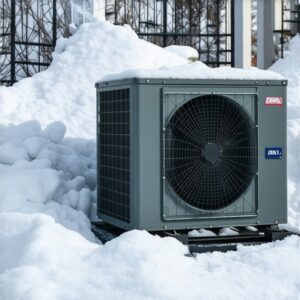
In our North and Cold climate zones, where the wind bites through a heat pump’s efficiency like a saw, the choice between air-to-air and air-to-water is a choice between moving air or moving mass. An air-to-air system is the standard DX (Direct Expansion) setup. It uses a compressor to pump refrigerant through a coil, and a blower to force air over that coil. The physics here is all about surface area and velocity. We perform airflow measurement services because if that air moves too fast, it doesn’t have the ‘dwell time’ to pick up heat; too slow, and your static pressure skyrockets, killing your blower motor. When we talk about heat pump solutions for efficient home comfort in 2025, we have to address the latent heat. In winter, an air-to-air system can feel ‘drafty’ because the discharge air temperature is much lower than an old-school furnace. It’s not that the heat isn’t there; it’s just not as concentrated.
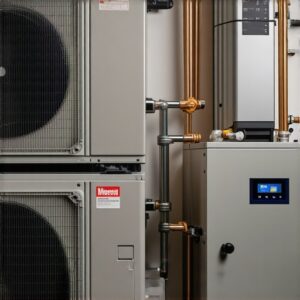
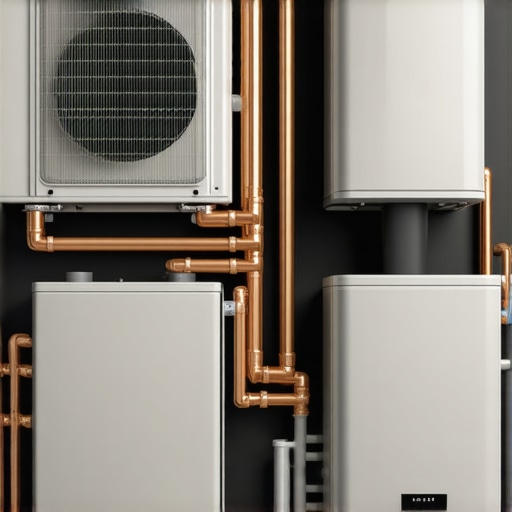
Air-to-water systems, however, are the heavyweights of the hydronic world. Instead of heating air, the outdoor unit heats a glycol-water mix that circulates through a heat exchanger. Think of it like choosing the best heating service for a luxury build or a commercial retro-fit. These systems are common in hotel boiler services where you need to move massive amounts of BTUs across long distances without the massive energy loss of ductwork. Water has a much higher specific heat capacity than air. You can move the same amount of heat in a 1-inch copper pipe that would require a 20-inch duct. But here is the catch: the installation is a surgical procedure. You aren’t just a ‘Tin Knocker’ (duct guy) anymore; you’re a pipe-fitter dealing with expansion tanks, circulator pumps, and the inevitable preventative heating maintenance required to stop oxygen from eating your heat exchanger from the inside out.
The 2025 regulatory cliff is the real elephant in the mechanical room. With the phase-out of R-410A, the new ‘mildly flammable’ A2L refrigerants require mandatory leak detector integration. These aren’t your grandpa’s units. If a sensor detects a leak in the evaporator coil, it will shut the whole system down to prevent a concentration of gas. This adds a layer of complexity to furnace repair services and heat pump maintenance that the ‘Sales Techs’ won’t tell you about. They just want to swap the box and run. A real tech knows that a high-efficiency furnace installation or a dual fuel heat pump system is a complex ecosystem. In cold climates, I often recommend a dual fuel heat pump system—using the heat pump down to 30°F and then letting a gas furnace take over when the physics of the refrigerant can’t keep up with the outdoor ambient drop. It saves your compressor from the ‘death cycle’ of constant defrosting.
“Properly sizing the equipment is secondary to properly sizing the delivery system.” – ASHRAE Standards Reference
Let’s talk about the ‘Pookie’ and the ‘Gas.’ Mastic, or ‘Pookie’ as we call it on the job site, is the only thing standing between you and a 30% energy loss in your attic. When we do static pressure testing, we often find that the ‘high-efficiency’ unit the last guy installed is choking to death because the return air drop is too small. It’s like trying to run a marathon through a soda straw. If you’re comparing air-to-air vs air-to-water, you have to look at your existing infrastructure. Do you have ducts? Go air-to-air, but pay for the airflow measurement services to ensure the ‘Tin Knocker’ didn’t leave you with a restricted mess. Do you have radiators or radiant floor heat? Air-to-water is your holy grail. It provides that ‘low and slow’ heat that doesn’t dry out your sinuses.
We also see a rise in demand-controlled ventilation integration. In the old days, houses were drafty, which was bad for the bill but good for the lungs. Now, we build ’em tight as a drum. If you don’t have proper ventilation, you’re just breathing recycled skin cells and VOCs. Whether it’s a simple transformer replacement or a full-scale wood burning stove installation for backup, every component must be calibrated. The ‘Sparky’ (electrician) needs to ensure the service can handle the heat strips, and the tech needs to ensure the refrigerant charge is ‘beer can cold’ on the suction side without flooding the compressor. This isn’t magic; it’s a math problem involving the Stefan-Boltzmann law and the latent heat of vaporization. If your tech doesn’t know what a psychrometric chart is, kick them out of your mechanical room. Comfort is a byproduct of precise engineering, not a lucky guess with a manifold gauge set.