The Phantom Cold Spot: Why Your Furnace Isn’t the Problem
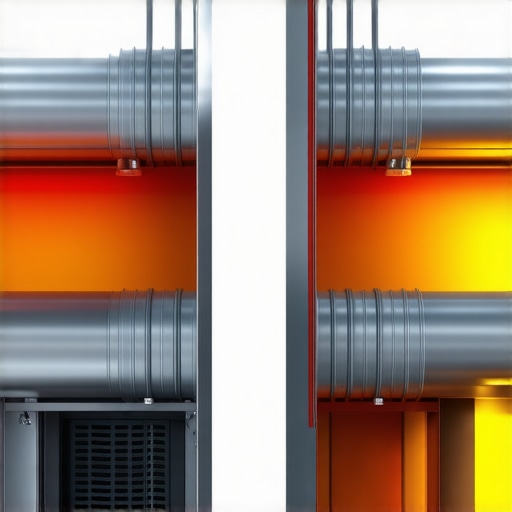
You’ve cranked the thermostat to 74 degrees, the burners are roaring, and the living room is pushing ‘tropical,’ yet the master bedroom feels like a meat locker in a Chicago winter. Most homeowners—and frankly, too many ‘Sales Techs’ looking for a commission—will tell you that you need a bigger furnace. They’re wrong. I’ve spent thirty years crawling through joists and sniffing out cracked heat exchangers, and I can tell you this: comfort is a matter of physics, not just horsepower. When you have persistent cold spots, you don’t have a heating problem; you have a delivery problem. Your ductwork is the respiratory system of your home, and if it’s got the equivalent of asthma, no amount of ‘juice’ is going to fix the chill.
The Mentor’s Mantra: Airflow vs. Horsepower
My old mentor, a grizzly veteran who could diagnose a failing inducer motor just by the frequency of its hum, used to scream at me whenever I looked at a nameplate first. ‘You can’t heat what you can’t touch!’ he’d yell, pointing at a kinked piece of flex duct that looked like a strangled python. He taught me that the most advanced dual fuel heat pump systems are useless if the static pressure is so high the blower motor is essentially running a marathon through a straw. Modern duct design isn’t about just ‘running some pipe’; it’s about calculating friction loss and ensuring the velocity of the air actually reaches the registers in the furthest corners of the house.
“The most expensive equipment in the world cannot overcome a bad duct system.” – Industry Axiom
In the North, where we deal with the ‘Polar Vortex’ every few years, we see this play out in 24/7 heating emergency response calls. People call us because their furnace is cycling on and off every five minutes—what we call short-cycling. They think it’s a bad limit switch. Usually, it’s because the return air duct is undersized. The furnace gets too hot because it can’t ‘breathe,’ hits the high-limit safety, and shuts down before the back bedrooms ever see a BTU of heat. This is why top HVAC repair strategies must always begin with a static pressure test, not just a parts swap.
The Thermodynamics of the ‘North’ Climate
When the ambient temperature drops below zero, the physics of your home change. In places like the Northeast or Midwest, we aren’t just fighting the cold; we are fighting the loss of latent heat. Dry air is an insulator’s nightmare. This is where heat pump solutions for efficient home comfort get tricky. Without proper humidity, 70 degrees feels like 65. Integrating whole-home humidifiers into your duct design doesn’t just stop your skin from cracking; it actually makes the air ‘thicker’ and better at carrying heat. If your ductwork isn’t designed to handle the moisture without rusting out the ‘tin,’ you’re asking for a moldy disaster. Modern IAQ improvement services focus on this balance—ensuring the ‘Pookie’ (that’s mastic sealant for the uninitiated) is applied to every joint so your expensive, humidified air doesn’t leak into the attic.
Static Pressure: The Silent Killer of Comfort
Every time a ‘Tin Knocker’ (duct installer) makes a 90-degree turn with a hard pipe, they add ‘equivalent length’ to the run. If you have five elbows between the plenum and your daughter’s bedroom, that 10-foot run is actually acting like a 50-foot run. The air loses its velocity, and by the time it reaches the vent, it’s a pathetic whimper. To solve this, we use Manual D calculations. We look at the ‘control board diagnostics’ to see how the variable speed blower is reacting. If the motor is ramping up to 100% just to push air through a dirty, undersized duct, it’s going to burn out long before its time. This is why preventative heating maintenance must include an inspection of the distribution system, not just the burner assembly.
“Design of the supply and return duct systems shall be such that the total external static pressure does not exceed the manufacturer’s blower rating at the required CFM.” – ACCA Manual J & D Standards
Beyond the Home: Commercial Heating Dynamics
It’s not just residential houses that suffer. I’ve been called into school boiler maintenance and hotel boiler services where the ‘cold spot’ was an entire wing of the building. In these large-scale systems, the issue is often air-binding or unbalanced loops. Whether it’s steam, hot water, or forced air, the principle remains: Resistance is the enemy. For those looking for the ultimate in consistent warmth, radiant floor heating installation bypasses the ‘airflow’ problem entirely by using thermal mass, but for 90% of us with forced air, we have to fix the ducts. If you’re tired of wearing a parka in your own hallway, it might be time for contacting a specialist who understands the difference between a ‘Sales Tech’ pitch and a real air-balance solution.
The Role of HEPA and IAQ in Modern Design
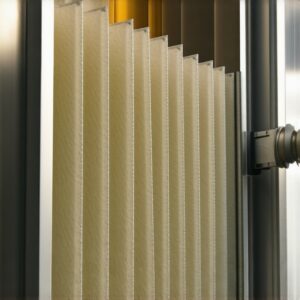
Everyone wants ‘clean air,’ so they go out and buy the thickest, highest-MERV filter they can find. They shove it into a rack designed for a cheap fiberglass mesh and wonder why their furnace is screaming. HEPA filter systems add a massive amount of resistance. If your ductwork wasn’t designed for that ‘pressure drop,’ you’re effectively choking your system to death. Duct cleaning services can remove the ‘squirrel hair and construction dust,’ but they can’t fix a duct that was too small from the day the house was framed. A real pro will look at your ‘total external static pressure’ and tell you if your system can actually handle that fancy filter without killing the compressor or the heat exchanger.
The 2025 Reality: Dual Fuel and Efficiency
As we move into 2025, we’re seeing a shift toward dual fuel heat pump systems. This is the ‘best of both worlds’—an electric heat pump for the mild days and a gas furnace for when the mercury drops into the negatives. But here’s the kicker: heat pumps move air at a lower temperature than gas furnaces. If your ducts are leaky or uninsulated, that ‘warm’ air will be ‘lukewarm’ by the time it hits your feet. Proper duct design ensures that the air is delivered fast enough and at a high enough volume to maintain comfort without the ‘drafty’ feeling people hate about old heat pumps. Choosing the right pro involves finding someone who understands these nuances. You can find more on choosing the best heating service to ensure your 2025 upgrades actually work as advertised.
Conclusion: Physics Doesn’t Lie
At the end of the day, you can spend $20,000 on the highest-efficiency equipment on the market, but if it’s hooked up to the same ‘accordion’ flex duct and leaky transitions, you’re just wasting money. Comfort is achieved when the thermodynamics of the house are in balance. Stop chasing ‘cold spots’ with space heaters that are a fire hazard. Fix the lungs of your home, seal your joints with real Pookie, and make sure your return air is as robust as your supply. That’s how a veteran tech stays warm, and that’s how you will too.