The Thermodynamic Lie of Resistance Heating
My old mentor, a man who spent forty years breathing in soot and refrigerant, used to scream at me whenever I suggested a quick fix: ‘You can’t cool what you can’t touch, and you can’t heat what you can’t move!’ He was obsessed with airflow and the raw physics of heat transfer. He taught me that while electric baseboards are 100% efficient in a laboratory, they are a financial disaster in the real world. In the HVAC trade, we call baseboard heaters ‘glorified toasters.’ They use a massive amount of electricity to heat a high-resistance element, which then radiates heat into a room. There is no multiplication of energy. You get one watt of heat for every watt of juice you pay for. That is a 1:1 ratio, or a COP (Coefficient of Performance) of 1.0. In a northern winter where the polar vortex is trying to turn your pipes into ice sculptures, a COP of 1.0 is a fast track to a $600 electric bill.
The Cold Climate Heat Pump: Defying the Polar Vortex
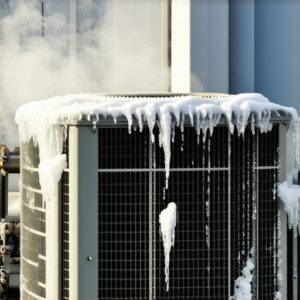
For decades, the knock on heat pumps was that they turned into expensive bricks once the temp hit 32°F. If you lived in a place like Chicago or Boston, you stuck with oil to gas conversion or stayed tethered to a boiler. But the 2025 generation of cold climate heat pumps (CCHPs) has changed the math. These units utilize variable-speed ‘inverter’ compressors and vapor-injection technology. Instead of just stopping when it gets cold, the system ramps up the juice, squeezing every bit of ambient thermal energy out of the -15°F air. While a baseboard is still struggling at 1:1, a high-end heat pump is still operating at a COP of 2.0 to 2.5 even in the deep freeze. You are literally moving heat rather than creating it, which is the secret to heat pump solutions for efficient home comfort in 2025.
‘The most expensive equipment in the world cannot overcome a bad duct system.’ – Industry Axiom
The Physics of Heat Exchangers and Carbon Safety
When I perform a commercial furnace repair or a standard HVAC repair, the first thing I look for isn’t the thermostat—it’s the heat exchanger. In a traditional gas system, a cracked heat exchanger is a death sentence, which is why carbon monoxide detector installation and regular combustion analysis are non-negotiable. However, with a cold climate heat pump or geothermal heat pump systems, we eliminate the combustion process entirely. There is no flame rollout, no soot, and no risk of CO poisoning from the heating source. We are dealing with the compression and expansion of refrigerants like R-410A or the newer R-454B. When that suction line is running, it’s pulling heat from the outside and dumping it inside via the evaporator coil. It’s pure system performance testing at its finest.
The Static Pressure Nightmare
You can buy the most expensive Trane or Carrier unit on the market, but if your tin knocker didn’t size the ducts right, you’re dead in the water. This is where system performance testing becomes critical. I’ve seen 5-ton units strangled by 3-ton ductwork, leading to high head pressure and early compressor failure. This is why I always tell homeowners that preventative heating maintenance is about more than just changing a filter; it is about checking the static pressure. If the air can’t move, the heat can’t get to you. Whether it’s shop heater services or a residential split system, the physics remain the same. If you are tired of the baseboard ‘click-clack’ and the dry, uneven heat, it’s time to look at a geothermal heat pump systems or a CCHP.
‘Design conditions for heating shall be based on the 99% column of the ASHRAE Climatic Design Conditions table.’ – ACCA Manual J
Why 2025 is the Year of the Transition
We are currently facing a ‘Regulatory Cliff.’ The EPA is phasing out older refrigerants in favor of A2L ‘mildly flammable’ options. While this sounds scary, it actually means the new equipment is more efficient than ever. If you are currently relying on an old oil burner, considering an oil to gas conversion is one path, but moving to a heat pump often qualifies for massive federal tax credits. For those with specialized needs, like pool heater repair or those requiring a 24/7 heating emergency response, the reliability of these new systems is a game-changer (though I hate that term). The reality is that the Sparky (electrician) will have less work maintaining your baseboards and more work helping us commission your new high-efficiency system. If you’re ready to stop wasting money, contact us to see how the math works for your specific home layout. Don’t wait for the ‘The sound of silence’ when your old heater finally gives up the ghost. Check out these top hvac repair strategies to extend your systems life before the next blizzard hits.