The Myth of the Cold Swamp: Why Your AC is Failing Your Comfort
I’ve spent thirty years crawling through fiberglass-filled attics and dodging wasps on commercial rooftops, and if there’s one thing that makes my blood boil more than a seized compressor in July, it’s a ‘Sales Tech’ telling a homeowner they need a bigger unit to fix a ‘sticky’ house. You know that feeling—the thermostat says 72 degrees, but you’re peeling your skin off the leather sofa like a cheap decal. That’s latent heat, my friend. It’s the invisible enemy that traditional air conditioning units are historically terrible at fighting, especially when they’re slammed into a house without a proper Manual J calculation.
“The most expensive equipment in the world cannot overcome a bad duct system.” – Industry Axiom
My old mentor, a grizzled veteran we called ‘Iron Lung’ Pete, used to scream at me whenever I’d reach for the gauges too fast. ‘You can’t cool what you can’t touch!’ he’d bellow. This wasn’t just old-man rambling; it was a physics lesson. Pete knew that airflow was the king of the castle. He taught me that an air conditioner isn’t a ‘cold maker’—it’s a heat and moisture remover. If the air moves too fast across that evaporator coil, the moisture doesn’t have time to condense. It just stays in the air, turning your living room into a refrigerated jungle. This is where the old-school gas furnace repair mentality fails, because we used to treat cooling as an afterthought to heating.
The Thermodynamic Reality of Latent Heat
To understand why a modern heat pump is a superior moisture-wrecker, you have to understand the dew point. In a traditional single-stage system, the compressor is either 100% on or 100% off. It’s like trying to drive in a school zone with a drag racer—you’re constantly slamming the gas and then the brakes. When that 5-ton beast kicks on, it drops the sensible temperature (the number on the wall) so fast that the unit cycles off before the evaporator coil has a chance to wring the water out of the air. You end up with a ‘short cycling’ nightmare where the air is cold but the humidity is 70%.
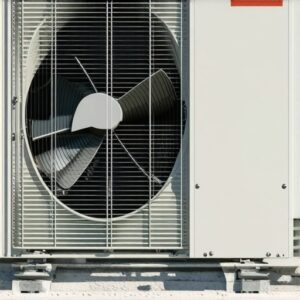
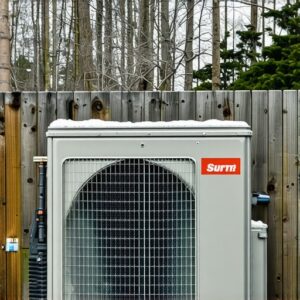
Modern heat pumps, particularly those with inverter-driven compressors, operate on a different plane of existence. Instead of ‘on’ or ‘off,’ they modulate. They might run at 25% capacity for four hours straight. This is a heat pump solution for efficient home comfort in 2025 because it keeps the air moving slowly and steadily over a freezing coil. This long run time allows the coil to stay below the dew point, pulling gallons of water out of your air and dumping it down the condensate drain. It’s the difference between trying to dry a spill with a quick swipe of a towel versus letting a sponge soak it all up.
The Airflow Manifesto: Why Ductwork is Your Destiny
I’ve seen ‘Tin Knockers’ (our affectionate term for duct installers) throw together flex duct like they were decorating for a birthday party. If your static pressure is too high because of pinched ducts or undersized returns, your brand-new heat pump will struggle just as much as an old steam boiler repair job from 1952. Airflow is the lifeblood of the system. If you want to fix the humidity, you have to look at the ‘Pookie’ (that’s the gray mastic sealant we use) and the transitions. I’ve found that many ‘bad units’ are actually just victims of poor manual J calculations where the installer guessed the load instead of doing the math.
When we talk about warehouse heating solutions or even crawl space heating solutions, we’re dealing with massive volumes of air that need to be managed. In a residential setting, if your return air drop is too small, your blower motor is going to work overtime, the coil will likely freeze up, and you’ll find yourself calling for a limit switch replacement because the system is overheating or tripping safety sensors. Preventative heating maintenance for homeowners in 2025 must include a deep dive into static pressure, not just ‘topping off the gas.’
From Swamp Coolers to Modern Miracles
In the Southwest, folks are used to swamp cooler maintenance, which literally adds moisture to the air to cool it. But in the humid South or the volatile Midwest, that’s a death sentence for comfort. If you’re transitioning from a propane system, you might even need propane conversion services to get your infrastructure ready for a high-efficiency heat pump. The beauty of these modern machines is their versatility. They don’t just handle the summer ‘juice’ (refrigerant) flow; they manage the entire envelope of the home. I’ve even integrated them into pool heater repair scenarios where heat recovery is used to warm the water while cooling the house—that’s the kind of ‘Thermodynamic Zooming’ that gets an old tech like me excited.
“Standard 62.1 and 62.2 are the recognized standards for ventilation system design and acceptable indoor air quality (IAQ).” – ASHRAE Standards
If you’re still clinging to an old gas furnace because you’re afraid of the ‘lukewarm’ air of 1980s heat pumps, you’re living in the past. Modern units can handle sub-zero temps, and their ability to dehumidify is leagues ahead of a standard AC-and-coil combo. We’re talking about top HVAC repair strategies to extend your system’s life that actually involve running the equipment more frequently but at lower intensities. It’s counter-intuitive, but it’s the key to a dry, crisp home. It’s why choosing the best heating service expert tips for 2025 always starts with a conversation about moisture, not just BTU capacity.
The Final Diagnosis: Comfort is Physics
Don’t let a ‘Sparky’ or a Sales Tech tell you that a ‘hard start kit’ is a magic bullet for a sticky house. If your home feels like a locker room, your system isn’t running long enough to do its job. Whether you’re looking at chimney liner installation for an old furnace or upgrading to a variable-speed heat pump, the goal is always the same: control the air. Contact us to get a real technician out there who knows the difference between sensible and latent heat. We don’t just swap parts; we solve the physics of your home. If you want to know more about how we handle your data, check our privacy policy. Remember: if the ‘suction line’ isn’t ‘beer can cold’ and the run-time isn’t long enough, you’re just paying for a cold swamp.