My old mentor, a man who could hear a refrigerant leak from across a warehouse parking lot, used to scream, ‘You can’t cool what you can’t touch!’ At the time, I was a green apprentice wrestling with a roll of mastic—what we call ‘pookie’ in the trade—trying to seal a trunk line in a drafty warehouse. He wasn’t just barking about the surface area of the evaporator coil; he was talking about the physics of the air itself. If the air doesn’t physically contact the medium designed to treat it, you’re just moving heat and dust in a circle. This fundamental truth is why HEPA filtration has moved from ‘hospital luxury’ to an absolute requirement in new construction heating design and commercial HVAC specifications. When you’re designing a modern commercial envelope, you aren’t just building a box; you’re building a life-support system where IAQ improvement services are the heartbeat.
“The most expensive equipment in the world cannot overcome a bad duct system.” – Industry Axiom
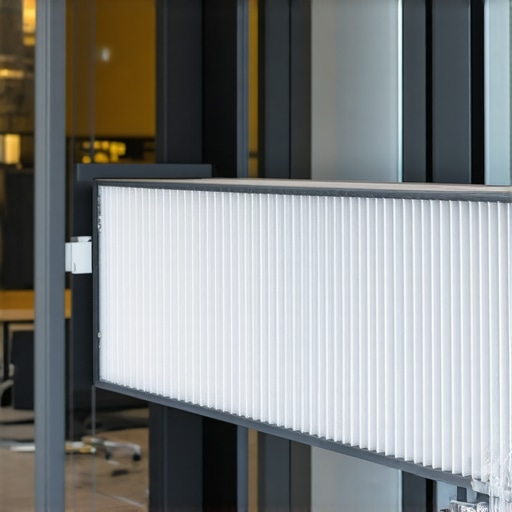
In the world of commercial air handling, we deal with ‘Static Pressure’—the resistance against the blower. A HEPA filter is essentially a technical brick in the airstream. While a standard pleated filter might catch dust bunnies and the occasional pet hair, a HEPA (High-Efficiency Particulate Air) filter captures 99.97% of particles down to 0.3 microns. To a tin knocker installing ductwork, that means the system needs a blower with enough ‘gas’ to push air through that dense mesh without killing the compressor. If you don’t account for this in the initial design, the system will ‘short cycle,’ meaning it turns on and off so fast it never reaches the dew point. When that happens in a humid environment, you don’t get cooling; you get a cold swamp. Thermodynamic zooming shows us that the evaporator coil must drop below the dew point to remove latent heat—the hidden energy in moisture. Without proper airflow managed by control board diagnostics, that moisture stays in the air, feeding mold inside the very ducts meant to keep people healthy.
New commercial spaces often utilize dual fuel heat pump systems to balance efficiency and raw heating power. These systems are marvels of engineering, switching between electric heat pump operation and gas furnace backup. However, the tighter the building, the more ‘stale’ the air becomes. Integrating HEPA filters into these systems requires a deep dive into air purification integration. You can’t just slap a thick filter into a standard rack. You need a bypass humidifier repair specialist or an IAQ expert to ensure the static pressure doesn’t skyrocket, causing the heat exchanger to crack. I’ve seen pellet stove repair technicians call me in because a commercial property tried to use wood-burning supplemental heat without proper filtration, leading to soot-clogged HEPA banks in days. It’s a mess that costs more than the ‘savings’ they were chasing.
“Ventilation is the key to diluting indoor contaminants, but filtration is the lock that keeps them out.” – ASHRAE Standards Reference
When I’m looking at crawl space heating solutions for multi-use commercial buildings, I often find that the ‘sparky’ (electrician) and the HVAC tech haven’t communicated about the load. Modern WiFi thermostat integration allows us to monitor the pressure drop across these filters in real-time. If the filter is loaded with construction dust—a common tragedy in new builds—the thermostat should alert the facility manager before the high-limit switch trips on the furnace. This level of oversight is essential when choosing the best heating service expert tips for 2025 because the tech who just ‘tops off the juice’ is a dinosaur. You need a technician who understands that the suction line should be ‘beer can cold’ only when the airflow is perfect. For more on keeping your gear running, check out top HVAC repair strategies to extend your systems life.
We also have to discuss the climate reality in the North. In cities like Chicago or throughout the Northeast, the ‘polar vortex’ isn’t just a news headline; it’s a mechanical threat. During a deep freeze, a heat pump might struggle, requiring the gas backup to kick in. If your HEPA system is poorly integrated, the increased resistance can cause ‘flame rollout’ in the furnace—a dangerous condition where the fire literally reaches back toward the technician. This is why preventative heating maintenance a guide for homeowners in 2025 and commercial managers is vital; it’s about safety as much as comfort. If you’re seeing issues with your setup, don’t wait for a total failure; reach out via our contact us page. We also offer specialized humidifier installation to ensure that while the HEPA filter is cleaning the air, it’s not becoming a desert inside. Dry air can crack woodwork and irritate the respiratory systems of everyone in the office. For those looking at future-proofing their property, exploring heat pump solutions for efficient home comfort in 2025 is the smartest move you can make today.