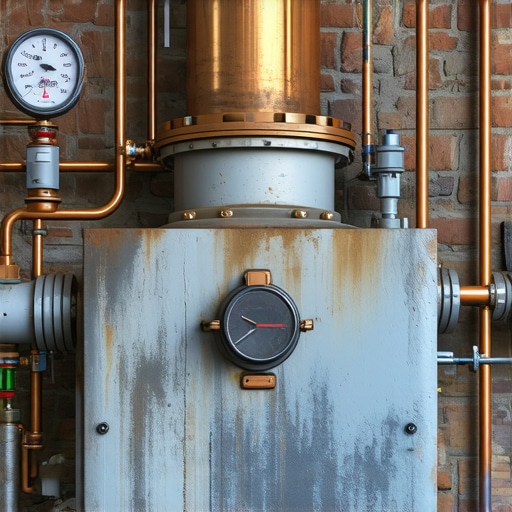
The sound of a school hallway in January shouldn’t include the rhythmic hammering of steam pipes or the low-frequency vibration of a struggling 2-million BTU iron giant. If your facility management team is still relying on a maintenance checklist written during the Reagan administration, you aren’t just wasting money; you are fighting a losing battle against physics. Most school districts are sitting on aging hydronic systems that were designed for a different era of energy costs and climate expectations. As a tech who has spent three decades dragging combustion analyzers through basement mechanical rooms, I’ve seen the same story play out: the boiler is treated like a static piece of furniture, when in reality, it is a complex thermodynamic engine that requires precise calibration of its combustion air-to-fuel ratio.
The Physics Lesson: Why Horsepower is a Lie
My old mentor used to scream, ‘You can’t heat what you can’t touch!’ He’d be standing over a 1970s cast-iron sectional boiler, pointing at the layers of calcium and magnesium scale inside the heat exchanger. This is the fundamental flaw in many outdated school maintenance plans. We focus on ‘horsepower’ or BTU output, but we ignore the thermal resistance of the scale. A 1/16th inch of scale can reduce heat transfer efficiency by nearly 15%. If your plan doesn’t include aggressive water treatment and a deep-dive thermocouple replacement schedule to ensure the pilot and main burner are communicating correctly, you are basically burning cash. In the world of commercial heating, airflow and fluid dynamics are the only metrics that matter. If the ‘Tin Knocker’ who installed your ductwork thirty years ago didn’t account for static pressure, no amount of ‘Juice’ (refrigerant) or gas will fix a cold classroom. This is why we advocate for preventative heating maintenance that looks at the system as a whole, not just the burner.
“The most expensive equipment in the world cannot overcome a bad duct system.” – Industry Axiom
The Thermodynamic Zoom: Latent Heat vs. Sensible Heat
Let’s get technical for a second. In our cold northern climate, schools have to deal with massive fluctuations in latent heat (the energy required to change the state of moisture in the air) and sensible heat (the actual temperature change we see on the dial). Older boilers are ‘non-condensing,’ meaning they let all that beautiful latent heat escape right out the flue stack. We’re talking 18% of your energy gone. This is where hyper-heat heat pumps are changing the game. Unlike your grandpa’s heat pump that quit when it hit 30°F, these modern machines use flash injection technology to maintain 100% capacity down to 5°F and beyond. When we talk about heat pump replacement for schools, we aren’t just swapping boxes. We are redesigning the thermodynamic cycle of the building. By utilizing financing for heat pump installs, schools can move away from the ‘Iron Giant’ and toward a modular system that scales with the actual occupancy of the building.
The Regulatory Cliff: Why 2025 Changes Everything
ASHRAE Standards 62.1 and 170 have shifted the goalposts on ventilation and filtration, especially post-2020. Your old boiler system likely doesn’t have the static pressure capacity to handle the MERV-13 filters now required for healthy air. This is the ‘Regulatory Cliff.’ If you aren’t integrating smart thermostat setup and remote thermostat access into your maintenance plan, you are flying blind. A modern facility manager should be able to see the delta-T (temperature difference) across an evaporator coil from their phone, not wait for a teacher to call about a 60-degree classroom. Furthermore, the 2025 phase-out of certain refrigerants means that old chillers and heat pumps are about to become ‘maintenance nightmares’ as the cost of ‘Juice’ skyrockets. Checking for heat pump solutions for efficient home comfort in 2025 is a good start, but applying those principles to a commercial school setting requires a specialized heat pump replacement strategy.
“Ventilation is the primary mechanism for the removal of indoor contaminants and the maintenance of acceptable indoor air quality.” – ASHRAE Standard 62.1
The Hidden Dangers: From Burnout to Snow Melt
Maintenance isn’t just about the furnace. Have you checked your school’s laundry facility lately? Dryer vent cleaning is often ignored until a fire alarm goes off during 3rd period. The lint buildup increases backpressure, causing the heating elements to overheat and fail prematurely. In the same vein, many modern schools are opting for snow melt systems installation for their entryways. These are hydronic loops buried in the concrete. If your boiler maintenance plan doesn’t include testing the glycol concentration in those loops, you’re looking at a burst pipe and a six-figure concrete repair bill when the ‘Polar Vortex’ hits. When things go wrong, you need a 24/7 heating emergency response team that knows the difference between a flame rectification issue and a failed inducer motor. Don’t let a ‘Sparky’ (electrician) or a ‘Sales Tech’ try to tell you it’s a simple fix; if they aren’t checking the gas pressure with a manometer, they are just guessing.
Financial Modernization and Rebates
One of the biggest hurdles for schools is the upfront cost. However, between the Inflation Reduction Act (IRA) and local utility incentives, rebate application assistance has become a core part of what we do. We can often find enough rebates to cover 30-50% of the cost of moving to high-efficiency systems. We help schools navigate financing for heat pump installs so they can pay for the equipment through the energy savings realized over the first five years. It’s about being a heating service expert, not just a repairman. You can find more on choosing the best heating service expert to guide you through these financial hurdles. If your current contractor hasn’t mentioned the ‘A2L’ refrigerant transition or the benefits of remote thermostat access, it’s time to find a new partner.
Conclusion: Moving Beyond the Wrench
The days of ‘kicking the tires’ and ‘topping off the gas’ are over. Modern school HVAC is a discipline of data and physics. Whether you are dealing with a thermocouple replacement on a backup water heater or a full-scale heat pump replacement for the gymnasium, the goal is the same: efficiency through precision. Don’t wait for a total system failure. Start with a comprehensive audit that looks at dryer vent cleaning, smart thermostat setup, and snow melt systems installation. Your students deserve a comfortable learning environment, and your taxpayers deserve a system that doesn’t bleed money through the roof. If you’re ready to stop the bleeding, you can contact us for a real technical evaluation. Check out top HVAC repair strategies to keep your current equipment limping along until the upgrades are ready. For information on how we handle your data during these audits, see our privacy policy.