The Airflow Manifesto: Why Your Warehouse is Hemorrhaging Cash
My old mentor used to scream at me while we were standing on a frozen rooftop in the middle of a January gale, ‘You can’t cool or heat what you can’t touch, kid! Air is a physical substance, not a suggestion!’ That lesson stuck. In the thirty years I’ve spent as a tin knocker and service tech, I’ve seen more warehouse owners treat their HVAC systems like a ‘set it and forget it’ appliance. They leave their ventilation fans screaming 24/7, exhausting conditioned air they just paid a fortune to heat or cool, and then they wonder why their utility bills look like a mortgage payment. That is where Demand-Controlled Ventilation (DCV) enters the picture. It is the difference between a finely tuned machine and a leaky bucket.
The Thermodynamic Reality of the Open Space
In a massive distribution center or manufacturing floor, the ‘enemy’ isn’t just the ambient temperature; it’s the wasted energy of moving air that doesn’t need to be moved. Standard ventilation runs at a constant volume, regardless of whether there are two guys on a forklift or a full shift of fifty people. When you install DCV, you are using CO2 sensors and VFDs (Variable Frequency Drives) to modulate the outside air intake based on actual occupancy. You stop throwing ‘juice’ at a problem that doesn’t exist. This isn’t some ‘game-changer’ marketing fluff; it’s basic physics. If the CO2 levels are low, we throttle back the fans. We keep the static pressure stable and keep the thermal energy where it belongs—inside the building.
“The most expensive equipment in the world cannot overcome a bad duct system or improper ventilation control.” – Industry Axiom
The Physics of Static Pressure and Duct Sealing
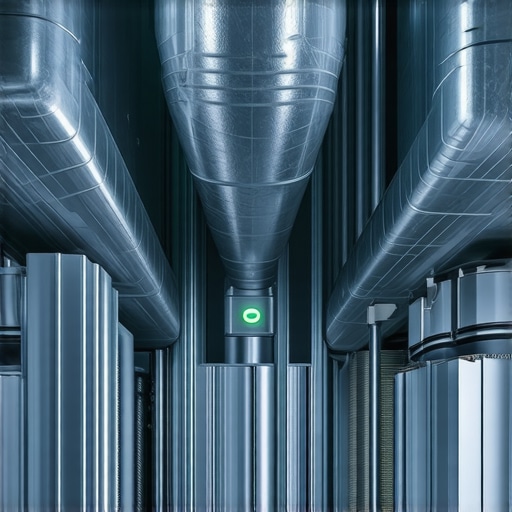
You cannot talk about DCV ROI without addressing the delivery system. I have walked into warehouses where the ductwork looked like it was put together by a distracted Sparky on a Friday afternoon. If your static pressure is off because of leaks, your DCV system is going to hunt and surge, eventually killing your blower motors. This is why HVAC duct sealing is the first step in any ROI calculation. I don’t use that cheap silver tape that peels off in two years; I use ‘Pookie’—thick, messy, mastic sealant that creates a permanent bond. When we perform static pressure testing, we’re looking for the resistance the fan has to overcome. High static pressure means your motor is working twice as hard to move half the air. If we seal those leaks and tune the DCV, the ROI starts ticking up immediately because we’ve reduced the mechanical load on the entire system.
The Northern Climate: Steam, Hydronics, and Heat Exchangers
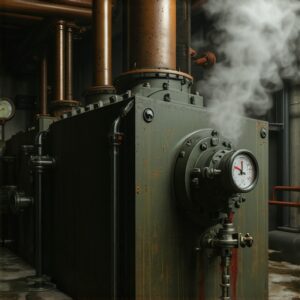
In cold climates like Chicago or the Northeast, the ROI of DCV is even more dramatic because heating air is more energy-intensive than cooling it. If you’re running a hydronic heating system or a steam boiler, you are boiling water to transfer heat to air. If you vent that air out of a loading dock because your ventilation is stuck on ‘high,’ you are literally pouring money down the drain. I’ve seen heat exchanger cleaning neglected for so long that the soot buildup acts like an insulator, forcing the burners to run longer. Combine that with a failing draft inducer motor repair, and your efficiency drops into the basement. A proper DCV setup integrates with your heating plant, ensuring that we only bring in enough cold outside air to satisfy ASHRAE standards, not a cubic foot more. This protects your steam boiler from short-cycling and keeps your heat exchangers from cracking due to thermal shock.
“Ventilation for acceptable indoor air quality must be dynamic to account for varying contaminant loads.” – ASHRAE Standard 62.1
The Sensory Diagnosis: How I Know Your System is Failing
I don’t need a laptop to tell me a warehouse system is failing; I can smell it and hear it. I can smell the acidic, sour tang of a compressor burnout from fifty feet away because the unit was ‘short cycling’ due to poor airflow. I can hear the high-pitched whistle of air whistling through a poorly sealed return—that’s the sound of money escaping. When we do system performance testing, we’re checking the temperature drop across the coil (the Delta T). If your DCV isn’t calibrated, you might be pulling in 20% more humid air than your evaporator coil can handle. In the summer, that latent heat (humidity) turns your warehouse into a swamp. In the winter, it’s dry air that causes static shocks and health issues, which is where whole-home humidifiers (or industrial equivalents) come into play to maintain the ‘Goldilocks’ zone of 40-60% RH.
Calculating the ROI: Financing and Certifications
The sticker shock of a DCV retrofit can be real, but you have to look at the Energy Star heating certification requirements and local rebates. Often, the utility company will pay for a significant chunk of the sensors and VFDs because it reduces the strain on the grid. We’re also seeing a massive shift toward financing for heat pump installs even in industrial settings. With the 2025 R-454B refrigerant transition looming, getting ahead of the curve with a high-efficiency, demand-controlled system is the only way to avoid the ‘Regulatory Cliff.’ If you’re still nursing a 20-year-old rooftop unit, you’re not saving money; you’re paying for a new unit every three years in wasted electricity and steam boiler repair bills. Check out our guide on choosing the best heating service to ensure you’re getting an architect, not just a salesman. Preventive measures are always cheaper than emergency calls. You can see our preventative heating maintenance guide for the logic behind this. If you are ready to stop guessing and start measuring, you should contact us for a full diagnostic. We don’t just ‘top off the gas’; we fix the physics of your building.