The Thermal Manifesto: Why Your Boiler is Lonelier Than You Think
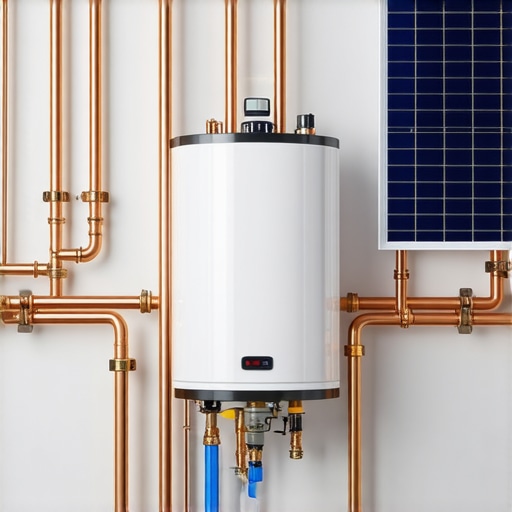
My old mentor used to scream, ‘You can’t heat what you can’t touch!’ This was back in the late 80s, when we were still using mercury thermostats and didn’t care about the ozone layer. He wasn’t talking about the physical radiators in the room; he was talking about the energy transfer at the molecular level. If the fluid in your pipes isn’t picking up BTUs from a source, it’s just a dead weight sitting in your basement. In the freezing winters of the North, where the wind bites through your coveralls, a boiler is a brute-force machine. But it’s an expensive brute. Merging solar thermal into that hydronic loop isn’t just ‘green’ nonsense; it’s about thermodynamic efficiency. You’re essentially pre-heating the return water so the boiler doesn’t have to fire its main burners as hard or as often.
“The most expensive equipment in the world cannot overcome a bad duct system.” – Industry Axiom
When we talk about merging solar thermal with a boiler, we are looking at a complex hydronic dance. Most guys call themselves ‘Tin Knockers’ or ‘Sparkies,’ but if you’re messing with solar-to-boiler integration, you better be a fluid dynamics specialist. In a standard setup, your boiler sucks in cold return water and blasts it with combustion heat. When we add solar collectors—whether they are flat-plate or vacuum tubes—we’re using the sun to provide ‘free’ sensible heat. This isn’t like those evaporative cooler services you see in the desert; we are dealing with high-pressure, closed-loop systems where every degree matters. If your solar loop is doing its job, that boiler might only need to raise the water temperature by 10 or 20 degrees instead of 80. That is where the ‘Maximum Savings’ actually live.
The Forensic Diagnosis: Anatomy of a Hybrid Hydronic System
Let’s get into the guts of it. To make this work, you need a high-quality heat exchanger. You don’t just dump solar-heated glycol into your house water. That’s a recipe for a sour-smelling disaster. You need leak detector integration because glycol has a lower surface tension than water—it will find a hole that water wouldn’t even consider leaking through. If you’ve ever smelled a compressor burnout, you know that acidic, acrid stench; a glycol leak in a boiler system isn’t quite that bad, but it’s a mess you don’t want. You have to monitor the control board diagnostics constantly to ensure the solar pump is only running when the solar storage tank is actually hotter than the boiler return line. If not, you’re literally pumping heat out of your house and into the sky at night.
Integrating this with cold climate heat pumps is the next logical step for a 2025-ready home. While the solar thermal handles the heavy lifting for the hydronic baseboards or radiant floors, the heat pump can manage the air handler repair and air distribution needs. Speaking of air, don’t forget the humidity. High-efficiency heating systems, even hydronic ones, can leave the air feeling like a desert. That’s why I always recommend steam humidifiers. Unlike those cheap bypass units that grow mold, a steam humidifier actually boils the water to provide pure, sterile vapor into your air purification integration stack. It’s the difference between breathing clean mountain air and huffing the dust from a 1970s shag carpet.
“Energy efficiency is not just about the source; it is about the distribution and the minimization of waste heat.” – ASHRAE Standards
I’ve seen ‘Sales Techs’ try to push a whole new system when a client just wants to save money. They’ll quote you $20k for a replacement when your current cast-iron boiler still has 20 years of life left. The real pro move is keeping the iron and adding the solar. But you need a solid foundation. That starts with preventative maintenance contracts to ensure your pumps are primed and your expansion tanks aren’t waterlogged. If your expansion tank is dead, the pressure spikes will blow the relief valve, and suddenly your basement is a swimming pool. If you are serious about this, check out preventative heating maintenance a guide for homeowners in 2025 to see what a real tech looks for before the first frost hits.
The Math of the Thermal Loop: Why Physics Wins Every Time
In a cold climate, the enemy isn’t just the temperature; it’s the lack of ‘juice’ (refrigerant or thermal fluid energy) when you need it most. When the sun is shining but it’s 10°F outside, those solar vacuum tubes are still pulling in energy. We use ‘Thermodynamic Zooming’ to look at the evaporator coil in a heat pump or the heat exchanger in a boiler. We want to drop the return fluid temperature just enough to maximize heat absorption but not so much that we cause condensation on the flue of a non-condensing boiler. If you get that wrong, you’ll rot the venting out in three seasons. This is why hospital HVAC zoning techniques are becoming popular in residential settings—we are looking for precision, not just ‘on or off’ heating.
For those of you with old drafty chimneys, you might consider fireplace insert services as a secondary backup. A good insert can act as a localized heat source, allowing the boiler to rest while the solar tank recovers. But again, you need the right pros. If you’re looking for the right team, read up on choosing the best heating service expert tips for 2025. You need someone who knows their way around a multimeter and a combustion analyzer, not just a guy with a wrench and a sales pitch. If your tech doesn’t talk about delta-T (the temperature difference between the supply and return), he’s just a parts-changer.
The 2025 Regulatory Cliff: R-410A is Dying, but the Sun Isn’t
As we move into 2025, the industry is panicking over the A2L refrigerant transition. While everyone else is worrying about ‘mildly flammable’ gases, the solar thermal and hydronic crowd is sitting pretty. Water and glycol don’t have a phase-out date. By merging solar with your boiler, you are future-proofing your home against the skyrocketing costs of new chemical refrigerants. You can find more on this in the heat pump solutions for efficient home comfort in 2025. The goal is to create a system that is resilient. If the power goes out, a small battery can keep the solar pumps and the boiler’s ‘Sparky’ (igniter) running. You can’t say that for a massive 5-ton central AC unit.
Ultimately, comfort is physics, not magic. It’s about managing the flow of energy. Whether you’re dealing with air handler repair to keep the air moving or control board diagnostics to keep the solar loop optimized, you have to respect the BTUs. If you treat your system like a fine-tuned engine, it will treat your wallet with respect. If you ignore it until it breaks, don’t be surprised when the bill has four digits before the decimal point. For more on extending the life of what you already have, see our top HVAC repair strategies to extend your systems life. Stop letting the heat escape, and start making the sun do the heavy lifting.