The Silent Killer in the Sub-Zero Shop
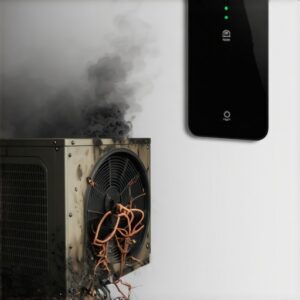
The air in a frozen warehouse doesn’t just bite; it carries a specific weight. When you walk into a shop where the warehouse heating solutions are struggling, you can smell the failure before you hear it. It’s a heavy, metallic scent mixed with a hint of unburned fuel. I’ve spent thirty years dragging my tool bag across oil-slicked concrete floors, and if there is one thing I’ve learned, it’s that a neglected shop heater is a ticking clock. Most folks think a furnace just ‘stops working’ when it dies. They’re wrong. Often, it keeps running, but it starts changing the chemistry of the air you breathe. We’re talking about incomplete combustion—the process where a lack of oxygen or a cracked heat exchanger turns your heat source into a Carbon Monoxide (CO) factory.
“Proper venting and combustion air are not suggestions; they are the physical requirements for life safety in any gas-fired installation.” – NFPA 54 / ANSI Z223.1 National Fuel Gas Code
I remember following a ‘Sales Tech’ into a local fabrication shop last January. This kid—fresh out of a two-week ‘academy’ and wearing a shirt too clean for this trade—had already quoted the owner $22,000 for a high-efficiency furnace installation. He told the guy his heat exchanger was ‘vaporized.’ I walked in, looked at the flame, and saw it dancing like a kite in a hurricane. It wasn’t vaporized; the furnace ignition repair he’d ‘performed’ hadn’t addressed the real issue. The burner was choked with grinding dust, and the ‘Sparky’ who wired the last unit had the polarity reversed. It was short-cycling and dumping CO into the rafters. A $150 cleaning and some duct design services to fix the return air saved that owner twenty grand. That’s the difference between a tech and a salesman.
Thermodynamic Zooming: The Physics of the Heat Exchanger
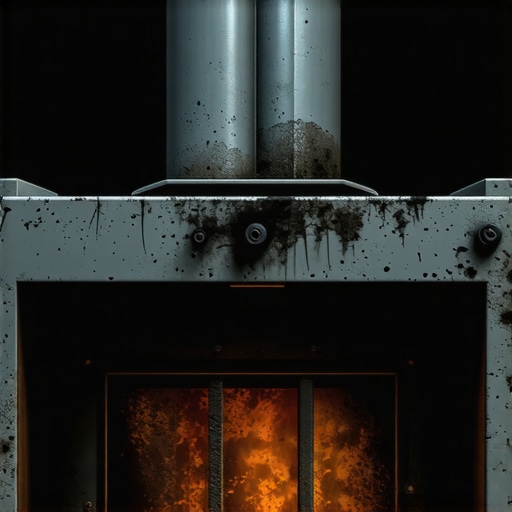
To understand the danger, you have to look at the ‘lungs’ of the system. In a standard shop heater, you have a combustion chamber where the ‘gas’ (fuel) meets a spark. This creates a flame that heats up the metal of the heat exchanger. The blower fan then pushes shop air over the outside of that metal. The goal is simple: transfer sensible heat to the air without ever letting the flue gases mix with the breathing air. When a system is unmaintained, dust and vibration cause hairline fractures in that metal. As the metal expands and contracts, those cracks open up. Now, the blower motor—the very thing meant to keep you warm—starts sucking CO out of the heat exchanger and blasting it into your workspace. This is why predictive maintenance alerts are vital; by the time you feel a headache, your CO levels are already in the danger zone. If you haven’t looked at your system lately, check out this preventative heating maintenance guide to see what you’re missing.
The North/Cold Climate Crisis: Combustion Air
Up here in the cold zones, we fight a constant battle with ‘Building Pressure.’ In a tightly sealed modern warehouse, your heaters need air to breathe. If your duct design services didn’t account for ‘makeup air,’ your furnace will literally starve. When a furnace starves for oxygen, it produces a yellow, ‘lazy’ flame. This is the hallmark of carbon monoxide production. I’ve seen warehouse heating solutions where the exhaust was frosting over, causing a backdraft of flue gases. This isn’t just a repair issue; it’s a physics problem. You can’t exhaust 1000 CFM of flue gas if you aren’t bringing 1000 CFM of fresh air in. It’s like trying to breathe through a straw while someone’s sitting on your chest. We often see this when shops try to implement hospital HVAC zoning techniques in a space that wasn’t built for it. Zoning requires precise pressure balances that most ‘Tin Knockers’ don’t understand.
“The most expensive equipment in the world cannot overcome a bad duct system or inadequate combustion air.” – Industry Axiom
The Maintenance Trap: Capacitors and Igniters
It’s not always a cracked exchanger that gets you. Sometimes it’s the small stuff that leads to the big disaster. A failing capacitor on the inducer motor can cause the motor to run slow. If the inducer isn’t pulling enough vacuum, the pressure switch might still close, but the combustion won’t be clean. We offer capacitor replacement services not just to keep the motor spinning, but to ensure the vent timing is precise. Similarly, a dirty hot surface igniter might take three or four tries to light the gas. Every time it fails, a small puff of unburned gas enters the cabinet. Over time, this causes ‘delayed ignition’—a mini-explosion that stresses the metal of the furnace, leading to those cracks we talked about. This is why furnace ignition repair should never be a DIY job for a shop foreman with a screwdriver. You need to check the manifold pressure and the micro-amps on that flame sensor. If you’re wondering how to vet a tech, look at these expert tips for choosing a heating service.
Air Quality and Integration
In industrial settings, air purification integration isn’t just about ‘smelling nice.’ It’s about removing the particulates that clog your burners. If you’re running a wood shop or a CNC line, that fine dust is the enemy of your HVAC system. It coats the refrigerant leak detection sensors and clogs the heat exchanger fins. When the airflow drops, the temperature of the heat exchanger spikes. Heat is the killer of metal. Keep it too hot for too long, and it will fail. Integrating programmable thermostat programming helps regulate these heat cycles, preventing the ‘thermal shock’ that occurs when a system jumps from 40 degrees to 80 degrees in a panicked morning startup. For more on extending the life of your hardware, see these top repair strategies. If you’re seeing signs of trouble, don’t wait for the CO alarm to go off—reach out through our contact page for a real diagnosis. We also specialize in heat pump solutions which, in some climates, can bypass the combustion risk entirely.
Summary of Shop Heater Safety
Don’t be the guy who ignores the ‘pookie’ (mastic) peeling off the ducts or the screeching bearings in the blower. A shop heater is a fire-breathing dragon trapped in a metal box. If you don’t maintain the box, the dragon gets out. Carbon monoxide is odorless, colorless, and heavier than air in certain conditions. It pools in the low spots of your warehouse, right where your guys are working. If your flame isn’t a crisp, sharp blue, shut it down. If your inducer motor sounds like a bag of marbles, shut it down. Maintenance is the only thing between a warm shop and a tragedy.