The Sound of a Silent Control Circuit
My old mentor, a grizzly guy who could smell a refrigerant leak from the driveway, used to grab me by the collar and scream, ‘You can’t cool what you can’t touch!’ He was talking about airflow over an evaporator coil, but that same fundamental law of physics applies to every electron moving through your control board. If your transformer can’t ‘touch’ the load of your new shiny piece of technology, it’s going to turn into a $20 piece of charred toast. You just spent $250 on a sleek piece of plastic with geofencing temperature control, only to find your house at a crisp 55 degrees on a Tuesday morning because the 24V ‘brain’ of your furnace decided to check out. It’s not a coincidence; it’s a capacity failure. Most people think of their HVAC system as a dumb box of metal, but the control circuit is a delicate nervous system. When you swap a mercury-bulb thermostat for a modern app-controlled heating system, you aren’t just changing the UI—you are changing the electrical impedance of the entire circuit.
“The most expensive equipment in the world cannot overcome a bad duct system.” – Industry Axiom
The Forensic Diagnosis: Anatomy of a Fried Transformer
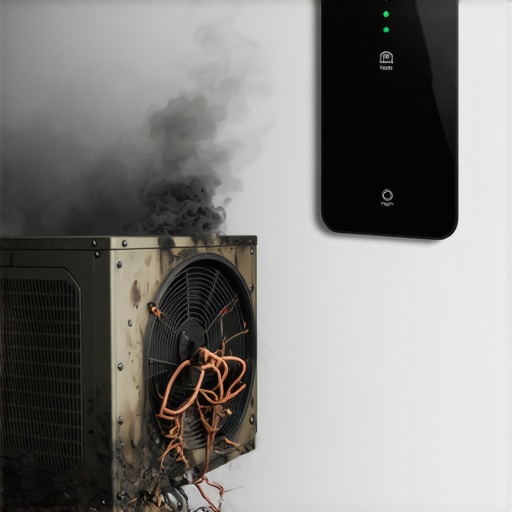
To understand why your transformer let out the magic smoke, we have to look at the ‘VA’ rating. Most residential furnaces and air handlers ship with a 40VA (Volt-Amp) transformer. This is the heart of your low-voltage system. It takes 120V of high-voltage ‘juice’ from your house and steps it down to 24V for your thermostat, your contactor, and your control board. In the old days, a thermostat was just a mechanical switch. It didn’t ‘consume’ power; it just moved it. But your new smart gadget is a computer. It has a backlit screen, a Wi-Fi radio, and complex logic processors. If you have a system with multiple zones, humidifiers, or you’ve recently looked into heat pump solutions for efficient home comfort in 2025, that 40VA transformer is already gasping for air. Add a smart stat that draws 5-10VA on its own, and you’ve pushed the secondary winding over its thermal limit. Sparky (the electrician) might tell you it’s a short, but as a guy who’s replaced a thousand of these, I’m telling you it’s an overload.
The C-Wire Trap and Thermodynamic Zooming
When we talk about system performance testing, we aren’t just looking at the ‘gas’ (refrigerant) levels. We are looking at the ‘latent heat’—the energy required to change the state of water in the air. A transformer failing isn’t just about electricity; it’s about the heat generated by electrical resistance within the transformer’s own windings. Most DIYers try to use a ‘power extender kit’ because they don’t have a ‘C-wire’ (Common wire). This is a recipe for disaster. This kit ‘steals’ power from the Y (cooling) or G (fan) circuits. If your contactor coil is already old and drawing high amperage, or if your fan relay is sticky, that transformer is being cooked from the inside out. This is why HVAC maintenance plans are critical. A tech with a decent multimeter can catch a transformer that’s running hot before it leaves you in the cold. If you’re in a Northern climate, a failed transformer means your furnace won’t initiate its combustion analysis or pilot light relighting sequence, leading to frozen pipes faster than you can call a tin knocker to fix your ducts.
“Designers shall use ACCA Manual J to ensure equipment is sized for the actual load, not a rule of thumb.” – ASHRAE Standards
The Physics of the North: Why Winter Kills Transformers
In cold climates where you might be considering preventative heating maintenance, the transformer is under unique stress. When the temperature drops, the internal resistance of wire changes, and components like inducer motors and gas valves can draw more current on startup. If you’ve also integrated solar thermal heating integration or an infrared heater installation into your control logic, the complexity is through the roof. A smart thermostat’s programmable thermostat programming often calls for ‘anticipator’ settings that the old transformer just wasn’t designed to handle. You might notice the screen on your thermostat flickering—that’s the ‘brownout’ before the total failure. It’s trying to pull current that isn’t there. If you want to avoid this, you need a 50VA or even a 75VA transformer and potentially an isolation relay. This keeps the ‘brain’ of the system on its own power supply so it doesn’t have to compete with the heavy-lifting components.
Repair vs. Replace: Pulling the Plug
If you’re staring at a dead system, don’t just swap the transformer and call it a day. You have to find the ‘why.’ Was it the new thermostat? Or is your contactor coil pitted and drawing 1.5 amps instead of 0.5? This is where top hvac repair strategies to extend your systems life come into play. Check your app-controlled heating systems for any alerts about power loss. If you find yourself needing professional help, you can contact us to get a real diagnostic. Don’t let a ‘sales tech’ tell you that a blown transformer means you need a whole new $15,000 furnace. Usually, it’s just a $100 fix involving a bigger transformer and some proper 24V wiring. But remember: if you don’t fix the underlying load issue, you’ll be replacing that transformer again in six months. Comfort is physics, and physics doesn’t care about your cool new touchscreen interface if the electrons can’t make the trip.