The Old Mentor’s Rule: Physics Doesn’t Care About Your Comfort
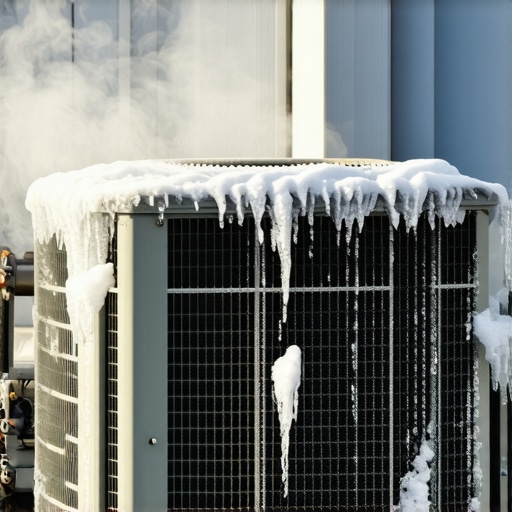
My old mentor, a man who smelled perpetually of WD-40 and menthol cigarettes, used to whack the side of an iced-over condenser with a nut driver and bark at me, ‘Kid, you can’t heat a house with an ice cube! If it looks like an igloo, you’re losing the war against thermodynamics!’ He was right. Most techs see a frozen heat pump and immediately reach for the juice, thinking it’s a leak. But if you’re staring at a solid block of white frost in the middle of a January polar vortex, you aren’t just looking at a mechanical failure; you’re looking at a breakdown of the psychrometric process. In the North, where we deal with real winters, a heat pump is an uphill battle. You’re trying to extract heat from 20°F air. To do that, your outdoor coil—acting as the evaporator in heating mode—has to drop well below the ambient temperature, often into the negatives. When that cold metal hits the dew point of the surrounding air, moisture flash-freezes. This is where the defrost cycle is supposed to save your skin, but when it fails, your system becomes a very expensive, very loud lawn ornament.
The Mechanical Anatomy of an Iced-Over System
Before you call for top hvac repair strategies, you need to understand the anatomy of the failure. A heat pump is essentially a heat transporter. In winter, it reverses the flow of refrigerant using a reversing valve. The ‘gas’ (refrigerant) absorbs heat from the outdoor air and carries it inside. But physics dictates that the outdoor coil must be colder than the air to absorb that energy. When it gets too cold, frost is inevitable.
“The most expensive equipment in the world cannot overcome a bad duct system or a neglected defrost sequence.” – Industry Axiom
The defrost board is the brain of this operation. It uses sensors to monitor the temperature of the coil. When it detects a ‘freeze’ condition, it’s supposed to shift the reversing valve back into cooling mode, effectively turning the outdoor unit into a heater to melt the ice, while simultaneously kicking on your electric heat strips or preventative heating maintenance gear so you don’t get blasted with cold air inside. If that board fries, or if the sensor slips, the ice just keeps building until the fan blade hits the frost and screeches like a banshee, eventually burning out the motor or, worse, killing the compressor through liquid slugging.
Thermodynamic Zooming: Why Humidity is the Enemy
In cold climates, we also deal with the ‘Dry House’ syndrome. While your heat pump is struggling with outdoor frost, the air inside is becoming a desert. This is why many homeowners look into steam humidifiers. They add necessary moisture to the air, which actually helps the home feel warmer at lower temperatures—sensible heat vs. latent heat. If your indoor air is too dry, you’ll find yourself cranking the programmable thermostat programming higher, forcing that outdoor unit to work harder and ice up faster. It’s a vicious cycle. For larger applications, like warehouse heating solutions, we often move away from standard heat pumps and toward high-intensity infra-red or massive gas units because the physics of a heat pump simply don’t scale well when the ceiling is thirty feet high and the insulation is non-existent. In residential settings, however, proper heat pump solutions require a surgical understanding of static pressure. If your ‘tin knocker’ didn’t size the return air drops correctly, your airflow will be strangled. Low airflow inside leads to low pressure in the system, which can cause the suction line to drop below freezing even in mild weather, leading to a total ice-over.
The Forensic Diagnosis: Finding the Root Cause
If you find your unit encased in ice, don’t just pour hot water on it and call it a day. That’s a band-aid on a gunshot wound. You need to check the ‘Pookie’ (mastic) on the ductwork and ensure your filters aren’t clogged. If the air can’t move, the heat can’t move. I’ve seen radiator replacement jobs where the homeowner switched to a heat pump but kept the old, restrictive duct paths—that’s a recipe for a frozen coil. If you’re in an old house with a hydronic setup, you might be better off sticking with boiler repair services or even looking into biomass boiler services if you have the fuel source.
“Standard 62.1-2022 defines the ventilation requirements necessary to maintain acceptable indoor air quality, which is often compromised when heat pumps short-cycle due to ice accumulation.” – ASHRAE Standards
For those with outbuildings, a garage heater installation is a better bet than trying to stretch a residential heat pump beyond its design limits. When the ice gets thick, check the fan. Is it spinning? If not, the motor might be dead, or the capacitor—that little silver can—has given up the ghost. If the fan is spinning but the ice remains, your reversing valve might be stuck, or you’re low on ‘juice.’ But remember, it’s a sealed system. If it’s low, there’s a leak. A ‘Sales Tech’ will just add more gas and bill you; a real tech finds the leak.
Repair vs. Replace: The 2025 Reality
We are entering a new era of refrigerants. With the phase-out of R-410A, the cost of older repairs is going through the roof. If your system is over ten years old and the compressor is sounding like a coffee grinder full of gravel, it might be time to look into financing for heat pump installs. The new A2L systems are more efficient but require specialized training. Always look for warranty service plans that cover the labor, because as these systems get more complex, the labor hours for a teardown increase exponentially. If you’re tired of the air-source headache, radiant floor heating installation is the gold standard for comfort in cold zones, though the upfront cost is higher. Whatever you choose, don’t ignore the ice. A frozen heat pump is a system screaming for help. If you don’t listen, you’ll be shivering in the dark while your compressor undergoes a terminal acidic burnout. If you’re ready to stop guessing and start fixing, it’s time to contact us for a real diagnostic, not a sales pitch. We know the difference between a defrost fluke and a thermodynamic failure. [IMAGE_PLACEHOLDER]