The Quiet Threat Behind the Utility Room Door
I’ve spent thirty years crawling through spider-infested crawlspaces and baking in attics where the temperature hits 130 degrees before noon. I’ve seen the industry change from heavy cast-iron beasts to the high-tech, thin-walled condensing furnaces of today. But as we barrel toward 2026, I’m seeing a dangerous trend. Homeowners are so worried about the new A2L refrigerant transitions and the rising costs of equipment that they are ignoring the very thing that makes a furnace go ‘bang’ in the night: the gas line. If you think a ‘Sales Tech’ from a big-box franchise is going to check your manifold pressure or your CSST bonding, you’re dreaming. They’re there to sell you a 20-seer unit and disappear. Real HVAC work is about the physics of combustion and the integrity of the fuel delivery system.
The Physics of the Blue Flame
My old mentor, a man who could diagnose a bad inducer motor just by the vibration in the floorboards, used to scream at me, ‘You can’t burn what you can’t feed!’ He was talking about gas volume. Most people think gas pressure is like water pressure, but it’s more about volume and velocity. When a furnace kicks on, it needs a specific amount of BTUs delivered instantly. If your gas line is undersized or choked with debris, that flame sensor isn’t going to see a clean, steady signal. You’ll get ‘hunting’—where the flame wavers and the board shuts it down. This is why top hvac repair strategies always start with the fuel source, not the thermostat.
“The National Fuel Gas Code (NFPA 54) requires that gas piping must be sized to provide a supply of gas sufficient to meet the maximum demand of all appliances connected to it without a loss of pressure.” – NFPA 54 / ANSI Z223.1
Risk 1: The CSST Bonding Death Trap
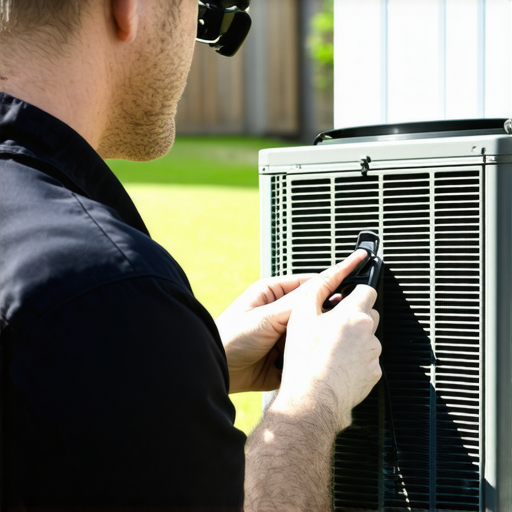
The first thing I look for when I walk up to a unit is that yellow flexible tubing known as Corrugated Stainless Steel Tubing (CSST). It’s a ‘tin knocker’s’ dream because it’s easy to pull, but if it isn’t bonded correctly to the electrical ground, a nearby lightning strike can blow a hole right through it. I’ve walked into basements that smelled like a rotten egg factory because a Sparky didn’t ground the gas manifold. Before you even think about a 2026 furnace install, you need to ensure your gas lines are properly bonded. If they aren’t, your new high-efficiency system is just a very expensive ignition source for a house fire. This is a critical part of any preventative heating maintenance checklist that actually matters.
Risk 2: The Missing Sediment Trap (The ‘Drip Leg’)
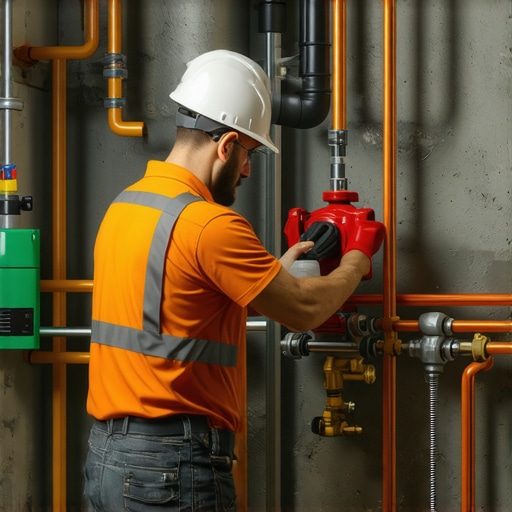
Next up is the sediment trap. I can’t tell you how many times I’ve followed a ‘Sales Tech’ who skipped this. It’s a simple T-junction in the gas line designed to catch moisture and pipe scale before it hits the gas valve. Modern gas valves are sensitive pieces of engineering; one tiny flake of rust can jam the internal diaphragm open or shut. If it jams open, you’ve got raw gas dumping into the burner box. If it jams shut, you’re calling me at 3 AM during a polar vortex. While we are performing boiler maintenance services or industrial heater services, the drip leg is the first line of defense for the gas train.
Risk 3: Undersized Manifolds and the 2026 Efficiency Gap
The 2026 standards are pushing furnaces toward even higher AFUE ratings. These units are finicky. They require precise gas pressure, often measured in inches of Water Column (W.C.) using a digital manometer. If your main gas line was sized for a 1980s furnace, it might not handle the high-input demands of a modern modulating gas valve. When the valve opens and the pressure drops too low, you get ‘lean’ combustion. This creates excessive heat on the heat exchanger, leading to cracks. A cracked heat exchanger is the death sentence for a furnace. This is why choosing the best heating service means finding someone who actually knows how to use a manometer, not just a drill.
“All gas-fired equipment shall be installed such that the gas pressure at the inlet to the appliance is within the range specified by the manufacturer under all load conditions.” – ACCA Manual National Standard
Thermodynamic Zooming: Why Humidity and Airflow Matter
In cold climates like Chicago or the Northeast, we aren’t just fighting the cold; we’re fighting the dryness. When you heat air, its relative humidity drops. This is why whole-home humidifiers and professional humidifier installation are not luxuries; they are structural necessities. Dry air sucks moisture out of wood floors and human lungs. Furthermore, in tightly sealed modern homes, you need heat recovery ventilators (HRVs) to swap out stale, CO2-heavy air for fresh outdoor air without losing your sensible heat. If you’re installing a new furnace in 2026, you should be looking at the total air envelope, including furnace flame sensor cleaning as part of your yearly ritual to ensure the system actually stays lit when the ‘juice’ is flowing.
The Hybrid Future: Heat Pumps and Shop Heaters
Don’t ignore the hybrid approach. A heat pump paired with a gas furnace (dual fuel) is the smartest move for the 2026 regulatory landscape. It allows you to run on electricity when it’s 40 degrees and switch to gas when the real deep freeze hits. And for those of you with workspaces, don’t forget shop heater services or even fireplace insert services to supplement your main plant. Every BTU counts when the grid is stressed. Just remember: whether it’s a boiler or a furnace, the gas line is the artery. If it’s clogged, leaking, or undersized, the rest of the body is going to fail. Stop listening to the sales pitches and start looking at the plumbing. If you have questions about your specific setup, you can always contact us to get a real technician’s eyes on the problem before the 2026 rush begins.