The Myth of the Magic Humidity Machine
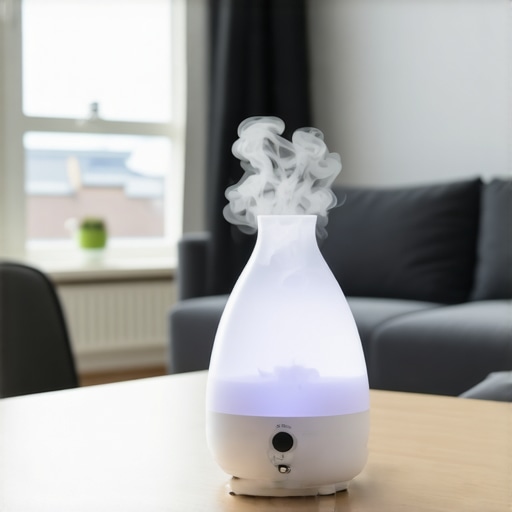
You’ve got the humidistat cranked to 45%, you can hear the solenoid clicking, and you’ve swapped the pad twice, yet your skin feels like old parchment and the dog is a walking static-electricity hazard. I’ve spent 30 years in the trenches of the HVAC world, and if I had a nickel for every time a homeowner told me their humidifier was ‘broken’ when it was actually just fighting a losing battle against physics, I’d be retired on a beach instead of crawling through your mechanical room. In the business, we call this the ‘Sieve Effect.’ My old mentor, a grizzled tin knocker who could smell a cracked heat exchanger from the driveway, used to scream at me, ‘You can’t cool what you can’t touch, and you can’t hydrate what you can’t hold!’ He was right. Airflow is the undisputed king of comfort, and your home’s inability to hold moisture isn’t usually a hardware failure; it’s a thermodynamic reality check.
“The most expensive equipment in the world cannot overcome a bad duct system or a leaky building envelope.” – Industry Axiom
The Physics of the ‘Gulping’ House
To understand why your IAQ improvement services aren’t yielding results, we have to talk about the ‘Stack Effect.’ In cold climates, your house acts like a giant chimney. Warm air is less dense than cold air, so it rises. It escapes through every recessed light, every unsealed attic hatch, and every ‘Pookie’-less joint in your ductwork. As that warm air leaves, the house has to ‘gulp’ in new air to replace it. This air comes from the outside, and here is the kicker: 20-degree air at 70% relative humidity contains almost zero actual water. When you bring that air inside and heat it to 70 degrees, its relative humidity drops into the single digits. You are essentially living in a machine that is constantly dehydrating itself. This is why preventative heating maintenance is about more than just checking the furnace; it’s about auditing the entire envelope. If your air exchange rate is too high, your humidifier is trying to fill a bathtub with the drain wide open.
The Airflow Manifesto: Why Static Pressure is Killing Your Comfort
Most residential humidifiers are bypass units. They rely on the pressure difference between the supply and return plenums to move air across a wet pad. If your furnace filter replacement hasn’t been done in six months, your static pressure is likely through the roof. A clogged filter acts like a brick wall for air. If the air can’t move, it can’t pick up moisture. I’ve seen ‘Sales Techs’ try to sell a whole new system when the real culprit was a $20 pleated filter that was too thick for the blower motor to handle. We see this often with high-MERV filters; they provide great filtration but can choke the ‘juice’—that’s the airflow—right out of the system. This leads to short cycling, where the furnace gets too hot, hits the limit switch, and shuts down before the humidifier has had enough run time to actually make a dent in the latent heat levels. Proper choosing the best heating service means finding a tech who carries a manometer, not just a sales brochure.
The Radiant Floor Heating Advantage
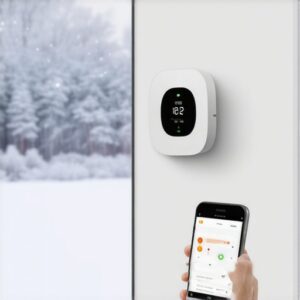
If you’re tired of the ‘forced air desert,’ many homeowners are looking toward heat pump solutions or even radiant floor heating installation. Radiant heat doesn’t rely on blowing dry air across your face. It heats the objects in the room. Because there’s no massive air movement, you don’t get the same rate of infiltration, which helps maintain whatever natural humidity you have. However, even with radiant heat, you still need to manage your air quality. This is where WiFi thermostat integration and remote thermostat access become vital. Modern thermostats can coordinate between your heating system and your ventilation, ensuring you aren’t over-ventilating and dumping all your expensive, humidified air back into the backyard.
“Ventilation is the intentional introduction of outdoor air into a space to control air quality. Infiltration is the unintentional leaking of air.” – ASHRAE Standards
Technical Deep Dive: The Flame Sensor and the Humidifier Connection
You might wonder what furnace flame sensor cleaning has to do with humidity. Everything. In the dead of winter, if your flame sensor is coated in carbon or oxidation, your furnace might light and then drop out after a few seconds. This constant cycling prevents the humidifier from reaching a steady-state operation. Humidifiers generally only run when the furnace is firing. If your system is ‘limping’ because of a dirty sensor or poor maintenance, it won’t run long enough to evaporate any water. I always tell my clients that a clean system is a hydrated system. Whether you’re looking at shop heater services for a garage or a high-end residential setup, the principles of combustion and airflow are universal. If the ‘Sparky’ did a bad job on the wiring or the tech skipped the sensor cleaning, your comfort—and your humidity—will suffer. Proper programmable thermostat programming can also help by extending run cycles at lower temperatures, giving the humidifier more ‘hang time’ to do its job. Finally, for the eco-conscious, solar thermal heating integration can be a way to add heat to the home without the drying effects of high-temp gas combustion, though the upfront cost is a heavy lift. Don’t let a ‘Sales Tech’ convince you that you need a 5-ton unit for a 2,000 square foot house; that’s the fastest way to turn your home into a cold, damp swamp or a dry, dusty desert. Stick to the physics, seal your ducts with Pookie, and keep your airflow unrestricted.