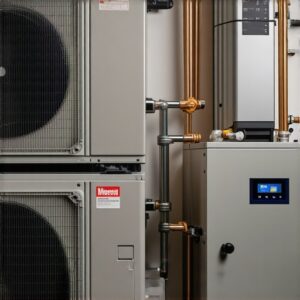
You’re sitting in your living room, the TV is off, and there it is—that low, mechanical drone that hasn’t stopped for three hours. It’s the sound of your heat pump blower motor spinning its life away, and if you’re in a northern climate where we rely on a mix of furnace repair services and boiler maintenance services, that sound usually translates to a skyrocketing utility bill. My old mentor used to scream at me while we were crawling through a spider-infested crawlspace, ‘You can’t cool or heat what you can’t touch!’ He was talking about airflow. If your blower isn’t cycling off, it means your system is struggling to satisfy the physics of the room, or your controls have gone rogue.
The Ghost in the Machine: Why the Fan Won’t Quit
As a tech who’s spent 30 years sniffing out burnt-out compressors and scrubbing ‘pookie’ (that’s duct mastic for the uninitiated) off my forearms, I can tell you that a blower that won’t stop is rarely a ‘simple’ fix. We have to look at the thermodynamic zooming of your home. In a northern winter, your heat pump is fighting a losing battle against the ‘Balance Point.’ This is the outdoor temperature where the heat pump’s capacity perfectly matches your home’s heat loss. Once you drop below that, the unit has to run constantly just to keep the status quo.
“Equipment capacity shall be determined in accordance with ACCA Manual J and the manufacturer’s performance data to ensure the system meets the heating and cooling loads of the building.” – ACCA Manual J Standards
If your manual J calculations were botched by a ‘Sales Tech’ looking to move inventory rather than size the equipment correctly, your blower will run until the bearings scream. They likely oversized the unit, leading to short-cycling in the fall, or undersized it, leaving you with a permanent hum in January.
The Logic Gate: WiFi Thermostats and Relay Services
Modern WiFi thermostat integration is a double-edged sword. I’ve seen countless 24/7 heating emergency response calls that were nothing more than a ‘Fan’ setting toggled from ‘Auto’ to ‘On.’ When it’s set to ‘On,’ that indoor blower is going to run regardless of whether the outdoor unit is actually moving ‘juice’ (refrigerant). However, if the setting is correct and the air is still moving, we start looking at relay services. A stuck fan relay on the control board is like a light switch that’s been glued in the ‘down’ position. Even if the brain of the system says ‘stop,’ the ‘Sparky’ (electrician) side of the board keeps feeding voltage to the motor.
Thermodynamic Zooming: Latent vs. Sensible Heat
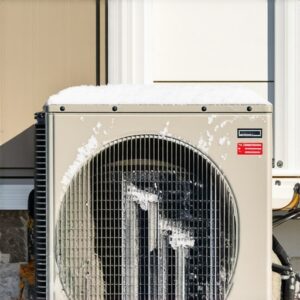
In cold-weather zones, we deal with the ‘Dry Air Problem.’ If you have a bypass humidifier repair issue and your home’s humidity drops to 15%, the air feels colder than it actually is. Your body’s moisture evaporates faster, making you feel chilled even if the thermostat says 72°F. This leads homeowners to crank the heat, forcing the blower to work overtime. Furthermore, if your system is a dual-fuel setup—meaning a heat pump paired with propane conversion services or a gas furnace—the blower logic becomes complex. The system might be stuck in a ‘Defrost Cycle’ where it’s actually running the AC to thaw the outdoor coil while using the backup heat to keep you from freezing. If that cycle fails, the blower just keeps pushing lukewarm air.
The Anatomy of Failure: From Baseboards to Boilers
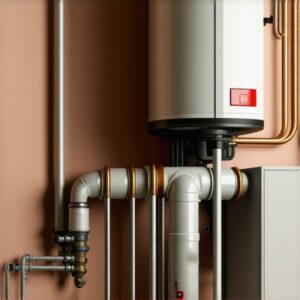
Sometimes the blower issue isn’t in the ductwork at all. In hybrid homes where baseboard heater repair is common, the heat pump is often used as the primary source until it hits the ‘clobbering’ point of 30°F. If your pilot light relighting on the backup boiler failed, the heat pump will run 24/7 trying to do the job of two systems. It’s a mechanical heart attack waiting to happen. To avoid this, following preventative heating maintenance is the only way to ensure your ‘gas’ pressures and relay logic are synced before the first frost.
“Heating systems must be maintained to prevent flame rollout and ensure the integrity of the heat exchanger for occupant safety.” – ASHRAE Standard 6.2
If you’re hearing a screeching sound accompanying the constant airflow, that’s not physics—that’s a failing bearing. At that point, you aren’t looking at a settings issue; you’re looking at a mechanical failure that could lead to a motor burnout, which smells like a mix of ozone and regret. If you’re unsure of your current system’s health, it’s worth choosing the best heating service expert who actually knows how to read a manometer and check static pressure, rather than a ‘Tin Knocker’ who just wants to sell you a new box.
The Verdict: Repair or Replace?
If your blower is running because of a $50 relay, fix it. If it’s running because your 15-year-old heat pump can no longer compress the refrigerant to the necessary ‘suction line’ temperature (beer can cold in the summer, scorching in the winter), you’re just burning money. In 2025, with the shift toward high-efficiency heat pump solutions, it often makes more sense to upgrade than to keep a dying motor on life support. Just make sure the next guy does a real Manual J, or you’ll be right back here, listening to that blower hum until the end of time. For more specific strategies on keeping your unit alive, check out our top HVAC repair strategies.