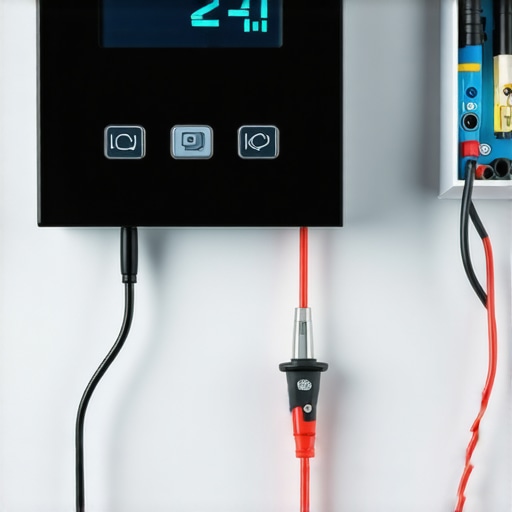
The Eerie Silence of a Dead Screen
There is a specific kind of silence that hits a technician’s ears when they walk into a house in the dead of January. It isn’t just quiet; it’s the heavy, cold stillness of a furnace that has given up the ghost. When you walk over to the wall and see that blank, black screen on the thermostat, your heart sinks. Most homeowners assume the worst—that the entire heat pump installation has failed or the blower motor replacement they’ve been putting off finally became mandatory. But I’ve been crawling through crawlspaces and sweating in mechanical rooms for thirty years, and I’ll tell you right now: a dark screen is rarely a dead unit. It’s usually a failure in the 24-volt nervous system.
Last week, I followed a ‘Sales Tech’—one of those guys who carries a shiny iPad and a clipboard but doesn’t own a pair of dirty coveralls—to a split-level home during a sub-zero cold snap. He’d already told the young couple they needed a $12,000 dual fuel heat pump system because their ‘computer board was fried.’ I walked in, pulled the door switch on the furnace, and found a blown 3-amp purple fuse. Total repair cost? Five bucks. The ‘Sales Tech’ hadn’t even checked for a low-voltage short. That’s the difference between a salesman and a technician who understands the physics of the trade.
The Anatomy of 24-Volt Juice: Transformers and Fuses
In the world of HVAC, we deal with two types of electricity. You’ve got your high-voltage line power that feeds the variable speed furnace services, and then you’ve got the low-voltage control circuit. Think of the transformer as the heart. It takes that 120-volt ‘juice’ from your house and steps it down to 24 volts. This is the power that tells the contactor to snap shut and the blower motor replacement to start circulating air. If that transformer fails, the brain (the thermostat) goes dark. It’s not magic; it’s simple electromagnetics.
“The most expensive equipment in the world cannot overcome a bad duct system, and the most advanced controls cannot operate without a stable 24V power supply.” – Industry Axiom
But why does a transformer die? Usually, it doesn’t just ‘quit.’ It’s murdered. It dies because of a short circuit. This is where the fuse comes in. Most modern control boards have an automotive-style fuse—usually 3 or 5 amps. If a tin knocker accidentally nicked a wire while installing a whole-home humidifier, or if a rodent chewed the insulation on your outdoor condenser wire, those two wires touch. The surge of amperage would melt the transformer if the fuse didn’t pop first. If your thermostat is blank, the fuse is your first forensic clue.
Thermodynamic Zooming: Why Voltage Matters in a Polar Vortex
When we talk about furnace tune-up services, we aren’t just vacuuming out dust. We are performing system performance testing to ensure the sequence of operations is tight. In a North/Cold climate, the physics of a heating cycle are brutal. When the thermostat calls for heat, it sends a 24V signal to the inducer motor. If the transformer is weak or the thermostat wiring upgrades were done poorly by some ‘sparky’ who didn’t understand HVAC logic, the voltage can drop. This ‘voltage sag’ can cause relays to chatter, heating up the control board and eventually blowing that fuse or killing the transformer. We look for ‘sensible heat’—the actual temperature rise across the heat exchanger—but we can’t get there if the control circuit is dead.
If you are running a ventless gas heater service as a backup, you might not notice the main system is down until the pipes are shivering. A blank thermostat in a cold climate often points to a secondary issue: the condensate line. If your high-efficiency furnace has a frozen drain line, the water backs up into the primary pan. The float switch—a safety device—breaks the 24V connection to the thermostat to prevent a flood. It looks like a dead transformer, but it’s actually a safety feature doing its job. This is why preventative heating maintenance is vital before the first frost hits.
The Forensic Diagnosis: How to Check the Fuse
Before you call for a heat pump installation quote, do some basic investigation. Turn off the power to the furnace at the breaker. Open the blower compartment door. Look at the control board—it’s the green or red circuit board with a mess of wires. Look for a small, colored plastic fuse. If the metal link inside that plastic is broken or the plastic looks charred, you’ve found your culprit. But here’s the veteran’s warning: don’t just replace the fuse. A blown fuse is a symptom. If you don’t find the short—maybe a rub-through on the thermostat wiring upgrades—the new fuse will pop the second the compressor kicks on.
“Standard 62.1 requires specific ventilation rates, but without functional control voltage, the mechanical ventilation system fails to meet indoor air quality targets.” – ASHRAE Standards
If the fuse is good but the thermostat is still blank, it’s time to check the transformer. Using a multimeter, we check for 120V on the primary side and 24V on the secondary. If you have 120V going in but zero coming out, the transformer has let the smoke out. At this point, we start looking at predictive maintenance alerts. Modern smart thermostats can sometimes warn you of power fluctuations before the hardware fails, but they require a steady ‘C-wire’ for power. If your old 2-wire system was rigged to work without a common wire, you’re putting extra stress on that transformer every single day.
Repair vs. Replace: The Hard Truth
Is it worth fixing a 20-year-old furnace with a blown transformer? Usually, yes. A transformer and a fuse are relatively cheap parts. However, if the transformer blew because the blower motor replacement was overdue and the motor was drawing 20 amps on a 15-amp circuit, you have a bigger problem. We use system performance testing to see the ‘Total External Static Pressure.’ If your ducts are choked, your motor works harder, draws more juice, and kills the electronics. In those cases, you might want to look into heat pump solutions that offer better efficiency and more robust electronics.
Don’t let a ‘Sales Tech’ talk you into a whole new system just because of a blank screen. Real HVAC work is about understanding the physics of the air and the flow of the electrons. Whether it’s a dual fuel heat pump system or a simple ventless gas heater service, the fundamentals don’t change. Keep your coils clean, keep your filters fresh, and make sure your 24V circuit is protected. If you’re unsure, check out these top HVAC repair strategies to keep your rig running through the blizzard. If you’ve got a dark screen and a cold house, it’s time to stop guessing and start testing.