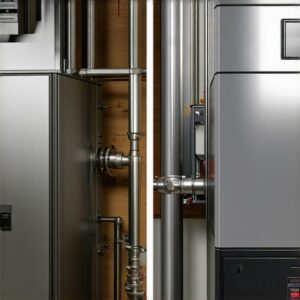
You’ve seen it every Sunday for thirty years. The choir is shivering, the deacons are wearing overcoats in the front pews, and the usher is constantly fiddling with a thermostat that’s mounted on a stone pillar that hasn’t changed temperature since the Eisenhower administration. As an HVAC veteran who has spent more time in dark, cramped mechanical rooms than in my own living room, I can tell you that the reason your church is drafty has almost nothing to do with the windows being ‘leaky’ and everything to do with basic physics that most ‘sales techs’ don’t even understand. They want to sell you a fifteen-thousand-dollar window replacement package, but they don’t understand the convective loop. My old mentor, a man who could diagnose a bad TXV just by the sound of the suction line whistling, used to scream at me, ‘You can’t cool what you can’t touch, and you can’t heat what won’t stay still!’ This is why airflow matters more than horsepower, especially in a sanctuary with forty-foot ceilings.
“The most expensive equipment in the world cannot overcome a bad duct system.” – Industry Axiom
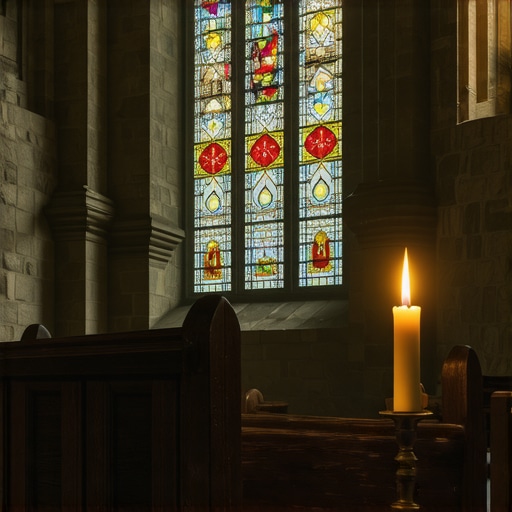
The ‘Simple Reason’ your church feels like a wind tunnel near the stained glass is a phenomenon called a convective cascade. In the North, where the winter wind bites through stone, those massive glass windows act as thermal bridges. Warm air from your furnace—if it’s lucky enough to even reach the pews—hits that cold glass. Because heat always moves toward cold, the air loses its energy, becomes denser, and literally falls. It’s not a leak; it’s a waterfall of air. This cold air ‘washes’ down the window and across the floor, right onto the ankles of the congregation. If your heating service provider isn’t talking about air velocity and throw patterns, they’re just parts-changers. You don’t need more ‘juice’ in the system; you need to break that cycle. We often see churches trying to combat this with a two-stage furnace installation, which helps by providing a constant, lower-velocity stream of air to keep the molecules moving without creating a blast, but the ductwork is usually the real culprit.
I remember a job back in ’98, a stone chapel that felt like a meat locker. A ‘suit’ from a big-box HVAC company told them they needed three new 5-ton units. I went up into the crawlspace and found the tin knocker who built the place in 1954 had used zero mastic. I call it ‘Pookie,’ and it’s the only thing that keeps a system’s static pressure where it needs to be. The air was blowing into the crawlspace instead of the sanctuary. A few buckets of Pookie and a proper furnace flame sensor cleaning to stop the short-cycling, and that church was toasty for the first time in decades. For more on keeping your system running long-term, you should look into top HVAC repair strategies.
“Infiltration of outdoor air into a building can account for up to 40% of the heating and cooling load.” – ASHRAE Handbook
In modern church management, we are moving toward AI-driven HVAC optimization and geofencing temperature control. Think about it: why heat a 10,000-square-foot room to 72 degrees on a Tuesday morning when only the pastor is in his office? Geofencing allows the system to ramp up only when it detects the choir director’s phone entering the parking lot. Combine this with demand-controlled ventilation, which uses CO2 sensors to determine how many people are actually in the room, and you stop heating the ’empty space’ and start heating the bodies. If you’re stuck with an old boiler, you need boiler repair services that understand the specific heat of water and the lag time of cast iron. You can’t just ‘turn it up’ ten minutes before the service. It’s about thermal mass. Sometimes, the best solution for those drafty windows isn’t air at all; it’s a radiant floor heating installation. By heating the objects (the pews and the people) instead of the air, you completely bypass the convective waterfall problem.
[image_placeholder]
We are also facing a massive shift in the industry with low-GWP refrigerant retrofits. By 2025, the old R-410A we’ve used for years is being phased out for A2L refrigerants like R-454B. These are ‘mildly flammable,’ which sounds scary to a layman but is just another day at the office for a real tech. It means your new sanctuary units will have leak sensors and extra shielding. If your ‘pro’ doesn’t know about the A2L transition, kick them off the property. They’ll likely try to sell you an evaporative cooler service in a humid climate just because they have the parts on the truck. Don’t fall for it. You need someone who knows how to perform choosing the best heating service based on physics, not commissions. Whether you need heat pump solutions or a simple tune-up, remember: comfort is a matter of airflow, not just temperature. If the air isn’t moving right, you’re just burning money to stay cold. For a full breakdown on keeping your church or home ready for the winter, read our preventative heating maintenance guide.