The Physics of Comfort: Why My Mentor Screamed About Airflow
My old mentor used to scream, ‘You can’t cool what you can’t touch!’ This is why airflow matters more than horsepower. He’d stand over a rattling condenser in a Chicago winter, the wind whipping off the lake, and remind me that the most expensive hyper-heat heat pumps are just expensive paperweights if the ductwork is choked. He was right then, and he’s even more right now as we stare down the barrel of the 2025 regulatory shifts. In the North, where we deal with polar vortexes and sub-zero humidity, the transition to SEER2 compliant upgrades isn’t just a label change; it’s a fundamental shift in how we calculate the vapor compression cycle under real-world stress. If you think sticking a high-efficiency unit on a 1950s duct system is going to save you money, you’re chasing a ghost. You’re essentially putting a Ferrari engine in a lawnmower frame.
“The most expensive equipment in the world cannot overcome a bad duct system.” – Industry Axiom
The Regulatory Cliff: The Death of R-410A and the Birth of SEER2
We are currently standing on a regulatory cliff. The old R-410A ‘juice’ is being phased out, and we’re moving into the era of A2L refrigerants like R-454B. These are ‘mildly flammable,’ which sounds scary to homeowners but really just means the equipment now comes with leak sensors and logic boards that would make NASA jealous. But the real meat of the change is SEER2. Unlike the old SEER rating, which was tested under laboratory conditions that didn’t account for the ‘tin knocker’ who botched the return air drop, SEER2 assumes a much higher static pressure. Specifically, it’s tested at 0.5 inches of water column instead of the old 0.1. This means the blower motors have to work harder, and if your heat pump solutions for efficient home comfort in 2025 don’t account for this, you’ll be burning through motors every three years. I’ve seen ‘Sales Techs’ push these units without mentioning that the existing ductwork will choke the life out of the variable-speed compressor. They want the commission; I want the unit to actually work when it’s -10°F outside.
Thermodynamic Zooming: How Hyper-Heat Actually Works
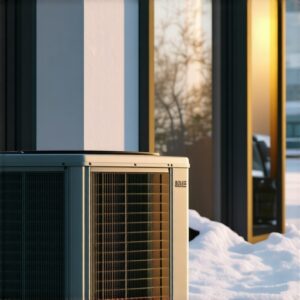
When we talk about hyper-heat heat pumps, we’re talking about an engineering miracle. In a standard heat pump, as the outdoor temperature drops, the density of the refrigerant vapor decreases, and the heating capacity falls off a cliff. But hyper-heat systems utilize an injection circuit—think of it like a turbocharger for the compressor. It injects a flash of liquid refrigerant into the compressor scroll, which keeps the discharge temperatures down and allows the system to maintain 100% capacity even when the mercury hits zero. This isn’t magic; it’s enthalpy. To get the real savings, you need HVAC load calculation services (Manual J) that don’t just guess based on square footage. We have to look at the ‘U-value’ of your windows and the ‘R-value’ of your attic insulation. If we don’t, the unit will short-cycle. Short-cycling is the silent killer of efficiency—it’s like driving your car in stop-and-go traffic instead of cruising on the highway. You never reach the steady-state efficiency that the SEER2 rating promises.
The Critical Role of Airflow Measurement Services and HVAC Duct Sealing
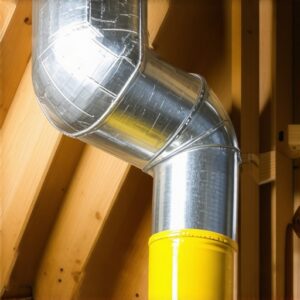
You can have the best flame sensor cleaning or the most pristine boiler repair services, but if your static pressure is too high, the physics simply won’t work. This is where airflow measurement services come into play. We use manometers to measure the ‘blood pressure’ of your system. If the supply side is pushing too hard and the return side is starving, the evaporator coil in your heat pump will likely ice up, or your heat exchanger will overheat and trigger a limit switch replacement. I’ve spent countless hours applying ‘Pookie’ (mastic) to leaking joints because HVAC duct sealing is the only way to ensure the air you paid to heat actually reaches the bedrooms. Tape dries out and fails; Pookie is forever. When a system is sealed, the static pressure stabilizes, and the SEER2 components can actually modulate their speed as intended, rather than running at 100% to overcome the leaks in the attic.
“Equipment performance is directly proportional to the integrity of the thermal envelope and the distribution system.” – ASHRAE Fundamentals
The Maintenance Trap: From Flame Sensors to Solar Thermal Integration
I despise the $29 ‘Tune-Up’ special. It’s a foot in the door for a sales pitch. Real maintenance, like preventative heating maintenance a guide for homeowners in 2025, involves checking the micro-amps on a furnace flame sensor cleaning job. If that sensor is coated in carbon, it won’t ‘rectify’ the flame signal, and your furnace will lock out right when the temperature hits the teens. For those looking at solar thermal heating integration, the complexity doubles. You’re now blending hydronic heat with air-side heat, requiring a controller that understands both worlds. Whether it’s commercial furnace repair or a residential hyper-heat install, the physics of heat transfer remain the same: you have to manage the delta-T (the temperature difference). If your ‘Sparky’ (electrician) didn’t pull a heavy enough wire for the backup heat strips, or if your tech didn’t check the ‘suction line’ (it should be beer-can cold in summer, but screaming hot in winter for a heat pump), you’re losing money every second the unit runs. Check top hvac repair strategies to extend your systems life to understand that the best repair is the one you never have to make because the system was commissioned correctly on day one. Selecting the right pro is half the battle; read choosing the best heating service expert tips for 2025 before you sign any five-figure contract. Comfort isn’t magic; it’s a balanced equation of pressure, temperature, and airflow. Don’t let a Sales Tech tell you otherwise.