The Sound of a Financial Disaster
The worst sound in a commercial building isn’t a banging compressor or a squealing belt; it’s the absolute silence of a dead furnace at 6:00 AM on a Monday morning in February. You walk in, and you don’t hear that low-frequency rumble of the inducer motor. You don’t feel the gentle vibration of the blower. Instead, you feel the creeping chill that tells you your employees are going to be working in parkas or, worse, your inventory is about to be ruined by a pipe burst. My old mentor, a grizzled old ‘Tin Knocker’ named Lou, used to grab me by the collar of my Carhartt and scream, ‘You can’t heat what you can’t touch!’ He was talking about airflow, but he was also talking about physics. If that heat exchanger doesn’t have air moving over it, it’s just a ticking time bomb of metallurgical fatigue. In thirty years of crawling through crawlspaces and humping tools onto commercial rooftops, I’ve seen more shops close their doors because they treated their HVAC like a toaster—something you just plug in and forget—until the day the fire department shows up because of a cracked heat exchanger or a carbon monoxide rollout.
The Anatomy of a Commercial Failure: The Forensic Diagnosis
When a commercial furnace dies, it’s rarely a ‘random’ event. It’s the culmination of years of neglect, poor gas line installation for furnaces, or the catastrophic failure of a heat exchanger cleaning schedule that was ignored to save a few bucks. Let’s look at the furnace like a biological organism. The heat exchanger is the lungs. The blower is the heart. The thermostat is the brain. If the lungs are choked with soot or scale, the heart has to work twice as hard to move the blood (the air). Eventually, the heart stops. Most ‘Sales Techs’—those guys who show up in a clean uniform and a shiny iPad—will tell you that you need a whole new $20,000 RTU (Rooftop Unit) the second a limit switch trips. They’re full of it. I’ve saved commercial systems with a simple wall furnace installation or a proper thermostat installation paired with AI-driven HVAC optimization. But you have to know what you’re looking at.
“The most expensive equipment in the world cannot overcome a bad duct system or a neglected combustion cycle.” – Industry Axiom
In Northern climates, where the mercury drops and the wind howls off the lake, your furnace isn’t just a comfort device; it’s a life-support system. We deal with ‘Sensible Heat’—the temperature you can read on a thermometer. But in a commercial shop, you also have to manage the steam humidifiers because dry air is a killer for electronic equipment and wood products. If your humidity drops below 20%, static electricity starts frying circuit boards. If your furnace is short-cycling because it’s oversized, you never get the runtime needed for the humidifier to actually do its job. It’s a delicate thermodynamic dance.
The Heat Exchanger: The Silent Killer of Business Continuity
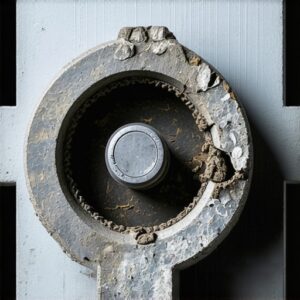
The heat exchanger is where the magic (and the danger) happens. It’s a series of metal tubes where the combustion happens on the inside, and your shop’s air blows over the outside. If that metal cracks due to ‘flame rollout’ or excessive heat from restricted airflow, you’re pumping carbon monoxide into your showroom. This is why heat exchanger cleaning and inspection aren’t ‘optional’—they’re legal and moral obligations. I’ve seen cracks so wide you could slide a credit card through them, usually caused by someone who thought they could save money by never changing the filters. When the filters get clogged, the static pressure rises, the blower slows down, and that heat exchanger gets ‘heat soaked.’ It expands and contracts until the metal fatigues and snaps. If you find yourself in this spot, sometimes an oil to gas conversion is the better path forward, especially with the rising costs of heating oil and the better control logic available in modern gas valves. For those looking to stay ahead of the curve, top HVAC repair strategies to extend your system’s life often start with a simple combustion analysis to ensure your gas-to-air ratio isn’t melting your internals.
The 2025 Regulatory Cliff: R-454B and Low-GWP Retrofits
We are currently standing on the edge of a massive industry shift. The EPA is phasing out R-410A in favor of ‘Mildly Flammable’ A2L refrigerants like R-454B. If you’re running a commercial heat pump or a hybrid system, you need to be aware of R-454B refrigerant transition services. These new systems require leak sensors and specialized ‘Sparky’ (electrician) work to ensure that if a leak occurs, the system doesn’t create a combustion hazard. For many shop owners, low-GWP refrigerant retrofits are becoming the only way to avoid the skyrocketing costs of old ‘Juice’ (refrigerant). If your system is more than 12 years old, don’t just dump more money into an R-410A leak. Consider a heat pump replacement that utilizes the latest AI-driven HVAC optimization to shave 30% off your utility bills. You can find more about these modern units in our guide on heat pump solutions for efficient home comfort in 2025.
“Standard 62.1 requires that ventilation systems be designed to prevent the moisture-related growth of mold and bacteria, which is why proper furnace-integrated humidification is critical for commercial health.” – ASHRAE Standards
Stop the Bleeding: Preventive Maintenance as a Profit Center
I’ve walked into shops where the owner is complaining that ‘the AC doesn’t work’ when it’s 20 degrees outside. It turns out the ‘Tin Knocker’ who installed the return air drop didn’t size it right, and the furnace is actually tripping on high-limit, which then locks out the whole control board. This is where preventative heating maintenance comes in. It’s not just about brushing off some dust. It’s about checking the gas pressure on the manifold, ensuring the gas line installation for furnaces is actually delivering the BTUs the nameplate requires, and verifying that the thermostat installation isn’t located right under a supply vent, which causes ‘ghost’ readings and constant cycling. If you want to avoid a total shutdown, you need an expert who knows how to read the ‘Pookie’ (mastic) on the joints—if it’s cracking and discolored, you’ve got a heat problem. For more tips on selecting the right pro, check out choosing the best heating service expert tips for 2025 and make sure they aren’t just trying to sell you a new box.
Summary of Thermodynamic Logic
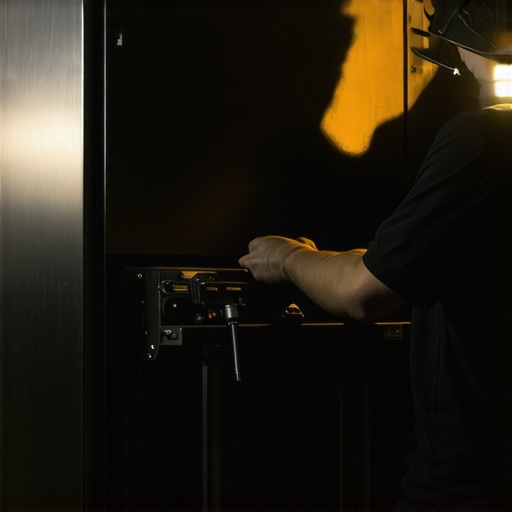
In the North, we fight the ‘Cold Sink’ effect. Every time your bay doors open, you lose your sensible heat. A wall furnace installation near the loading dock can act as a thermal curtain, preventing your main furnace from overworking. Don’t let a $50 ignitor or a dirty flame sensor be the reason you lose a week of production. Use AI-driven HVAC optimization to monitor your system’s performance in real-time. If the delta-T (the temperature difference between return and supply) starts to drop, the system should tell you BEFORE it dies. That is how you stay in business while the guy down the street is shivering in the dark. “, “image”: {“imagePrompt”: “A macro cinematic shot of a weathered HVAC technician’s hand holding a flashlight, illuminating a hairline crack in a heavy-duty industrial steel heat exchanger inside a dark commercial furnace. The lighting is moody and technical.”, “imageTitle”: “Inspecting a Cracked Commercial Heat Exchanger”, “imageAlt”: “A veteran technician performs a forensic inspection on a damaged commercial furnace heat exchanger.”}, “categoryId”: 0, “postTime”: “”}